

Aromatic Carboxylic Acid Intermediate CDMO Solutions for Seamless Scale-Up
2026-09-08
Scaling up aromatic carboxylic acid intermediates from lab to commercial production is often where promising syntheses stall. Trace impurities, heat management, and inconsistent yields can erode timelines and budgets. That’s why working with a CDMO that truly understands these building blocks matters. DSL Chemicals has built its reputation on robust process development and seamless scale-up for exactly these challenges—turning complex chemistries into reliable, plant-ready routes. Here’s what to look for when your next aromatic carboxylic acid project needs to move beyond the bench.
Scaling Aromatic Carboxylic Acid Chemistry Without the Usual Headaches
Moving from milligram-scale experiments to kilogram production with aromatic carboxylic acids often feels like switching from a bicycle to a freight train. The chemistry itself doesn't change, but everything around it does: heat transfer becomes sluggish, stirring turns unpredictable, and those clean little precipitations turn into stubborn, filter-clogging sludges. The usual workarounds involve heroic amounts of solvent, painfully slow additions, or accepting a yield hit just to keep the process manageable. But there's a different way to think about scale-up that focuses on the acid's own behavior rather than just brute-forcing the equipment.
One underused trick is to stop treating the carboxylic acid as a passive participant. Its solubility, melting point, and tendency to form dimers or salts can be leveraged as process controls. For example, controlling the pH during workup can turn a messy emulsion into a clean phase split, and choosing the right counterion can convert a sticky solid into a free-flowing crystalline product. These aren't exotic techniques; they're just rarely applied early enough in route design. When you plan for scale from the first step, you avoid the painful re-optimization that often happens after the pilot batch fails.
Another headache comes from oxidation or coupling reactions where the aromatic acid is generated in situ. At larger volumes, local hot spots or poor mixing can create byproducts that were never seen on the bench. A practical fix is to switch to a continuous or semi-batch mode for the critical addition, or to use a less aggressive oxidant that still gives full conversion but with a wider safety margin. The goal isn't to eliminate all challenges, but to design a process that tolerates normal manufacturing variability without requiring a chemist to stand over the reactor with a pipette.
What Most CDMOs Miss About Carboxylic Acid Intermediates—and How We Address It
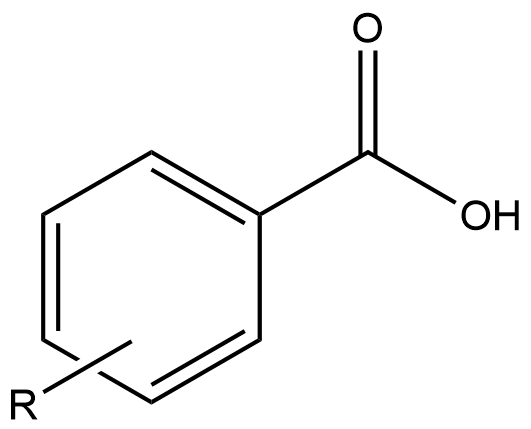
Most CDMOs treat a carboxylic acid intermediate as just another isolated solid, but that mindset misses how the acid group quietly reshapes solubility, salt formation, and thermal stability. A free acid that looks fine on paper can turn into a poorly filterable hydrate or a stubborn sodium salt that refuses to crystallize once the pH drifts during workup. If the team doesn't track the acid's pKa and buffering behavior, the next amide coupling sees a messy mix of protonated and deprotonated species, dragging yields down and pushing impurity profiles out of spec.
Our approach starts by profiling the carboxylic acid early: we measure solubility across a handful of solvent systems, check for decarboxylation risk under the planned temperature range, and screen counterions before committing to an isolation. Often the best move is not isolating the free acid at all—we keep the intermediate as a stable salt or a protected ester until right before the coupling step, then release the active acid in situ under controlled conditions. We also replace aggressive acid-base swings with gentler phase splits or pH-triggered crystallizations. That way the intermediate arrives at the next stage in the exact form the reaction needs, not the form that was easiest to isolate.
From Lab Notebook to Plant Floor: A Process That Holds Up
The distance between a neatly recorded experiment and a running production line often hides more than just scale. What works on a bench, with careful manual steps and controlled glassware, can buckle under the weight of continuous flow, imperfect raw materials, and operators who were not in the room when the original idea took shape. The process that survives is rarely the one that was first written down. It is the one that gets tested against real tolerances, documented with enough clarity for a midnight shift, and re-validated every time a supplier tweaks a spec or a valve starts to drift.
That transition is not a single handoff but a series of deliberate translations. Lab language full of "roughly," "until color changes," or "stir for a while" must become pump speeds, temperature deadbands, and timed additions. Equipment that was never meant to run for more than an hour now faces three-shift duty. The notebook is no longer the source of truth; it is the starting note in a conversation between chemists, engineers, and the people who will eventually troubleshoot the line at 2 a.m.
A process that holds up is one that was built for the plant floor from the beginning, even if the first version lived in glass. That means choosing reagents that do not degrade in bulk storage, designing for viscosity changes as batches grow, and writing procedures that assume a distracted human, not a perfectly focused researcher. When the lab notebook stops being a record of discovery and starts being a blueprint for repetition, the real work of scale-up has already begun.
Impurity Control Strategies That Survive Scale-Up
Lab-scale purifications often lean on techniques that quietly fall apart in a pilot plant. A flash column that cleans up five grams with half a liter of solvent becomes a logistical and safety headache at two hundred kilos, and the impurity profile rarely improves the way the small run suggested. The first filter for any impurity control strategy is whether it can be executed with standard plant equipment: crystallizers, filter dryers, wiped-film evaporators, and countercurrent extractors. If the answer is no, the method needs redesign before it reaches the kilo lab.
Spiking studies give more reliable scale-up predictions than simply chasing a clean HPLC trace. Rather than loading pure product into a crystallizer, add the known process impurities at their expected upper limits and watch how the solid phase rejects or traps them. This reveals purge factors under realistic mother liquor compositions—information that stays hidden when impurities are only present at trace levels. Solvent swaps, seeding protocols, and cooling rates can then be tuned to keep rejection consistent as batch size grows.
Process analytical technology is where many scale-up surprises get caught early. Focused beam reflectance measurement and Raman probes can track particle size, polymorph conversion, and oiling-out tendencies in real time, so an impurity that co-crystallizes only under a narrow cooling window isn't discovered during a failed production batch. Build the control space around those measurements, and the process becomes less sensitive to operator judgment or slight changes in vessel geometry.
Documentation That Speaks Your Regulatory Team's Language
Most technical documentation gets written for engineers, then handed to regulators as an afterthought. That rarely ends well. The reviewers on the other side aren't looking for a tour of your architecture—they need to see how risks are identified, controlled, and verified in terms they already use. When your documentation mirrors their checklists, definitions, and expected evidence, the review stops being a translation exercise.
We've learned to write for the people who actually sign off. That means using the same risk categories and control language your regulatory team already works with, not inventing new ones. Each document is structured around what they need to demonstrate compliance—traceability from requirement to test, clear acceptance criteria, and no buried assumptions. If a phrase would make sense in an engineering standup but not in a submission packet, it gets rewritten.
The payoff is usually quieter than you'd expect: fewer clarification emails, shorter review cycles, and a regulatory team that trusts the next document before they open it. That trust comes from consistency, not cleverness. We keep the format predictable, the terminology aligned with current guidance, and the evidence easy to locate. It's documentation that does its job without needing a translator.
Capacity That Adapts When Your Timeline Doesn't
Most project plans look great on paper until a key approval slips, a supplier runs late, or a stakeholder asks for one more round of feedback. Fixed capacity forces you to either pay for idle resources or scramble when demand spikes. We take a different route: the underlying capacity flexes in near real time, so the infrastructure follows your actual pace instead of the other way around.
That means you can pause, accelerate, or extend without renegotiating a contract or waiting on procurement. Small teams get the same headroom as large launches, and when a deadline moves, your available capacity moves with it. No overprovisioning to feel safe, no last-minute fire drills. Just a setup that respects the fact that timelines are living things.
FAQ
Instead of forcing a route that works at gram scale, we start with a parallel screening of carboxylation, oxidation, and hydrolysis options. We rank them by cost, cycle time, and thermal risk, then lock the route only after a 20-liter demonstration run. That gives the plant team a realistic heat and mass transfer profile before any pilot work begins.
We treat impurity control as a kinetic problem, not a purification afterthought. For aromatic carboxylic acids, the usual suspects are decarboxylation byproducts, residual metal catalysts, and positional isomers. We use spiking studies and forced degradation to identify purge points, then tune crystallization solvents and cooling rates so purge happens inside the reactor train rather than in a separate recrystallization.
The package includes a thermal stability report, an impurity fate map, an analytical method bridging memo, and raw material specifications with moisture and assay limits tied to downstream performance. We also add video walkthroughs of any unusual filtrations or phase splits. That way the receiving plant does not constantly phone the lab for tacit knowledge.
We map the reaction enthalpy by reaction calorimetry and use that data to define dosing limits and jacket temperature ramps. For particularly energetic steps, we design a semi-batch protocol with real-time heat flow monitoring. If the heat release rate drifts outside the predicted envelope, the control system automatically slows addition rather than relying on an operator to notice.
We have a mix of glass-lined and hastelloy reactors from 500 liters to 10,000 liters, with dedicated cryogenic and high-pressure trains. That lets us keep the same process geometry when moving from pilot to commercial scale. For materials that are sensitive to iron or chloride, we can shift to PTFE-lined or ceramic systems without changing the registered process.
We qualify at least two vendors for every aromatic starting material and run a monthly stability check on their lot-to-lot variability. For niche boronic acids or halogenated aromatics, we hold safety stock equal to three months of forecasted demand. If a single-source reagent becomes unavailable, we have a change-control process that revalidates the impurity profile before the new lot enters production.
We write the chemistry, manufacturing, and controls sections that regulators actually read, focusing on impurity origin and control strategy rather than generic process descriptions. Our team can support pre-approval inspections and respond to deficiency letters with comparative batch data from your development history.
In early phase, we prioritize speed and structural confirmation; we often use a modular route that allows late-stage diversification. By Phase III, we migrate to a cost-robust process with fewer unit operations and tighter control limits. The handoff is built around a scale-down model that reproduces plant performance in a 1-liter reactor so troubleshooting can be done without risking a full batch.
Conclusion
Scaling aromatic carboxylic acid chemistry often fails at the interface between bench and plant, not because the core reaction is inherently unstable but because the conditions that work in a round-bottom flask rarely translate directly to a 500-gallon vessel. The acid group itself invites trouble: it can drive unwanted salt formation, shift solubility windows, accelerate decarboxylation when heat or trace metals are present, and make pH-sensitive workups a moving target. A CDMO that genuinely understands these molecules starts by mapping the protonation states across every unit operation rather than simply cloning a lab procedure. That means fixing the order of addition, isolating the free acid or its salt at the right point, and designing quench and crystallization steps around the pKa of the aromatic system instead of relying on generic downstream processing. The result is a route that holds up under larger mass-transfer and heat-transfer limitations, with fewer hold-point failures and less rework.
Impurity control is where most scale-ups quietly derail, especially with aromatic carboxylic acids that tend to form dimers, anhydrides, or oxidative byproducts during extended processing. The approach embeds impurity fate mapping early, pairing reaction calorimetry with targeted LC-MS and NMR tracking so that any species above a defined threshold is tied to a specific upstream condition, not discovered later as an out-of-spec batch. Alongside that, the paper trail is built for regulatory review: batch records, validation protocols, and specifications are written with CMC reviewers in mind, so questions about residual solvents, metal content, or polymorph consistency get answered in the first submission rather than in a deficiency letter. When timelines shift, capacity is adjusted through modular reactor trains and parallel workstreams without changing the qualified process, keeping the scale-up seamless from first demo to commercial demand.
Contact Us
Contact Person: Wei Zhang
Email: [email protected]
Tel/WhatsApp: 862163529955
Website: https://www.dslchem.com