

Best Mission-Critical Valve Manufacturer: Engineering Reliability for High-Stakes Industries
2026-06-14
In industries where failure is not an option, the right valve can mean the difference between seamless operation and catastrophic downtime. From refining volatile chemicals to controlling steam in power plants, mission-critical valves must perform with unwavering precision. This is where ZMV excels—engineering valve solutions that embody reliability when stakes are highest. Discover what sets a truly mission-critical valve manufacturer apart and how ZMV’s relentless focus on quality redefines industry standards.
Precision Engineering Where Failure Is Not an Option
In fields where tolerances are measured in microns and a single flaw can cascade into catastrophe, engineering becomes something closer to philosophy—a discipline where absolute certainty is the only acceptable outcome. Every surface finish, every material choice, every thermal expansion coefficient is scrutinized not as a variable, but as a potential point of failure that simply cannot be permitted to exist. This isn’t about building things that usually work; it’s about creating systems that must work, every time, under conditions that would make lesser designs disintegrate.
The mindset behind this level of precision rewrites the traditional engineering playbook. Instead of designing for typical loads and adding a safety factor, you design for the worst-case scenario and then push beyond it, testing to destruction not to find limits but to eliminate them. Components are machined from exotic alloys using processes that take days for a single part, then inspected with equipment that can detect deviations smaller than a wavelength of light. The cost is astronomical, the pace is deliberate, and the culture that sustains it has no room for “close enough.”
History provides stark reminders of why this intensity exists. When a spacecraft’s O-ring fails on a cold morning or a turbine blade develops a subsurface crack, the results aren’t warranty claims—they’re loss of life, loss of mission, loss of decades of progress. That’s why the engineers in these domains don’t talk about failure as a possibility; they treat it as a design parameter to be engineered out of existence. Their work isn’t visible to the public until something goes wrong, and their proudest achievements are the disasters that never happened.
Built to Endure the Toughest Industrial Demands
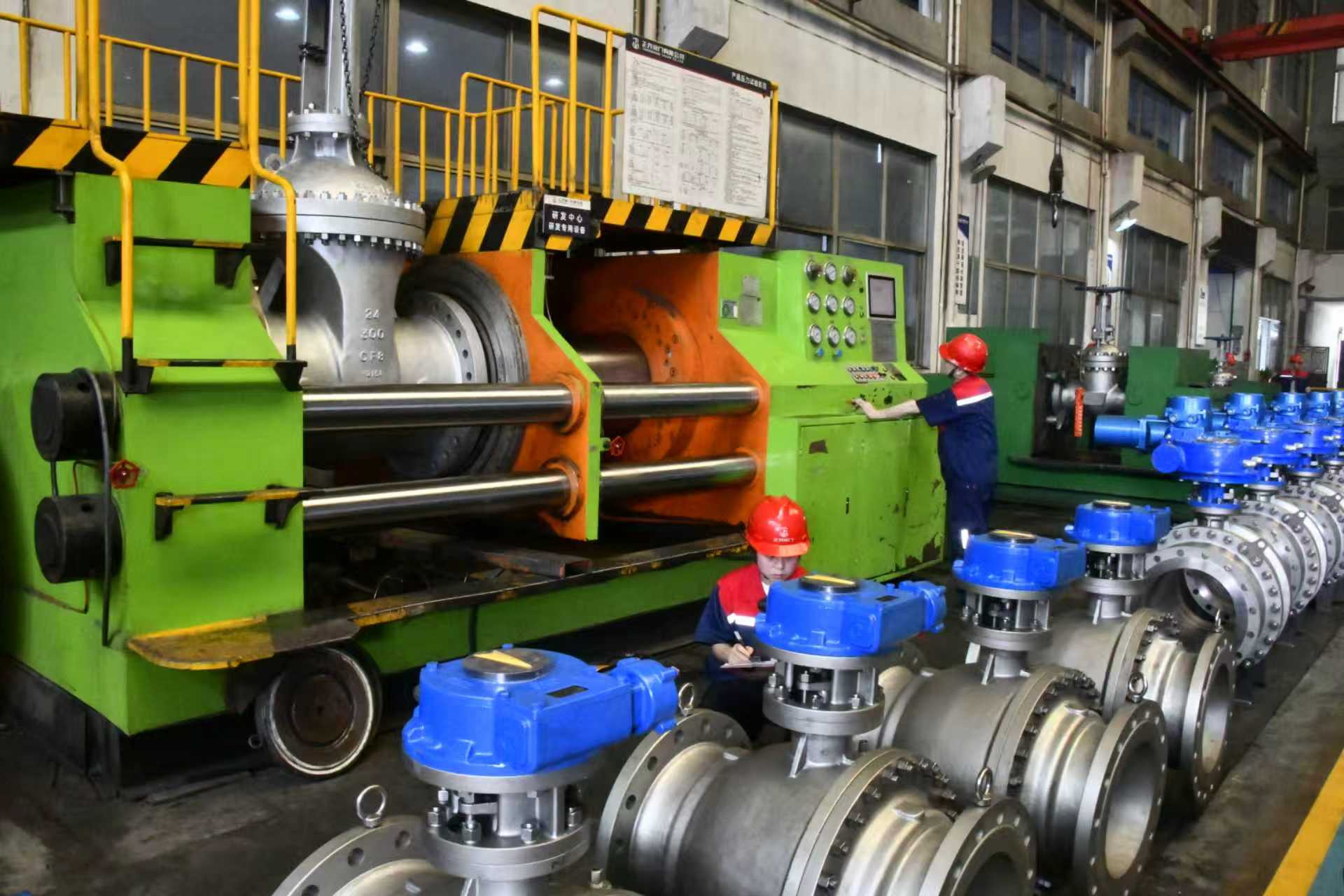
Industrial environments don't play nice. From relentless vibrations and shock loads to extreme temperatures and corrosive dust, the conditions on a factory floor or job site will quickly expose any weakness. This equipment was designed from the ground up with that reality in mind, not as an afterthought. Every component, from the reinforced housing to the sealed connectors, has been selected or engineered to take a beating and keep performing. We've learned that reliability isn't just a feature—it's the baseline expectation when downtime costs thousands per hour.
The internal architecture uses redundant pathways and heavy-duty thermal management that fends off heat buildup even in unventilated enclosures. Instead of relying on off-the-shelf parts that might fit, we tested multiple alloys and composite materials to find the right balance of impact resistance and corrosion protection. You'll find double-sealed seams and a coating that laughs off chemical splashes and high-pressure washdowns. It's not cleanroom equipment—it's built for places where dirt and moisture are part of the daily routine.
Before any unit ships, it goes through a battery of tests that simulate years of abuse: thermal cycling from -40°F to 185°F, continuous vibration at multiple frequencies, and salt fog exposure that would send lesser devices to the scrap bin. In actual deployments, these units have kept running through floods, seismic events, and around-the-clock operation with zero unplanned downtime. That's not by accident. It's the result of refusing to compromise on materials and over-engineering every stress point until failure wasn't an option.
Custom-Engineered Valves for Unforgiving Environments
In the depths of a subsea oil field or the blistering heat of a chemical plant, generic valves simply don't last. Our team approaches each challenge as a blank slate, collaborating with field engineers to pinpoint the precise failure modes that off-the-shelf solutions miss—whether it’s galling in high-purity oxygen lines or erosion from abrasive slurries. By obsessing over material pairings, from duplex stainless steels to tantalum alloys, we develop valve internals that shrug off harsh media while maintaining bubble-tight shutoff through years of cycling.
Beyond materials, the geometry of the valve itself is often reimagined. We’ve learned that in unforgiving environments, standard flow paths create velocity hotspots that accelerate wear, so our designs frequently incorporate custom-shaped trims and diffusers to redistribute energy. Thermal expansion mismatches, a common silent killer, are countered with bespoke live-loading systems and expansion joints that aren’t found in any catalog. Each prototype goes through a battery of tests that simulate the client’s worst-case scenario—not just a generic industry standard—because a valve that works in a lab at room temperature is irrelevant to the operator who has to turn it at -50°C in a blizzard.
Perhaps most critically, our process doesn’t end at the design stage. We embed ourselves with maintenance crews to understand the human factors: how a handle placement can mean the difference between a smooth actuation and a back injury in a tight space, or how a stem seal that requires one less turn cuts minutes off a dangerous line break. This gritty, field-level insight gets baked into every custom solution, resulting in valves that become the benchmark for reliability in operations where failure isn’t an option.
Reliability Tested Beyond Conventional Limits
We don’t just check boxes on a test sheet. Our components are pushed into scenarios most manufacturers won’t even attempt—sustained thermal swings from -40°F to 185°F while under full load, vibration profiles that mimic decades of road abuse in a matter of days, and salt-spray chambers that run until corrosion should have eaten through twice the material thickness. It’s not about passing a standard; it’s about finding the breaking point long before our customers do.
One memorable round involved burying a prototype connector in wet, acidic soil for eight months straight—powered up and switching. When we dug it out, it still met original performance specs. That’s the kind of overreach that became our baseline. Every design iteration gets its own version of this treatment, and the lessons from each failure reshape the next blueprint.
Industry certifications tell you a product meets minimum requirements. We treat those as starting points. Our reliability lab operates on a “prove it wrong” philosophy, where test parameters keep ratcheting up until the part finally gives. By understanding those failure modes deeply, we engineer out weaknesses that standard protocols never even address.
Seamless Integration into High-Stakes Workflows
When a trading desk is seconds away from a multi-million-dollar move, the last thing anyone needs is a platform that breaks its stride. Seamless integration means the system doesn’t announce itself—it simply shows up as a natural extension of the tools already in play. Whether it’s blending into a Bloomberg terminal layout or mirroring the cadence of an in-house risk dashboard, the connection feels less like a plug-in and more like a native update that was always meant to be there. No splash screens, no context switching—just the data and actions right where the mind expects them.
Under the hood, this cohesion leans on direct API pathways and event-driven architecture that syncs state across applications without polling delays. In a surgical suite, for instance, that means vital signs and imaging streams flow into the same view the surgeon uses to guide robotic instruments, updating in lockstep with physical maneuvers. The system parses existing protocols rather than demanding new ones, adapting to HL7, FIX, or proprietary schemas without forcing teams to retool. This quiet compatibility is what keeps the chain of command intact during moments where focus can’t fracture.
A flight dispatcher rerouting an aircraft through sudden weather cells doesn’t have bandwidth to babysit a new interface. Here, the integration surfaces relevant alerts by reading the same telemetry the dispatcher already trusts—air speed, fuel curves, route constraints—and overlays suggestions without hijacking primary controls. It’s the difference between a co-pilot who murmurs course corrections and one who grabs the yoke. The value isn’t flashy; it’s measured in the near-miss that never happened because the right nudge arrived at the right time, dressed in the familiar colors of the workflow itself.
Decades of Expertise Anchored in Safety and Performance
Over 30 years of learning what actually works in the field—and what doesn’t—has shaped every component we manufacture. Safety isn’t a department or a checklist; it’s a reflex, honed by engineers who’ve seen how small oversights cascade into catastrophic failures. That’s why our development cycles begin with failure mode analysis, not just performance targets.
Real-world performance means tolerating unpredictability. Our systems are forged from materials and geometries that have survived decades of thermal swings, corrosive environments, and continuous duty cycles. Each generation builds on the last, incorporating lessons from installations in remote mines, offshore rigs, and mission-critical facilities where downtime isn’t an option.
This heritage isn’t just about longevity—it’s about an ingrained sense of responsibility. When a new prototype spins up in our test bays, it’s scrutinized by veterans who remember the failures of the ’90s and the redesigns that fixed them. That institutional memory isn’t written down in any textbook; it lives in the way we route hydraulic lines, choose bolt torques, and derate components. It’s what makes our safety margins generous without being wasteful, and our performance specs believable without being boastful.
FAQ
We engineer every valve with redundant safety features and rigorously test them under extreme conditions to ensure they never compromise a high-stakes operation.
Our valves are trusted in nuclear power, deep-sea oil extraction, and aerospace—sectors where failure isn't an option and downtime costs millions.
We use proprietary alloy blends and advanced coating technologies that exceed industry standards for chemical resistance, validated through decade-long accelerated aging tests.
Absolutely. Our in-house engineering team collaborates directly with your project leads to develop bespoke solutions, from compact high-pressure actuators to multi-port diverter valves.
Every unit passes a battery of non-negotiable tests: cryogenic cycling, helium leak detection, burst pressure verification, and full-stroke timing under load—all documented in a traceable report.
We maintain ASME N-stamp and ISO 19443 certifications, with real-time process monitoring and a zero-defect culture that demands root-cause analysis for even minor deviations.
Conclusion
Precision engineering defines every valve we produce because in the industries we serve, there is simply no margin for error. From the drawing board to final assembly, each component is built to endure relentless pressures, corrosive substances, and temperature swings that would dismantle standard equipment within days. Our valves are not off-the-shelf compromises; they are custom-engineered answers to the specific challenges of unforgiving environments—whether deep-sea drilling, petrochemical processing, or cryogenic gas handling. The materials, seals, and actuation systems are selected and designed to maintain integrity when the operating conditions push the limits of physics, giving operators the confidence that a single point of failure will never come from us.
Reliability isn’t a marketing claim—it’s a measurable outcome of testing protocols that exceed conventional standards by a wide margin. We simulate years of brutal service in a matter of weeks, cycling valves through thermal shock, particle-laden flows, and extreme pressure differentials to expose any weakness long before installation. Yet a valve’s performance is only as good as its integration, so we work alongside system architects to ensure seamless compatibility with existing control infrastructures, minimizing retrofit complexity and downtime. Anchoring all of this is decades of hard-won expertise in safety-critical applications, where every design decision traces back to real-world failures and near-misses across high-stakes workflows. This accumulated knowledge isn’t kept in a manual; it’s embedded in every seat, stem, and certification, ensuring that our valves don’t just meet industry requirements—they set the benchmark for what mission-critical reliability should be.
Contact Us
Contact Person: Lucas Lin
Email: [email protected]
Tel/WhatsApp: 8613968913000
Website: https://www.zhengmaogroup.com