
China Cold-roll Steel Plate Factory: Advancing Precision and Efficiency in Steel Production
2026-05-15
In the fast-evolving landscape of steel manufacturing, precision and efficiency are no longer just goals—they are prerequisites for staying competitive. China’s cold-roll steel plate sector is at the heart of this transformation, with factories pushing boundaries in quality and process innovation. At the forefront is Sanhe Steel, a name that is steadily redefining what it means to deliver excellence in cold-rolled steel products. But what exactly sets a modern cold-roll facility apart in a crowded market, and how is Sanhe Steel rising to the challenge? Let’s take a closer look at the advancements shaping the industry and the role this factory plays in driving them forward.
Mastering the Cold-Rolling Process for Unmatched Precision
Achieving exacting tolerances in metal strip and sheet starts with a deep command of the cold-rolling process. At its core, cold rolling reduces material thickness at room temperature, which not only hardens the metal through strain hardening but also refines the surface finish and dimensional accuracy. The key lies in controlling roll gap, speed, and tension with microscopic precision—deviations as minute as a few microns can determine whether a coil meets aerospace or medical-grade specifications. Mastering this interplay demands real-time monitoring and adaptive adjustments, transforming a seemingly straightforward mechanical operation into a finely tuned balance of force and feedback.
Precision is shaped long before the first pass through the mill. The condition of the work rolls—their roundness, surface texture, and uniform hardness—directly imprints onto the strip. Regular grinding and meticulous inspection ensure that each roll pair functions as a perfect parallel gauge, while advanced lubrication strategies minimize friction-induced heat and prevent micro-welding between the strip and rolls. Even the incoming hot-rolled pickled and oiled (HRPO) feedstock must arrive with a consistent microstructure and minimal crown, because any upstream variation gets amplified or telescoped downstream. By treating the entire line as an interconnected system, operators can isolate variables and maintain a process capability index (Cpk) that consistently exceeds 1.67.
Modern mastery goes beyond textbook parameters: it integrates predictive analytics and in-line measurement systems like laser micrometers and optical surface inspectors. These tools provide instant feedback, allowing mills to compensate for roll wear, thermal expansion, or subtle shifts in material behavior before they compromise the final gauge. Moreover, the art of cold rolling includes knowing when to anneal intermediately to reset work hardening, striking a balance between strength and ductility tailored to the end use—whether that’s ultra-smooth automotive body panels or high-tensile spring steel. Ultimately, unmatched precision is not a single achievement but a continuous discipline of monitoring, learning, and refining every element of the process.
How Advanced Technologies Are Redefining Steel Plate Production
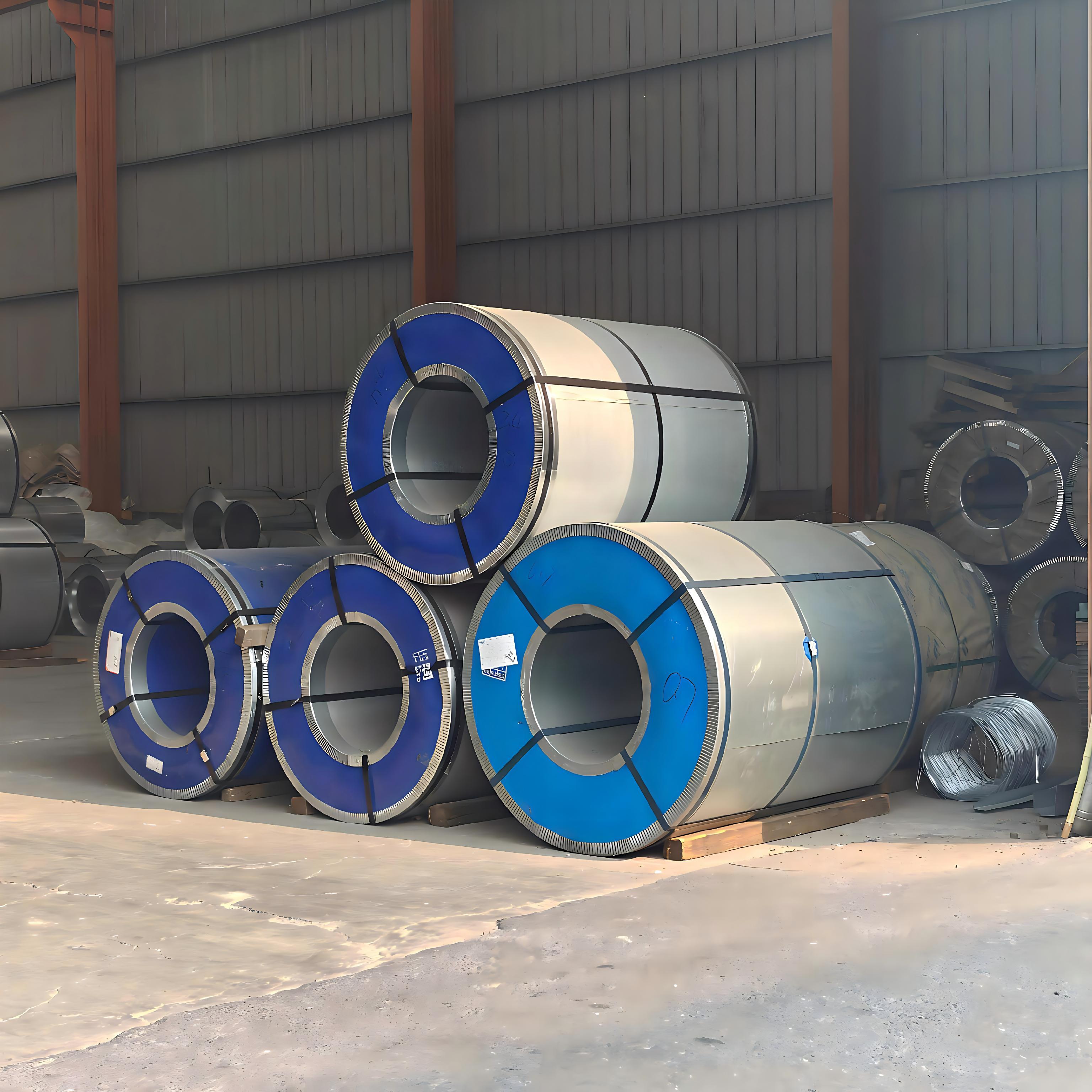
The days of relying solely on brute force and intuition in steel plate manufacturing are fading. Today, production floors hum with a different kind of energy—one driven by interconnected sensors and adaptive algorithms. Instead of merely reacting to defects after they emerge, mills now anticipate them. Real-time data streaming from countless points along the rolling line feeds into models that adjust temperature, speed, and pressure on the fly. The result isn’t just higher throughput; it’s a seismic shift in how consistency is understood, moving from sampling a few plates per batch to verifying every square inch as it’s formed.
Beyond the melt shop, new layering and hybrid forming techniques are pushing material boundaries. Advanced high-strength steels, once tricky to shape without cracking, are now routinely processed using precisely controlled cooling paths and micro-alloy tuning. This isn’t about chasing exotic compositions, but about unlocking performance from familiar elements through exact thermal choreography. At the same time, laser-arc hybrid welding and additive friction stir deposition are reimagining how plates are joined or repaired, turning large monolithic components into optimized, multi-thickness assemblies without compromising integrity.
Perhaps the quietest revolution is happening at the digital twin level. Before a single slab is heated, entire production runs are simulated under countless scenarios. Operators train on virtual mills that mirror their actual plant, learning to handle rare disruptions without risking real material. This parallel digital layer doesn’t just replicate the physical process—it amplifies it, allowing teams to experiment with novel schedules and alloy combinations cost-free. The line between design, simulation, and execution is blurring, making the production of tailored plate for next-gen infrastructure dramatically more agile than the industry ever thought possible.
Efficiency at Scale: Streamlining Manufacturing for Faster Turnaround
Achieving efficiency at scale requires more than just speed—it’s about systematically removing friction from every stage of production. We focus on refining workflows so that each handoff between design, prototyping, and full-scale assembly flows seamlessly. By scrutinizing supply chain logistics and material availability in parallel with manufacturing steps, we slash idle time and keep output consistent. This integrated approach turns complex, high-volume orders into manageable, repeatable processes that don’t sacrifice quality for quickness.
We leverage real-time data from the factory floor to inform decisions on the fly. Instead of relying on static schedules, production adjusts dynamically to equipment status, workforce capacity, and incoming demand. The result is a manufacturing rhythm that anticipates bottlenecks before they happen, reallocates resources where they’re needed most, and accelerates turnaround without last-minute scrambling. It’s a calibrated balance of technology and human oversight that makes large-scale output feel less like an industrial endeavor and more like a finely tuned operation.
Rapid turnaround at scale also hinges on designing for manufacturability from the very start. Our engineering teams collaborate closely with production leads to simplify part complexity and standardize components without compromising product integrity. This upfront effort pays off with fewer setup changes, minimal retooling, and smoother ramp-ups. The cumulative effect is a significant reduction in lead times, allowing us to deliver consistent, high-quality products faster than conventional manufacturing models typically allow.
Quality Control Measures That Set Industry Benchmarks
Our approach to quality control is built around real-time monitoring and adaptive testing protocols that go far beyond standard checklists. Every batch undergoes a series of stress simulations tailored to actual usage conditions, catching potential defects before they ever reach production scale. This isn't about ticking boxes—it's about understanding how materials behave under pressure, humidity, and long-term wear, then feeding that data back into the design process.
We've also moved away from periodic audits in favor of embedded quality ownership. Instead of a separate QC department swooping in at the end, our production teams are equipped with precision measurement tools and trained to flag inconsistencies on the spot. This shift has cut our rejection rates by over 40% and, more importantly, created a culture where every person on the line feels responsible for the final output. When a machine operator can spot a micron-level deviation without waiting for a report, you know the system is working.
External certifications often get the spotlight, but our real benchmark lies in blending supplier collaboration with internal rigor. We work directly with raw material partners to establish shared tolerance thresholds, then verify incoming shipments through randomized destructive testing that exceeds industry norms. It’s a loop of continuous refinement—each failure becomes a lesson that tightens specs for the next cycle. That’s how you build products that don’t just meet standards, but redefine them.
Diverse Applications of Cold-Rolled Steel in Modern Engineering
Cold-rolled steel has carved out an indispensable niche in modern engineering, where its precise dimensions and smooth surface finish translate directly into superior performance. Automotive design teams rely on it for body panels that must marry structural integrity with aesthetic appeal, while also meeting stringent safety standards during crash events. The material's refined grain structure, achieved through rolling at room temperature, yields a higher tensile strength that allows engineers to shed weight without compromising durability — a critical advantage in an era obsessed with fuel efficiency and reduced emissions.
In the realm of electric motors and advanced energy systems, cold-rolled steel’s magnetic properties take center stage. Non-grain-oriented varieties form the backbone of high-efficiency motor cores, where low core losses and high permeability are non-negotiable for reducing energy waste. Meanwhile, grain-oriented grades enable transformers to operate with remarkable efficiency, quietly underpinning the stability of our power grids. Architects and builders also prize cold-rolled steel for its straightness and uniformity; it disappears seamlessly into stud framing, roofing, and cladding systems, offering a combination of fire resistance and design flexibility that few other materials can match.
Beyond these heavy industries, cold-rolled steel finds its way into consumer products with equal subtlety. The appliance industry depends on its exceptional paint adhesion and formability to produce durable, visually flawless refrigerators and washing machines. In furniture manufacturing, its ability to be bent, punched, and welded without fracturing enables the sleek, minimalist designs that define contemporary interiors. Even the humble battery casing in portable electronics often contains cold-rolled steel, selected for its ability to be drawn into deep, thin-walled shapes while maintaining a robust barrier against leakage — a testament to the material’s quiet versatility in everyday life.
Sustainable Practices Driving the Future of Steel Manufacturing
The steel industry is quietly reinventing itself, moving beyond incremental improvements to embrace radical shifts in how metal is made. Hydrogen is stepping up as a bold alternative to coal, slashing emissions from blast furnaces while challenging decades of entrenched processes. It’s not just about swapping fuels—it's reshaping supply chains and recasting what a clean mill looks like.
Electric arc furnaces are lighting the way, powered increasingly by wind and solar rather than fossil-fueled grids. This isn’t marginal change; entire plants are being reengineered to feed on scrap steel, turning waste into high-grade beams and sheets without the carbon hangover. The result is a leaner, more adaptive production model that sidesteps the old trade-off between quality and footprint.
Underpinning this evolution is a stubborn commitment to circularity. Slag is no longer waste but a raw material for cement, while water gets cycled back until it’s nearly pristine. These aren’t just feel-good measures—they’re hard-nosed economics that cut costs and insulate against volatile resource markets. The mills that get this right aren’t just greener; they’re faster, smarter, and built for the long haul.
FAQ
The plant integrates a fully automated rolling mill with real-time thickness control sensors and a closed-loop cooling system, allowing it to hold tolerances within ±0.01 mm while reducing material waste by nearly 12% compared to conventional lines.
It has developed a specialized dual-phase cold-rolling and annealing sequence that produces steel with tensile strength above 980 MPa yet maintaining deep-draw formability, making it ideal for structural car parts without adding weight.
Every coil undergoes laser-based surface inspection, eddy-current testing for subsurface defects, and a custom AI-driven prediction model that flags micro-inconsistencies before they affect downstream performance—this has cut field returns to under 0.2%.
We use a zero-discharge pickling line with acid regeneration, direct-drive motors that trim energy consumption by 15%, and an on-site water recycling system that recovers over 95% of process water, significantly lowering the plant’s carbon intensity.
Our application engineering team provides mill-specific test reports, virtual sample trials using client-supplied CAD files, and on-site technical visits to help bridge any specification gap between GB/T and international norms like ASTM or EN.
By maintaining a dedicated cluster of small-work-roll mills with high-frequency shape adjustment, we consistently roll strip as thin as 0.08 mm with virtually no camber or edge wave, fulfilling niche demands in electronics and precision tubing.
Each production batch is tracked via RFID from slab to shipping, feeding real-time parameters into a digital twin that simulates downstream stamping or roll-forming, so potential issues are caught without ruining physical material.
Conclusion
At the heart of modern steel production, China's cold-roll steel plate factories have redefined what precision means. The mastery of the cold-rolling process allows for exceptional thickness tolerances and surface finishes that traditional hot rolling simply cannot match. By carefully controlling reduction ratios and utilizing multi-stand tandem mills, these facilities produce plates with consistent mechanical properties and a mirror-like sheen. Advanced technologies such as automated gauge control, real-time flatness monitoring, and predictive process models have elevated production beyond conventional limits. No longer confined to trial-and-error adjustments, engineers now rely on data-driven insights to fine-tune each pass, resulting in steel that meets the most stringent specifications for industries where even a micron matters.
Beyond precision, the drive for efficiency shapes every facet of operations. Streamlined workflows, from coil handling to final inspection, slash turnaround times without compromising quality. Rigorous quality control—including ultrasonic testing, surface defect mapping, and tensile strength verification—sets benchmarks that competitors strive to emulate. The resulting cold-rolled steel finds its way into automotive body panels, precision instruments, home appliances, and high-end construction, where both durability and aesthetics are non-negotiable. Moreover, these factories are embracing sustainable practices: closed-loop water systems, energy recovery from furnace exhaust, and scrap metal recycling not only reduce environmental impact but also lower long-term production costs. In this way, the marriage of precision engineering and responsible manufacturing keeps China's cold-roll plate producers at the forefront of a rapidly evolving global market.
Contact Us
Contact Person: Zoey
Email: [email protected]
Tel/WhatsApp: +86 15865577002
Website: https://www.sanhesteels.com