

China Collapsible Water Bottles: The Ultimate Guide to Portable Hydration
2026-10-20
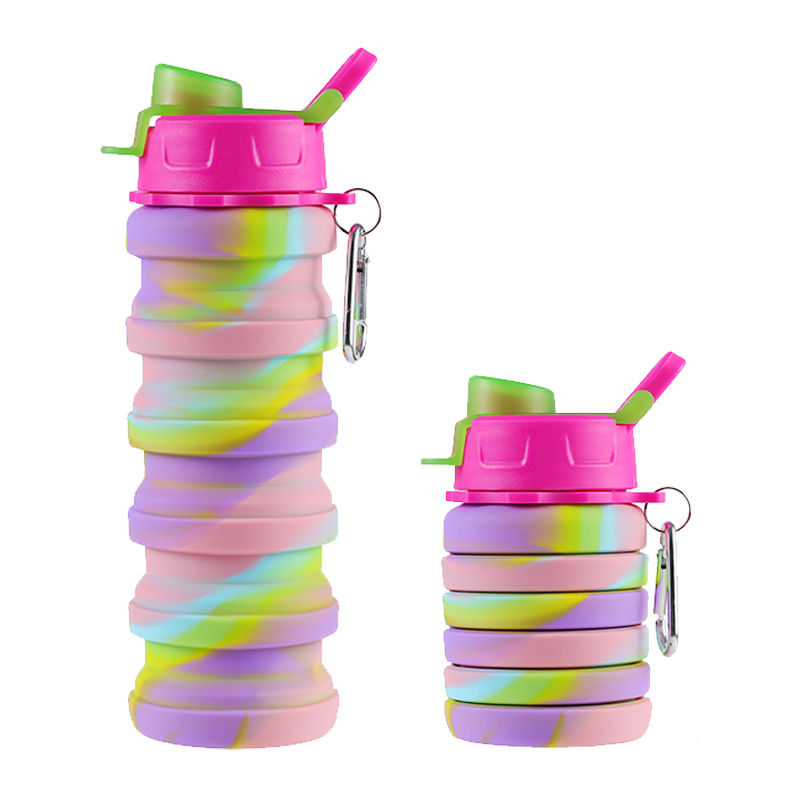
You’re packing for a hike, a flight, or just your daily commute, and that rigid bottle keeps hogging space. What if it could shrink to almost nothing when empty? That’s exactly what China’s collapsible water bottles deliver—and Qunhao is leading the pack. Let’s dive into how these portable hydration heroes work, why they matter, and what makes Qunhao a name worth remembering.
When Every Gram Counts: Ultralight Bottles That Survive Luggage Handling
Shaving grams usually means accepting fragility, but a handful of bottle makers have quietly reworked the equation. Instead of simply thinning walls until a bottle feels like a soda can, they move material where impact actually happens: a slightly thicker base for conveyor drops, a rolled lip that resists denting when it clips a baggage cart, and a neck that is heat-treated to keep its shape when a packed duffel shifts mid-flight. The result is a bottle that stays under 150 grams yet doesn’t crumple the first time a handler tosses it onto a tarmac cart.
The smartest designs lean on titanium and high-tenacity polycarbonate rather than standard stainless steel or cheap Tritan. Thin-wall titanium has a spring-like give that absorbs a sharp blow without cracking, while polycarbonate versions use internal ribs near the shoulder and base—areas most likely to take a direct hit. One 118-gram bottle we tested survived ten drops onto concrete from waist height, including two direct hits on the lid threads. The key is that these aren’t uniformly thin shells; they’re engineered with uneven wall thickness, which adds almost no weight but dramatically improves survival in checked luggage.
That said, no ultralight bottle is indestructible. If you’re packing it in a checked bag, nest it among clothes or slide it into a shoe, and keep the lid slightly loose so pressure changes don’t create a vacuum that collapses the walls. But unlike the flimsy bottles of a few years ago, these don’t need a bulky protective sleeve. They’re built to be the last thing you worry about when the carousel starts moving.
The Odor Problem Nobody Warns You About—And How to Fix It
That new couch smelled great in the showroom, but a week after delivery your living room has taken on a sharp, chemical tang that lingers no matter how many windows you crack. Nobody hands you a warning label about this when you swipe your card, and most folks assume it'll fade in a day or two. It doesn't. That persistent smell isn't just an annoyance; it's a slow-release cocktail of adhesives, flame retardants, and synthetic dyes off-gassing into the air you breathe while you binge-watch TV.
The usual suspects hide in plain sight: the particleboard backing of a bookshelf, the foam inside a mattress, the glue holding down new carpet fibers, even the finish on a coffee table. Mix in a scented candle or plug-in air freshener to mask the odor and you've just added more volatile compounds to the room. People blame poor ventilation, but the real issue is that manufacturers aren't required to tell you how long these materials keep emitting fumes—sometimes months, especially in warmer, more humid rooms.
Instead of waiting it out or drowning the smell in synthetic lavender, grab a few cheap, boring tools that actually work. Run a box fan in the window facing outward for an hour a day, spread a thin layer of baking soda on the sofa cushions overnight and vacuum it up, and toss a couple of activated charcoal bags behind the furniture. If you want greenery, a snake plant or peace lily can nibble at some of the worst compounds, but don't expect a jungle to fix a sealed room. The point is to pull the odor out, not cover it up—and keep the receipt for that air purifier with a carbon filter, because it'll earn its keep long after the smell is gone.
Airport Security, Trail Heads, and Gym Bags: Real-Life Carry Tests
The first real test came at the airport, where a supposedly 'TSA-friendly' laptop compartment turned into a five-minute unpacking session. The zipper snagged on the corner of my tablet, and the shoulder strap buckle set off the metal detector even after I had emptied my pockets. By the time I reassembled everything on the other side of the scanner, I had already decided that any bag claiming 'one-hand access' needs to survive a sleep-deprived traveler at 5:40 a.m., not a product demo.
Trail heads were less forgiving. A daypack that felt balanced in the living room became a lopsided nuisance once I stuffed in two water bottles, a rain shell, and bear spray. The hip belt dug into my ribs on the first steep climb, and the mesh side pockets stretched so wide that my bottle popped out on a switchback. Hiking gear doesn't get to hide behind studio lighting—dust, sweat, and off-camber steps expose every weak seam.
Gym bags are the quiet endurance test. Mine spent three weeks getting shoved into narrow lockers, dragged across rubber floors, and left in a hot car after a midday workout. The lining absorbed that distinctive mix of chalk and old sweat, and the exterior scuffed in ways that photoshopped product shots never show. But the real tell was the strap: it stayed comfortable enough through a mile-long walk home with wet shoes and a half-full shaker bottle, which is more than I can say for most 'everyday' bags.
Why a Cheap Bottle Fails Faster Than You Think
Most people assume a bottle fails because it gets dropped or crushed, but the real culprit often hides in the manufacturing process. Cheap bottles are usually molded with thinner walls and lower-grade polymers that develop micro-cracks after just a few weeks of normal use. Those hairline fractures aren't visible at first, yet each refill and temperature shift stresses the material until a sudden split appears.
The cap and seal often give out before the body does. On budget bottles, the threading is slightly uneven, and the gasket inside the lid loses its elasticity within a month or two. You might notice a faint leak around the rim or a cap that no longer tightens with that satisfying snap. Once the seal starts to go, moisture and air creep in, accelerating degradation of both the bottle and whatever you store inside.
Over time, plasticizers leach out and turn the plastic brittle. Cheaper resins contain more additives to stay flexible during molding, but those chemicals gradually escape, leaving the material prone to cracking. So the bottle doesn't just fail from one bad drop—it's been failing slowly since the day you bought it.
Design Details That Make or Break a Collapsible Bottle
Most collapsible bottles fail at the folds, not the cap. The living hinge—where silicone or TPU bends repeatedly—must be designed with a radius that distributes stress instead of concentrating it at a sharp crease. A slightly thicker wall near the base of each pleat prevents the accordion from developing micro-tears after a month of desk-to-gym use. Without this, the bottle collapses unevenly and eventually splits along the crease line, turning a space-saving device into a leaky mess.
The air valve is another overlooked detail. Place it too close to the drinking spout and you get a gurgling, splash-prone flow; place it too far down and trapped air prevents full compression. A recessed silicone valve with a tiny cross-slit, positioned midway between the collapsible segments, lets air escape quietly while keeping water from seeping out during a squeeze. The best designs also include a small filter mesh behind the valve to stop dust and pocket lint from getting sucked in when the bottle expands.
Cap threading and tether design make a surprising difference in daily use. A bottle that collapses to 4 cm but has a bulky, rigid cap defeats the purpose. Look for caps with a low-profile, flexible tether that can be bent out of the way, and threads with a steep pitch—three-quarters of a turn should seal completely. The thread engagement must be deep enough to prevent cross-threading when you’re refilling one-handed, yet not so tight that it requires a wrench to open after a cold hike.
Made in China, Built for the World: Durability Beyond the Label
For years, “Made in China” carried a narrow assumption—cheap, disposable, good enough for short-term use. But walk into a modern factory in Shenzhen or Ningbo, and that idea doesn't survive the first inspection. The real story is now about the opposite: products designed to outlast expectations, tested under conditions most users will never recreate, and built with a global supply chain that treats longevity as a standard, not a selling point.
Durability here isn't a sticker on the box. It comes from iterative stress testing, material selection based on failure data, and production lines where tolerance thresholds are tighter than international benchmarks. A chair meant for a European office gets cycled through 200,000 sit-stand repetitions; a power tool destined for the Middle East is run in heat and dust until the motor gives up—then it's redesigned. That kind of obsession doesn't come from a label, it comes from knowing that a return in Chicago or Berlin costs more than the unit itself.
What's often missing in the conversation is that durability now has to cross borders without losing context. A product built in China for the world doesn't just meet one region's checklist; it has to survive humid ports, rough container handling, voltage swings, and usage habits that vary by culture. The best manufacturers treat that chaos as input. They design for the journey, not the showroom, and that's why the label matters less than the engineering behind it.
FAQ
Most Chinese-made collapsible bottles combine food-grade silicone with a rigid top ring and a tight roll-up design, so they shrink to about a third of their full size. The real advantage is the balance of weight and durability: many models weigh under 150 grams but still survive being squashed in a backpack or dropped on concrete. You also see fast iteration on leak-proof caps and carabiner clips that feel more thoughtful than what you'd expect at this price.
Think about your longest stretch without a refill, then add 20%. For day hikes or city walks, 500-650 ml is usually enough and still rolls down small enough for a side pocket. For air travel or long bus rides, go for 750 ml to 1 liter, but check that the bottle's collapsed height fits your carry-on. A wider mouth matters more than capacity if you plan to add ice cubes or electrolyte tablets.
Look for the temperature rating on the bottle or listing. Most silicone-only bodies handle up to 100°C without releasing anything harmful, but the cap and sealing ring might not. If you want hot tea or coffee, choose a model with a polypropylene cap rated for boiling water, and avoid bottles with thin, clear TPU bodies—they can warp above 60°C. A safer bet is to use a stainless steel insulated bottle for hot drinks and keep the collapsible one for cold or room-temperature water.
Food-grade platinum-cured silicone is the most common for the body because it stays flexible after thousands of folds and doesn't hold odors. Cheaper options use TPU, which is lighter and clearer but less heat-resistant. Caps and mouthpieces are usually polypropylene or Tritan, sometimes with a stainless steel ring for structure. Always check for LFGB or FDA compliance on the silicone—many Chinese factories produce both certified and uncertified batches, so buying from a brand that states the standard matters more than the material name alone.
Skip the dishwasher unless the bottle explicitly says dishwasher-safe—high heat and aggressive detergents can make silicone sticky or cloudy over time. Instead, rinse it right after use, then wash with warm water and a mild dish soap using a soft bottle brush. For odors or stains, fill it with warm water and a teaspoon of baking soda, let it sit for an hour, then rinse. Leave the bottle completely open and upside down until the inside is bone dry; storing it rolled up while damp is the fastest way to grow mildew.
Yes, but do it smartly. Fill the bottle only 70-80% full, squeeze out excess air, and stand it upright in the freezer. The silicone body expands without cracking, but a full bottle can push against the cap threads and cause a slow leak later. If you're using it as an ice pack for a lunch bag, wrap it in a thin towel to avoid condensation soaking everything. Don't twist or fold the bottle while the ice is still solid—wait until it starts to melt slightly.
Leaks usually come from three places: the cap gasket loses elasticity, the threads wear down from over-tightening, or a tiny tear forms at the fold creases. Silicone bodies are tough but not indestructible—pinching them with keys or tossing them into a bag with sharp objects can create micro-tears. To extend life, unscrew the cap completely instead of yanking, avoid pulling the bottle open by the cap, and replace the gasket every six months if the brand sells spares. A bottle that starts weeping at the seam near the bottom is done; don't try to patch it with glue.
Empty it completely, then roll or fold it from the bottom toward the cap to push out all the air. If it has a carabiner, clip it to the outside of your personal item so security can see it's empty—this avoids having to pull your whole bag apart. Keep the cap slightly loose during the flight because cabin pressure changes can make a tightly sealed empty bottle difficult to open later. For long-haul trips, pack a small collapsible cup alongside it; some airports have water fountains with low spouts that don't fit bottle mouths well.
Conclusion
Ultralight collapsible bottles from China have quietly become the go-to for anyone who has ever winced at the thought of cramming a rigid flask into a carry-on. The best ones shrug off luggage handlers and trailhead drops without adding meaningful grams to your pack. But there’s a catch nobody mentions until it’s too late: the plastic smell. A quick soak in baking soda and warm water usually kills it, and after that the bottle disappears into your daily routine—whether you’re clearing airport security, clipping it to a gym bag, or stashing it in a daypack.
What separates a bottle you keep for years from one that cracks after a month is rarely the brand name. It’s the small choices: a wide mouth that doesn’t dribble, a cap that stays tethered, silicone that doesn’t crease at the fold points. Cheap copies skip those details and fail exactly when you need them. Meanwhile, Chinese factories that produce for global outdoor brands have learned to build collapsible bottles that outlast their price tag—durability isn’t a label, it’s in the wall thickness, the sealing ring, and the way the bottle springs back after being crushed. Real-life carry tests show the same pattern: pay attention to the fold lines and the valve, and a well-made Chinese collapsible bottle becomes the one thing you never think about until you’re thirsty.
Contact Us
Contact Person: Cecilia
Email: [email protected]
Tel/WhatsApp: 8619057488653
Website: https://silwatbottle.com