

China Heat Resistant Conveyor Belt Vendor for Durable High-Temperature Solutions
2026-08-20
High-temperature material handling is unforgiving—one weak belt can halt an entire line, and replacement costs spiral fast. If you're sourcing a China heat resistant conveyor belt vendor for durable high-temperature solutions, you need more than a generic product. XAN has built a reputation on belts that withstand sustained heat without sacrificing flexibility or strength. Here's what to look for before you commit.
Heat-Resistant Belts That Don't Crack at 300°C
When equipment runs hot, most rubber belts start to show micro-tears long before they fail outright. These belts are built differently. The compound holds up under continuous exposure to 300°C, so you won’t see the surface crazing or edge splits that typically force early replacements. In ovens, dryers, or heat-treating lines, that translates to fewer stoppages and less guesswork about when a belt might give out.
The real test is thermal cycling. A lot of materials can take a short spike, but repeated heating and cooling is what breaks them down. This design absorbs that stress without turning brittle. Even after hundreds of cycles between ambient and 300°C, the belt stays flexible enough to track properly on pulleys and resist cracking at the flex points. That’s the difference between a belt that survives a demo and one that works in daily production.
Maintenance teams often notice the change within the first month. Instead of scheduling belt swaps around heat damage, they can extend intervals and focus on other tasks. The surface stays smooth and intact, so product contact remains clean, and there’s no flaking or debris from degraded rubber. For any line where 300°C is a normal operating condition, these belts remove one of the most persistent failure points.
What China's Leading Conveyor Belt Vendors Won't Tell You About Thermal Aging
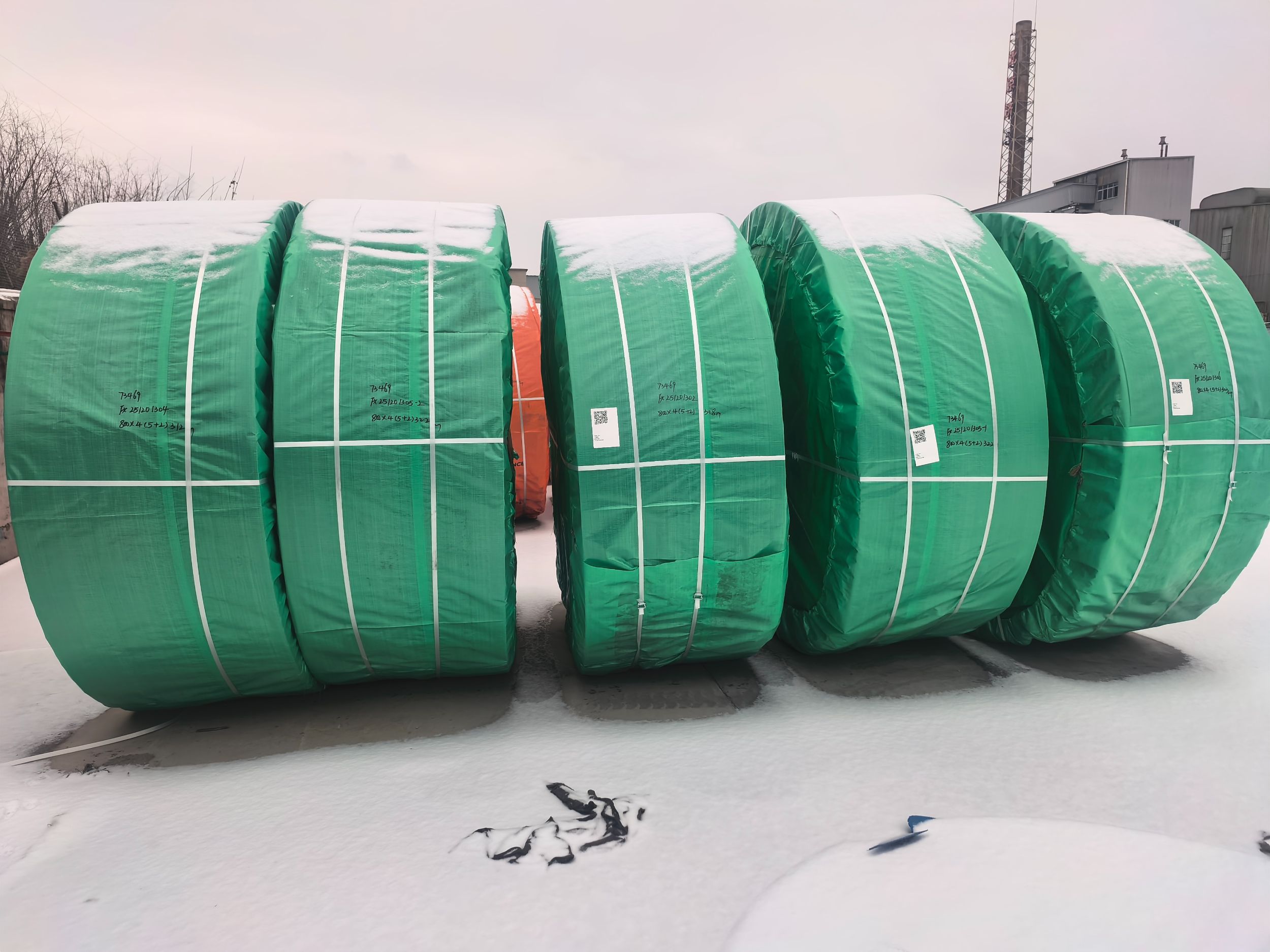
Most procurement teams assume a conveyor belt's heat resistance rating tells the whole story. That assumption quietly costs operations millions in premature replacements and unplanned downtime. Thermal aging isn't a single event—it's a slow, uneven chemical attack that degrades the rubber compound long before visible cracking appears. Vendors rarely volunteer how quickly tensile strength drops once a belt operates near its upper temperature limit for extended periods. The difference between a belt rated for 150°C and one actually holding up at that temperature often comes down to antioxidant packages and filler choices that few suppliers disclose.
Ask for aging test data, and you'll likely get a lab report showing minimal change after 7 days. Real-world conveyor lines run for months, cycling through temperature spikes, load variations, and exposure to oils or chemicals that accelerate oxidation. Chinese manufacturers have become masters at optimizing for short-term heat resistance while trimming the additives that preserve elasticity over years of service. The result is a belt that passes incoming inspection but loses 40% of its elongation at break after six months. By the time maintenance crews notice surface hardening, internal crosslinking has already compromised splice integrity and troughability.
The hidden variable is not the maximum temperature rating printed on the spec sheet—it's the activation energy of the degradation reaction. Belts with identical heat resistance labels can age at wildly different rates depending on the sulfur curing system, carbon black dispersion, and whether the compound uses EPDM or a cheaper SBR blend with heat-resistant additives. Savvy buyers now request accelerated aging tests at multiple temperatures and extrapolate using Arrhenius plots. Without that level of scrutiny, you're essentially gambling that the vendor's cost-cutting measures won't show up until after the warranty expires.
Custom High-Temperature Belts for Cement, Steel, and Foundry Operations
Standard high-temperature belts give out quickly when they meet clinker, sinter, or freshly poured castings, because heat alone isn't the only problem. Abrasion, impact loading, and thermal cycling work together to tear edges and delaminate covers. The first step in a custom build is picking the right base: fiberglass for sustained radiant heat, Kevlar or aramid for cut resistance, and stainless steel mesh when both temperature and mechanical abuse are extreme. After that, coatings are matched to the process—PTFE for release, silicone for flexibility at moderate heat, or vermiculite for direct flame exposure. No single material works everywhere, so each belt is specified by peak surface temperature, load type, and dwell time on the hot zone.
Cement plants moving raw clinker at 400-600°F need a belt that won't track off or fray at the edges. A fiberglass carcass with a PTFE coating and reinforced sealed edges handles that dust and fine grit without unraveling. Steel mills are different: hot scale and occasional slag splash punish belts with sharp gouges. There, a stainless steel mesh belt with high-tensile edge loops and spot-welded cleats survives thermal cycling well past 1000°F while resisting cutting. Foundry operations add another layer, because sand sticks and oil from cores penetrates. A treated aramid carcass with a graphite-loaded silicone surface keeps sand from bonding, allows clean release, and still sheds enough radiant heat to protect the belt structure.
Customizing the belt goes beyond just choosing heat-resistant materials. We map the full conveyor path, identify where hot material drops and where the belt wraps small pulleys, then adjust weave density, cleat height, and tracking guides around those stress points. Splice design gets extra attention because most high-temperature failures start at the joint. Reinforcing the splice zone with compatible, heat-stable fibers and using mechanical fasteners only where necessary reduces early failure. The result is fewer emergency replacements, less spillage of hot material, and a safer work environment around the conveyor line.
Why EPDM and Silicone Belts Outlast Standard Rubber in Hot Environments
Standard rubber compounds rely on unsaturated polymer backbones that begin breaking down once temperatures climb past 150°F. The double bonds in natural or SBR rubber react with heat and oxygen, causing chains to scission and cross-link uncontrollably—this shows up as surface cracking, hardening, and a sudden loss of tensile strength. In continuous hot environments, these belts often fail within weeks, not because of wear but because the material itself degrades.
EPDM takes a different path: its saturated backbone has no vulnerable double bonds for oxygen or ozone to attack. That single structural difference means EPDM can handle sustained temperatures up to 300°F without significant chain scission. Heat exposure causes minimal property drift—the belt may soften slightly but retains elasticity and tear resistance far longer than any standard rubber. Silicone goes even further, with siloxane bonds that require substantially more thermal energy to break. Silicone belts stay flexible and functional at continuous temperatures exceeding 400°F, and they don't harden or crack the way organic rubbers do after repeated thermal cycling.
The practical consequence is clear in demanding applications: ovens, engine compartments, and conveyor systems near heat sources. A standard rubber belt in those settings embrittles and snaps within a season, while EPDM or silicone belts keep running for years. That's not marketing hype—it's the difference between a polymer designed for thermal stability and one that simply wasn't built to survive hot air, radiant heat, or aggressive thermal oxidation.
The 400°C Conveyor Belt Test: How We Verify Durability Before Shipping
We don't trust a belt until it's been roasted. Every batch gets pulled at random and run through a conveyor oven set to a steady 400°C for 72 hours straight. The belt keeps moving the entire time, carrying a dummy load that mimics real production weight. Any belt that survives without warping, cracking, or losing tension makes it to the next round of checks.
After the heat soak, we cool the belt down and stretch it on a jig that measures how much it deformed. We cut small samples from the edges and middle, then pull them apart on a tensile tester. The numbers have to match our original spec within two percent, or the whole lot gets rejected. This isn't about lab-perfect conditions—it's about knowing a belt won't snap or wander after a month in a furnace.
Only belts that pass both the live run and the post-heat tensile test get stamped and packed. We've had plenty of designs that looked great on paper and failed this test—usually at the splice points or the drive teeth. Catching those weak spots before a customer bolts the belt into a production line is the whole point of the 400°C test. If it can't take the heat here, it doesn't ship.
From Raw Material to Finished Belt: Inside a Heat-Resistant Production Line
The line starts with a strict intake protocol for heat-resistant compounds. EPDM rubber arrives as bale stock, while aramid or polyester fabric is unrolled and inspected for weave density. Carbon black and peroxide curing agents are weighed in sealed hoppers, because even minor contamination can drop the belt's upper service limit from 180°C to below 150°C.
Mixing happens in an intermeshing internal mixer where the EPDM is masticated with fillers and anti-oxidants for a set energy curve, not just a fixed time. The batch then goes through a two-roll mill to form a uniform sheet, which is calendered onto the fabric carcass. Multiple plies are built up on a drum, with skim coats between layers to stop delamination under thermal cycling.
Curing takes place in a continuous Rotocure or a large autoclave, depending on belt width. Temperature and pressure ramps are profiled to avoid scorching the outer cover while the core reaches full crosslink density. After cooling, the belt is slit to width, edging is sealed, and samples are pulled for heat aging, adhesion, and tensile tests at 150°C and 200°C. Only belts that hold at least 80% of original tensile strength after 168 hours of aging are passed for dispatch.
FAQ
We typically produce belts rated for continuous exposure up to 200°C, with short-term spikes up to 250°C. For special applications like cement clinker or sintered ore, we can add a glass fiber carcass or use EPDM rubber to push the limit closer to 400°C.
Steel mills, cement plants, foundries, and power stations are the main users. They move hot clinker, coke, sinter, and ash where ordinary belts would crack or delaminate within weeks.
We use heat-resistant skim compounds and choose carcass materials like polyester-nylon or steel cord depending on the load. For extreme heat, we add a layer of glass fiber or use a special rubber formulation that slows down thermal aging.
Yes, most orders are built to spec. We can make belts from 400mm to 2400mm wide and any length up to 200 meters per roll. Edge types, cover thickness, and belt strength can all be adjusted.
It depends on the temperature and material being carried. In a cement plant running at 150°C, a belt usually lasts 8 to 14 months. If you are handling sharp, heavy clinker at 200°C, expect 6 to 10 months. We can give a more accurate estimate once we know your operating conditions.
We offer a full installation manual and can arrange video calls with our engineers. If the order is large enough, we can send a technician to your site for startup and training. We also keep spare belts in stock for fast reorders.
Every batch goes through a heat aging test, tensile strength check, and adhesion test. We also do a visual inspection for surface defects. For first-time customers, we can provide a sample piece for your own lab testing before mass production.
Conclusion
China’s heat resistant conveyor belt vendors have moved past the idea that a thicker rubber cover is enough for high temperatures. The belts that survive at 300°C without cracking rely on EPDM and silicone compounds that keep their elasticity when standard rubber turns brittle. For cement plants, steel mills, and foundries, that difference shows up in fewer unexpected shutdowns and less spillage along the line. Custom work is not a special request; it is part of the normal order because every furnace discharge or clinker conveyor has its own width, thickness, and edge-sealing requirements.
Behind the catalog specs, a dependable vendor runs every batch through a 400°C cyclic test, watching for surface cracking, delamination, and loss of tensile strength before the belt leaves the factory. Thermal aging is rarely discussed openly, but the real issue is not just the rubber formula—it is how well the raw polymer is mixed, calendered, and cured. A poorly dispersed batch will develop hard spots that fail long before the rated temperature. From raw material to finished belt, the production line should include traceability and repeated inspection, so the final product resists edge wear and hardening far longer than standard rubber in the same hot environment.
Contact Us
Contact Person: Anna Lu
Email: [email protected]
Tel/WhatsApp: 8618561668850
Website: https://www.x-conveyor.com