

China Lauryl Alcohol Ethoxylate: A Deep Dive into Applications and Supply Chain
2026-08-17
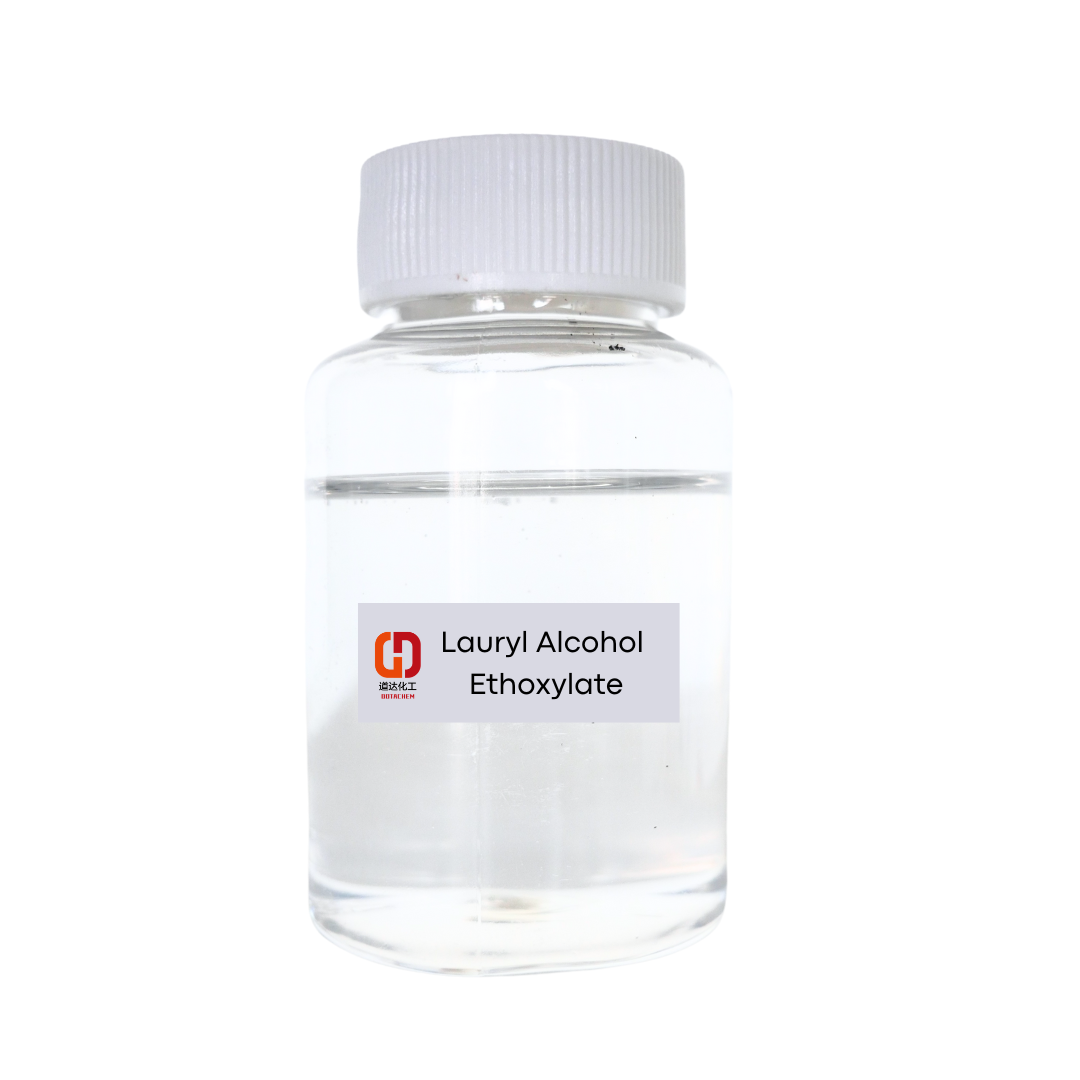
Everyone talks about China’s massive lauryl alcohol ethoxylate capacity, but few dig into the specific applications where that capacity gets absorbed—or the supply chain checks that keep prices stable. Whether it’s high-foaming detergents, textile processing, or hard-surface cleaners, the molecule’s versatility hides a procurement puzzle. At POLYKEM, we see the pressure points firsthand: ethylene oxide logistics, fatty alcohol quality swings, and regional demand shifts that rarely make headlines. This deep dive doesn’t just list uses; it maps the real forces shaping China’s LAE supply chain—and what they mean for your next order.
Where Lauryl Alcohol Ethoxylate Actually Ends Up in China
Lauryl alcohol ethoxylate rarely sits idle once it leaves the reactor. In China, a large share flows directly into liquid laundry detergents and dishwashing liquids, where its role is quietly functional—lowering surface tension so greasy residues lift off fabric and ceramic without excessive foaming. Household brands blend it with anionic surfactants to hit the right viscosity and cloud point, but the compound also appears in less obvious places like textile pre-treatment baths and industrial degreasers used in metalworking shops across Jiangsu and Guangdong.
Agricultural formulations absorb another meaningful portion. Pesticide and herbicide producers rely on this nonionic surfactant as a wetting agent and emulsifier, ensuring active ingredients spread evenly across leaf surfaces instead of beading up and running off. The same property makes it useful in leather processing, where it helps fatliquors penetrate hides, and in emulsion polymerization for certain acrylic and vinyl acetate-based coatings. What surprises many is its presence in institutional cleaners for food processing plants—places where rinsability matters more than foam volume.
A smaller but steady stream ends up in personal care items like hair conditioners and mild facial cleansers, though formulators often switch to narrower-range ethoxylates for lower skin irritation. The remainder trickles into paper de-inking, oilfield demulsifiers, and even concrete admixtures that improve workability. Tracking exact tonnage is tricky because much of the supply moves through distributors rather than direct contracts, but the pattern is clear: once produced, lauryl alcohol ethoxylate disappears into dozens of industrial niches that rarely show up on consumer labels.
Mapping the Real Production Hubs Beyond the Coastline
For decades, the default mental map of global manufacturing has clung to port cities and coastal industrial belts, as if proximity to ocean freight were the only logic that mattered. Yet the most consequential shifts in production are now unfolding hundreds of kilometers inland, where land costs, labor pools, and freight rail networks have quietly redrawn the geography of making things. Chengdu and Chongqing in western China, for instance, have evolved from provincial backwaters into sprawling electronics and automotive hubs, their assembly lines fed by dedicated rail links to Europe that bypass congested seaports entirely. These cities aren’t exceptions—they’re early signals of a broader pattern in which the “hinterland” stops being a synonym for “peripheral” and starts functioning as the operational core.
Look beyond the usual suspects and you’ll find similar dynamics in places like Slovakia’s Žilina region, where a dense cluster of automotive suppliers operates hours from any coastline, or in Mexico’s Bajío, a high-desert corridor that has attracted aerospace and appliance manufacturing precisely because its inland location offers lower turnover and cheaper utilities than border zones. The infrastructure that makes this possible is rarely glamorous—intermodal yards, inland customs depots, upgraded two-lane highways—but its cumulative effect is to decouple production decisions from maritime geography. Companies are learning that a factory in an inland logistics park can often reach end customers faster than one wedged into a congested port city, simply because the inland site avoids the bottleneck of drayage and terminal queues.
What’s striking about these inland hubs is that they don’t merely replicate coastal models on cheaper land; they develop their own operational logic. In places like Vietnam’s Bac Ninh province or India’s Pune district, production clusters have grown around technical universities and supplier ecosystems rather than port access, creating feedback loops where skilled labor and specialized services become the real “coastline”—the edge that determines where value concentrates. The map of real production hubs, then, is no longer a ribbon hugging the shore but a patchwork of interior nodes, each wired into global flows through rail, air, and data rather than container ships alone. Ignoring that shift means planning for yesterday’s geography while tomorrow’s factories rise far from any tide.
Why Detergent Formulators Keep Relying on LAE
Detergent formulators keep returning to LAE because it delivers dependable antimicrobial performance without disrupting the overall cleaning system. Unlike some preservatives that lose potency in the presence of surfactants or extreme pH, LAE remains stable across a wide range of formulations, from concentrated liquids to powder blends. This reliability means fewer reformulation headaches and consistent product quality batch after batch.
Another reason LAE stays in the formulator's toolkit is its compatibility with modern green chemistry goals. It provides strong protection against bacteria and fungi at low use levels, which helps reduce the total chemical load in a finished product. Formulators can meet stringent preservation standards while still marketing a cleaner, more responsible ingredient profile—an advantage that matters in today's competitive retail environment.
Finally, LAE's long history of safe use in personal care and household products gives formulators confidence when navigating regulatory requirements. Instead of constantly testing new, unproven alternatives, they can rely on a well-documented active that already has broad acceptance in key markets. That track record translates into faster development timelines and fewer surprises during stability or safety testing.
Textile Auxiliaries: The Hidden Volume Driver
Walk through any dyehouse and you'll see the main event—fiber, dye, water. But the real work often happens in unmarked drums and IBC totes: wetting agents, defoamers, leveling agents, sequestrants. These textile auxiliaries rarely make the spec sheet headline, yet they quietly dictate whether a batch runs clean or turns into a rework nightmare. Every meter of fabric that leaves a mill depends on a precise cocktail of these chemicals, often dosed at just a few grams per liter. That tiny addition rate hides a massive cumulative demand.
What most outsiders miss is how auxiliaries multiply volume across the supply chain. A single pretreatment scour can require a surfactant, a chelator, an emulsifier, and a stabilizer—each from a different supplier, each shipped in bulk. Then dyeing adds its own stack: dispersants for polyester, anti-creasing agents for knits, pH buffers for reactive dyes. Finishing piles on softeners, crosslinkers, and soil-release polymers. None of these are the star ingredient, but together they can easily outweigh the dyestuff itself in total chemical consumption per ton of textile.
The hidden driver effect becomes even clearer in fast fashion cycles. Short lead times push mills to run more batches, smaller lots, and frequent shade changes. Every clean-out and re-set demands a fresh dose of auxiliaries—machine cleaners, reduction clears, anti-pilling agents. The fabric itself may be cheap cotton or polyester, but the chemical throughput behind it keeps climbing. So while the market chases new fiber blends or bio-based dyes, the steady, unglamorous demand for auxiliaries keeps expanding under the radar, shaping procurement budgets and logistics loads far more than most industry reports admit.
Agrochemical Blends and the Push for Narrow-Range Grades
The rise of multi-active agrochemical blends has pushed formulators to demand much tighter control over particle size distribution and purity profiles. When two or three active ingredients are combined with surfactants, solvents, and stabilizers, even minor variations in particle size can trigger aggregation, settling, or uneven spray patterns in the field. Narrow-range grades—whether for wettable powders, suspension concentrates, or water-dispersible granules—reduce these risks by keeping the entire batch within a predictable physical envelope. This matters because growers now routinely mix products at the tank, and a blend that behaves inconsistently from one jug to the next can lead to blocked nozzles or underdosed strips.
Beyond particle size, the push for narrow-range grades also covers chemical purity and isomer ratios. A generic active ingredient lot with a wider impurity window may still pass older specifications but can interact differently with co-formulants in a complex blend. Formulators increasingly set internal limits that are tighter than regulatory minimums, simply because the cost of a failed batch or a field complaint outweighs the price premium for higher-grade inputs. Suppliers who can deliver consistent narrow-range material gain a quiet advantage in long-term supply agreements, especially for high-value fruit and vegetable crops where phytotoxicity risks are amplified.
The drift toward narrow-range grades is also being accelerated by new application technologies. Low-volume spraying, drone-based delivery, and variable-rate systems depend on highly uniform droplet formation and quick, complete dispersion. A blend with a slightly broader particle distribution may work fine in a traditional boom sprayer but cause clogging or drift in a precision system running at lower flow rates. For formulators, specifying a narrow-range grade is less about chasing an abstract ideal and more about ensuring that every liter of mixture performs the same way across a widening range of equipment and field conditions.
Supply Chain Friction: Logistics, Stockpiling, and Regional Imbalances
Logistics friction rarely stems from a single breakdown. It accumulates across handoffs — a container stuck at a congested terminal, a chassis shortage at an inland rail yard, a driver waiting six hours to pick up a load. During the pandemic, these delays compounded into weeks-long shipment times and spot rates that tripled or quadrupled on major lanes. The result wasn't just higher freight bills; it was a loss of predictability. Planners could no longer rely on transit-time buffers, so production schedules slipped and stockouts became common even for basic components.
Faced with unreliable lead times, many firms abandoned lean inventory targets. They moved from just-in-time to just-in-case, ordering earlier and holding more safety stock than they had in decades. This stockpiling, while rational at the individual level, created a classic bullwhip effect: small changes in consumer demand translated into much larger swings in upstream orders. Warehouses filled with goods that arrived too late for peak selling seasons, tying up working capital and pushing storage costs to record highs. Yet the alternative — risking a line-down situation or empty shelves — was often considered worse.
The friction also redistributed activity unevenly across regions. Coastal gateways like Los Angeles and Rotterdam faced sustained backlogs, while inland markets saw warehouse vacancies drop below 2% in some corridors. As importers shifted volume to alternate ports, new chokepoints emerged in places without enough trucking capacity or rail connections. At the same time, nearshoring moves began rerouting flows toward Mexico, Eastern Europe, and Southeast Asia, but those regions lacked mature logistics infrastructure. The result is a patchwork of bottlenecks that moves faster than many supply chains can adapt, reinforcing the need for more flexible, regionalized distribution networks.
FAQ
Household and industrial detergents absorb the largest share, especially liquid laundry formulations where the C12-C14 ethoxylate gives strong wetting and low-foam rinsing. Personal care rinses, textile pre-treatment auxiliaries, and hard-surface cleaners follow closely, with agrochemical emulsifiers a smaller but growing niche.
Producers often lock in ethylene oxide via proximity to integrated refineries and negotiate long-term contracts for fatty alcohols from Southeast Asian oleochemical plants. Some also switch between natural fatty alcohol and synthetic alcohol routes depending on price spreads, which buffers margin compression during crude oil or palm kernel oil spikes.
The combination of consistent large-batch output, flexible order sizes, and lower energy and labor costs often offsets freight and lead times. Many Chinese plants also run dedicated export grades with tight cloud point and PEG distribution specs, which reduces reformulation work for overseas customers.
Ethoxylation units cluster near coastal ethylene oxide suppliers in Shandong, Jiangsu, and Zhejiang. Colocation with EO pipelines or nearby rail terminals avoids costly pressurized storage and allows continuous dosing, which keeps reactor utilization high and lowers per-ton conversion costs for lauryl alcohol ethoxylate.
Older sulfated and solvent-heavy co-product streams are being phased out, pushing plants toward closed-loop EO recovery and catalytic removal of dioxane. Smaller operators without wastewater recycling or VOC control systems have exited, consolidating capacity among larger producers who can afford upgrades and third-party audits.
Cosmetic and personal care formulations are growing quickly, particularly micellar waters, mild facial cleansers, and sulfate-free shampoos. The institutional cleaning segment is also rising as hotels, food processing plants, and healthcare facilities shift to low-residue nonionic systems built around C12-C14 ethoxylates.
A widening gap separates large continuous ethoxylation lines with advanced distributed control systems from smaller batch reactors. The bigger players offer narrower homolog distribution, lower free EO residuals, and better color stability, which matters for premium personal care and export-focused detergent brands.
Demand is shifting toward RSPO-certified palm kernel oil derivatives and alcohol ethoxylates with higher renewable carbon content. Some formulators are also requesting lower 1,4-dioxane limits and biodegradable claim support, prompting producers to refine catalyst systems and post-treatment steps rather than relying on conventional neutralization alone.
Conclusion
Lauryl alcohol ethoxylate in China rarely ends up where casual observers expect. While household detergents remain a familiar outlet, a large share of volume flows into industrial and institutional cleaning, leather processing, and emulsion polymerization. Detergent formulators keep returning to LAE because it balances hard-surface degreasing with manageable foam profiles without forcing them into costly reformulations when ethylene oxide prices shift. Textile auxiliaries are the quiet volume driver: scouring agents, leveling agents, and emulsifiers in dyeing and finishing consume enormous quantities, and their performance demands push suppliers toward tighter homolog distributions than commodity grades usually provide. Agrochemical blenders are now asking for narrow-range LAE to stabilize emulsifiable concentrates and reduce phytotoxicity risks, which has forced ethoxylation plants to invest in more precise reactor control.
Supply chains tell a more complicated story. Production capacity has spread well beyond the traditional Jiangsu–Zhejiang coastline into interior provinces, where new ethoxylation units sit closer to textile and agrochemical customers but farther from ethylene oxide feedstock terminals. That mismatch creates persistent logistics friction: liquid LAE is bulky, temperature-sensitive, and costly to move over long distances, so regional imbalances emerge quickly. Stockpiling becomes a defensive habit—formulators hold extra inventory ahead of ethylene oxide maintenance turnarounds or downstream holiday shutdowns, yet overstocking ties up working capital. The push for narrow-range grades adds another layer of complexity, since dedicated reactors and longer batch cycles limit flexibility. In practice, Chinese LAE supply is less a single national market than a patchwork of regional loops, each balancing local feedstock access, downstream demand, and the cost of moving ethoxylates across provincial lines.
Contact Us
Contact Person: Levi
Email: [email protected]
Tel/WhatsApp: +86 532 84688720
Website: https://www.polykem-intl.com