

China Oil-Injected Compressor: What Industrial Buyers Need to Know
2026-10-09
China is now a major source of oil-injected compressors, but for industrial buyers the real challenge isn't finding a unit—it's knowing which one won't quietly drain your maintenance budget. Air-end durability, oil separation efficiency, and service support vary far more than spec sheets suggest. Seize Air has seen these differences up close, and this guide covers the practical checks that should come before any purchase decision.
China's Oil-Injected Compressor Factories: Spotting the Engineers from the Assemblers
Walk into many compressor plants in China and the first thing you see is a row of identical bare screw airends from the same supplier, a pile of standard gas tanks, and workers bolting them together. That's not necessarily a bad product, but it's assembly, not engineering. The difference shows up when you ask about rotor tip clearance or the reasoning behind the oil injection rate. A factory with real engineering depth can tell you how they measure the rotor profile on a coordinate measuring machine and why they chose a specific discharge port shape to reduce turbulence.
Pay attention to the test bench. Many assemblers only run a brief no-load spin to check for leaks. Engineers run the machine under full pressure and log air flow, power draw, oil carryover, and vibration at multiple points. They also tend to keep the rotor assembly area temperature-controlled because thermal expansion of a few microns changes the clearance. If you see workers using feeler gauges to set end gap instead of relying on precision machining and controlled assembly, you're looking at an assembler.
The clearest signal is how the factory handles a change request. Ask them to quote a unit with a different working pressure or a non-standard voltage. An assembler will call the airend supplier and wait. An engineering team will pull up their own performance curves, recalculate oil cooling capacity, adjust the motor service factor, and maybe modify the separator element size. They can also explain failure modes from the field—like why excessive oil injection leads to higher discharge temperature or why the return line diameter matters for oil carryover under part load.
Beyond the Spec Plate: What Experienced Buyers Actually Check
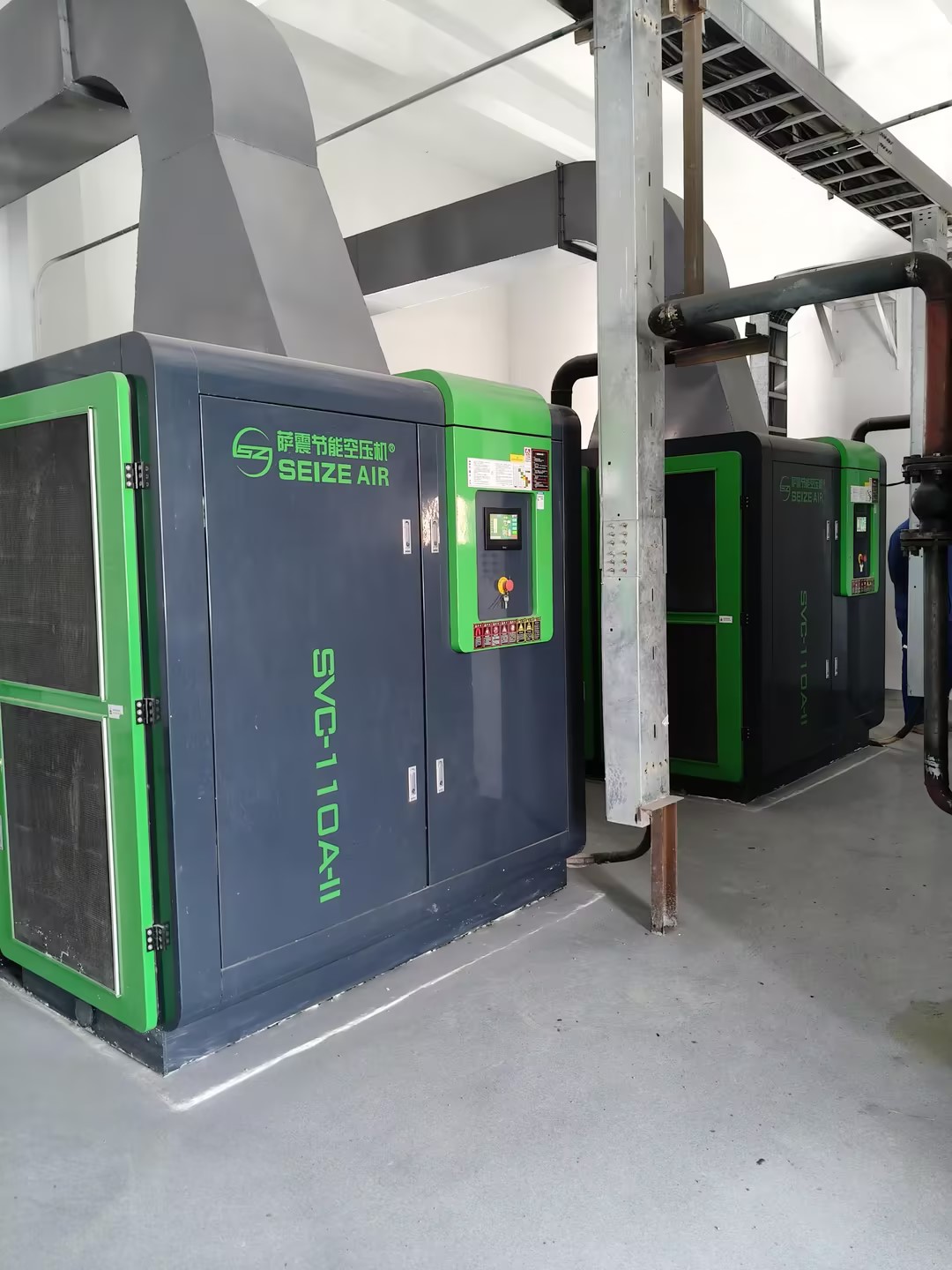
Most spec sheets read like a wish list, but seasoned buyers have learned to look past the headline numbers. They’ll flex a frame by hand, run fingers along weld beads, and listen for rattles that never show up in a brochure. It’s less about claimed torque or payload and more about how a machine behaves under load, whether the controls fall naturally to hand, and if the access panels were designed by someone who actually services equipment.
There’s also the quiet checklist: spare parts availability, how the manufacturer handles firmware updates, and whether third-party attachments fit without modification. A number on paper won’t tell you that a hydraulic hose rubs against a sharp bracket after 500 hours, or that the battery tray is a nightmare to remove. Experienced buyers poke, prod, and sometimes ask to see a unit with real hours on it—because wear patterns reveal more than any marketing sheet ever will.
Finally, they think about the long game. Resale value, dealer support within a day’s drive, and the cost of common consumables often weigh heavier than a marginal gain in efficiency. If a component fails, it’s not the spec that gets you back to work—it’s how fast you can get the part and how clearly the manual explains the fix.
The Real Price of a Cheap Oil-Injected Compressor from China
The sticker price is only the down payment. Once a cheap oil-injected compressor from China is wired in and running, the oil gets dirty faster than the manual suggests, the separator clogs sooner, and the air-end runs hot enough to make you nervous about a rebuild before the first year is out. You save a few hundred dollars on the purchase, then spend it back in filters, oil, and the odd gasket that starts sweating after two weeks.
Downtime is the part nobody quotes in the brochure. When a pressure switch fails or the control board throws an error that isn't in the badly translated manual, you're not waiting on a local parts counter—you're waiting on a freight forwarder. Two or three days without air can idle a whole shift. Then there's the quiet waste: these machines often pull more amps per cubic foot than a well-built rotary screw, so the energy bill creeps up while the compressor itself sounds busy but delivers less.
The smaller failures add up in a way that feels like normal maintenance but isn't. A weeping hose here, a sticking drain valve there, a safety valve that pops too early. Each one is a clue the machine was built to a price, not a service interval. After a few years, the real cost of keeping it alive can overtake what a more expensive, properly supported unit would have cost from day one.
Six-Month Failures and Warranty Gaps Most Buyers Discover Too Late
By month six, the honeymoon ends in ways no spec sheet warns about. Rubber seals on dishwashers start weeping, battery health drops below the number you were promised, and the zipper on a high-end backpack snags exactly where the warranty fine print excludes “normal wear and tear.” These failures rarely announce themselves. They show up as a faint click in a hinge, a three-second lag on a screen, or a faint musty smell from a washing machine that never dries fully between cycles.
The real sting is timing. Most standard warranties run ninety days or one year, but the expensive components — compressors, motor mounts, display panels — are often covered only for six months under separate, shorter provisions that nobody reads until a repair quote lands. Buyers assume “parts and labor” means the whole product. In practice, labor charges, shipping costs, and “diagnostic fees” get carved out, leaving you to pay more than the part itself would cost on the open market.
What separates careful buyers from regretful ones is a habit of reading the exclusions backward: start with what is not covered, then work up to the headline promise. If the warranty mentions “sealed components” or “normal deterioration,” treat that as a countdown clock, not a safety net. Six months in, you may find that the cheapest fix is not the warranty at all — it is buying a part from a third-party supplier and replacing it yourself on a Saturday afternoon.
Direct Deals vs. Trading Companies: What Changes in Your Order
When you place an order directly with a factory, every detail lands squarely on your lap. You handle the technical drawings, material selections, production timelines, and quality checks yourself. There’s no middleman to filter miscommunications or soften sudden price shifts. A factory’s quote might look lean at first, but once you factor in the time spent chasing updates, verifying certifications, and managing export paperwork, the true cost of a direct deal often balloons beyond that initial number.
On the other hand, a trading company steps in as your on-the-ground coordinator. They absorb the messy parts—vendor vetting, sample consolidation, last-minute schedule crunches—and typically offer flexible order quantities that many factories won’t entertain for small or mixed product lines. You lose some margin transparency, yes, but you gain a single point of accountability. If a batch of circuit boards fails inspection, the trading partner reworks or replaces it without you needing to argue across language barriers.
What actually changes in your order depends on your tolerance for volatility. Direct deals suit buyers who have deep manufacturing experience, stable demand, and the bandwidth to micromanage production. Trading companies make more sense when your catalog shifts frequently, order volumes swing, or you prefer someone else to own the logistics headaches. Either path alters how much control you hold, how fast problems get solved, and whether your final invoice reflects the raw unit price or the fully loaded cost of getting goods to your warehouse.
Building a Maintenance Pipeline with a Chinese Supplier Before You Sign
Most buyers wait until a machine breaks before asking how to get it fixed. That is a costly mistake. Before you sign a contract with a Chinese supplier, you should force a conversation about maintenance that goes beyond a one-page warranty clause. Ask for a written breakdown of spare parts inventory, typical lead times for critical components, and the exact process for escalating a fault. If the supplier cannot explain this clearly before payment, they will not magically become responsive after the invoice clears.
A practical way to test the pipeline is to request a remote diagnostic walkthrough during the negotiation. Have the supplier use a video call to show you how they would troubleshoot a common issue on a similar machine. Also ask for an example of a maintenance log or checklist they provide to existing clients. This reveals whether their after-sales team exists as a separate department or is just a sales manager with a screwdriver. You can also agree on a communication channel such as WeChat, Slack, or email with a defined response window, and include that SLA in the purchase agreement.
Do not rely on the supplier's promises alone. Ask for a tabletop maintenance drill: give them a hypothetical failure scenario and see how quickly they propose a fix, including the exact part number and shipping method. Tie a small portion of the final payment to the completion of initial training and the delivery of a full maintenance manual, videos, and a spare parts price list. This turns the often-ignored after-sales section into a measurable obligation, and it filters out suppliers who only care about moving boxes.
FAQ
Look beyond the price tag. A dependable factory typically controls core assembly and testing in-house rather than acting as a trading company. Ask for a live video tour of the production floor, the brand of airend they use (imported units from GHH, Hanbell, or similar are common), and names of existing customers in your region who run similar duty cycles. If they hesitate to share any of this, treat that as a warning sign.
Insist on a third-party performance test before shipment, following ISO 1217 or equivalent. You can hire an inspection agency like SGS or Bureau Veritas to witness the test at the factory. Focus on specific power (kW per cubic meter per minute) rather than just motor horsepower, and check that the motor is a recognized brand with a service factor that matches your worst-case ambient conditions.
Yes, many units are built for 24/7 operation, but you must specify that demand clearly. The key is the configuration: a heavy-duty airend, properly sized cooler, quality bearings, and an oil separator that keeps carryover below 3 ppm. Don't assume every standard model is rated for continuous duty. Ask about bearing brands, maximum ambient temperature, and whether the drive train is direct or belt-driven for your load profile.
Plan for freight, import duties, and local electrical certification if your market requires it. Voltage and frequency differences may force you to add a transformer or accept derating. Initial fill of compressor oil, first set of filters, and spare parts kits are often sold separately. Also confirm whether the price includes commissioning, startup support, and manuals in English. Remote troubleshooting and travel for factory technicians can add thousands if not clarified in advance.
For pressure vessels, ASME or CE marking according to your destination market is non-negotiable. The factory should hold ISO 9001 at a minimum. Motor efficiency matters: look for IE3 or IE4 to keep operating costs down. If you need oil-free air quality, note that oil-injected machines always leave trace oil in the compressed air unless you add downstream filtration to reach ISO 8573-1 Class 0 or Class 1.
Avoid full upfront payment. A common structure is 30% deposit, with the balance released only after a successful pre-shipment inspection you approve. A letter of credit adds another layer of protection. For warranty, request at least 12 to 18 months from commissioning, not from shipment date. Spell out response time for replacement parts, whether remote diagnostics are included, and which components are excluded as wear items.
The biggest error is buying by price per horsepower instead of specific power or total air delivery. Many also ignore the real pressure band of their process, leading to constant loading and unloading that shortens compressor life. Altitude and high intake temperatures reduce output, so a unit sized at sea level may underperform at your site. Finally, forgetting to size the receiver tank and piping properly negates any savings from the compressor itself.
Most established manufacturers will customize voltage, frequency, enclosure rating, control systems, and even add remote monitoring or heat recovery options. Customization is manageable if you provide a clear technical specification and accept a longer lead time. However, the greater the deviation from a proven standard design, the more important it is to lock down acceptance tests and warranty terms in writing before production begins.
Conclusion
When sourcing oil-injected compressors from China, industrial buyers quickly learn that a factory name and a spec sheet tell only half the story. The first real challenge is telling genuine manufacturers apart from assemblers who simply bolt together imported airends, motors and tanks. The engineers stand out because they ask about your duty cycle, altitude, ambient temperature and voltage stability, not just your required CFM and pressure. Experienced buyers also ignore the shiny spec plate and instead open the cabinet, trace the piping, check the oil cooler sizing, and ask for a test report under load. Cheap units often hide their true cost in undersized receivers, low-grade separators, and thinner steel that passes a static test but fails under thermal cycling. Many of these machines run fine for a few months, then start eating oil, tripping thermal overloads, or blowing separator cartridges. By the time you file a warranty claim, the seller has either disappeared or blames your power supply. So the decision is rarely about the initial quote.
The choice between a direct factory deal and a trading company changes more than price. Trading firms can offer faster communication and mixed-container convenience, but they rarely understand design changes or accept engineering feedback. A direct relationship with an engineer who can modify the controller, adjust oil cooling for high-humidity environments, or source a different motor brand gives you a machine built around your site, not just a stock unit. Smart buyers set up a maintenance pipeline before signing: agreed oil brands and filter part numbers, a critical spares list shipped with the first order, remote alarm codes mapped to simple fixes, and a monthly photo-based inspection routine. They also demand a detailed pre-shipment test video that includes startup, load, and oil carryover measurement. These steps do not eliminate risk, but they turn a blind purchase into a managed relationship. In the end, what separates a reliable Chinese oil-injected compressor from a costly gamble is not the badge on the tank, but the people and processes you lock in before the wire transfer clears.
Contact Us
Contact Person: Mia
Email: [email protected]
Tel/WhatsApp: +86 19821985894
Website: https://www.seize-air.com