

Chip Resistor Factory Producing High Precision Components for Global Electronics
2026-10-22
Most people never see a chip resistor, yet billions of them keep modern electronics alive. At Milliohm, producing those tiny components is a relentless pursuit of precision—because when a resistor is off by a fraction of a percent, a car's battery sensor or a 5G base station can misbehave. Here's a look inside the factory and the process that makes high-precision chip resistors for customers around the world.
Where Tight Tolerances Meet Global Demand
Tight tolerances used to be a local achievement—a shop could hold a few microns on a mill and take pride in the parts never leaving the building. That equation changes once a bearing housing cut in Taichung has to drop into a gearbox assembled in Stuttgart with no hand fitting, no rework, and no phone call. The tolerance now has to survive freight, customs, temperature swings, and a different team's measurement conventions. What global demand actually asks for is a tolerance that remains meaningful across borders, not just inside a single inspection room.
The tension between precision and speed shows up in small ways. A global purchasing team might push for shorter lead times while the tolerance stack still requires slow, repeated measurements and careful thermal stabilization. Shops that manage this rarely do it by working faster; they shorten the loop between machining and verification, place CMMs near the machine instead of across the plant, and document measurement uncertainty before shipping. That up-front clarity prevents the classic dispute where a part meets spec at the supplier and fails at the buyer because the two labs are five degrees apart.
Global demand also amplifies the skills bottleneck. When order volumes spike, companies try to qualify a second or third production site, but micron-level repeatability doesn't transfer by sending drawings alone. The more resilient suppliers build a portable quality system: golden reference parts, fixed probing routines, and temperature loggers packed with every shipment. That turns tight-tolerance work from a craft that lives in one machinist's hands into a process that can be reproduced in different time zones without losing the part's intended fit.
Small Components, Serious Precision
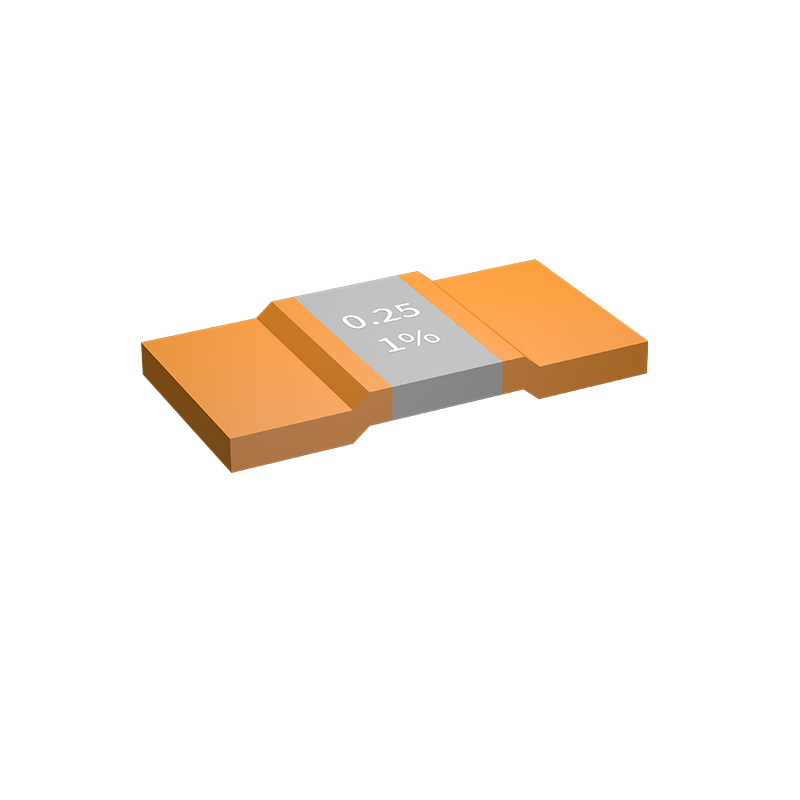
Miniaturization has pushed manufacturing into a realm where a fraction of a micron can determine whether a component performs flawlessly or fails outright. These parts rarely exceed a few millimeters in any dimension, yet they must hold tolerances that once belonged only to laboratory instruments. The challenge isn't simply making something small—it's making something small that behaves with absolute predictability under stress, temperature swings, and years of continuous operation.
What makes this level of precision genuinely serious is the absence of margin for error. In a connector no wider than a grain of rice, every contact surface, every chamfer, every micro-burr influences signal integrity or mechanical retention. A deviation invisible to the naked eye can generate heat, cause intermittent contact, or compromise a seal. Manufacturers working in this space rely on specialized metrology, ultra-fine tooling, and cleanroom discipline, but the real differentiator is an almost obsessive attention to how materials respond at micro scale—springback in thin foils, capillary action in tiny gaps, or the way a coating thickness of half a micron changes wear behavior.
The payoff is seen in devices that simply work where larger assemblies would be impossible: surgical instruments navigating sub-millimeter anatomy, watch escapements beating millions of times without lubrication, optical alignment fixtures holding laser paths stable across temperature gradients. These small components don't announce themselves; they stay hidden inside housings and connectors, quietly enabling performance that larger, less precise parts could never match. That invisibility, combined with uncompromising accuracy, is what turns small components into serious precision.
Inside a Facility Built for Consistency
Walking through the floor, the first thing you notice is what isn’t there: vibration, temperature swings, dust, or hurried movement. The building was laid out so that raw materials enter on one side and finished product leaves on the other, with almost no backtracking. Air handling keeps humidity and temperature inside a narrow band, and the concrete slab is isolated from surrounding ground motion. Even the lighting is positioned to avoid shadows that could affect visual checks. Every element that might nudge a reading or shift a dimension has been designed out before it can become a variable.
But the physical shell only gets you so far. Consistency here is an everyday habit, not a slogan. Gauges are checked against certified standards on a fixed schedule, and each batch of incoming material is logged with its lot number so any result can be traced back to its source. Operators rotate stations every few hours to keep attention fresh, and handover notes are written in plain language, not shorthand. When something drifts even slightly beyond tolerance, the line stops and a root cause is documented before work resumes. That discipline may look slow from the outside, but it is what keeps the output identical from one shift to the next.
Redundancy is the quiet layer underneath. The facility runs on two independent power feeds, and compressed air has a backup receiver sized to hold pressure through a short outage. Critical inspection stations are duplicated, so one can be pulled for maintenance without changing the production rhythm. Reference parts are stored in sealed cabinets and used to verify measuring equipment before every release test. Even with all this, final samples from each run are held for a predetermined period, making it possible to recheck a batch if a customer question ever comes up. That combination of controlled space, strict routine, and built-in fallback is what turns repeatability from a goal into a default.
How High-Stability Resistors Reach Worldwide Markets
The path from a specialized component to a global commodity rarely follows a straight line. For high-stability resistors, the journey often starts in tightly controlled industries like aerospace or medical instrumentation, where tolerance thresholds are measured in parts per million. Manufacturers earn trust by surviving brutal qualification cycles, then leverage that credibility to enter adjacent sectors. A resistor that holds its value through thermal shock and humidity testing in a satellite payload doesn't just get a certificate—it gets a story that procurement engineers share quietly at trade shows.
Distribution networks play an equally decisive role. Raw performance only matters if the right buyers can actually obtain samples without a six-month wait. Companies that succeed internationally often build regional hubs with local technical support, not just warehouses. They translate datasheets into multiple languages, adjust packaging for humid coastal climates, and maintain buffer stock near electronics manufacturing clusters in Shenzhen, Guadalajara, or Penang. This on-the-ground presence turns a resistive component from a catalog entry into a dependable supply chain node.
Pricing strategy tips the final balance. High-stability resistors can't compete on unit cost with commodity thick-film parts, so suppliers emphasize total cost of ownership instead. A resistor that drifts less means fewer field recalibrations, lower warranty claims, and longer service intervals. Marketing materials for industrial automation or energy metering rarely mention raw specs alone; they show failure rate curves and long-term stability data captured over tens of thousands of hours. That evidence, shared through application notes and engineering webinars, gradually converts skeptical OEMs into repeat customers across continents.
The Craft Behind the Chip Resistor
A chip resistor looks like nothing more than a tiny speck of ceramic with silver ends, but its creation depends on a level of precision that most people never see. The raw substrate starts as a high-purity alumina wafer, cut and fired to exacting tolerances. A resistive paste—often a blend of ruthenium dioxide and glass frit—is screen-printed onto the surface. This paste isn't just slapped on; the mesh count, squeegee pressure, and angle all shift the final resistance by fractions of a percent. After printing, the part is fired at temperatures hot enough to fuse the film without melting the base.
What separates a mediocre resistor from a stable one is the trimming process. Laser or abrasive techniques cut a path through the resistive film, nudging the value upward while monitoring it in real time. Every cut changes the current path geometry, so the operator watches the drift and stops within a whisper of the target. Then comes the tough part: protecting that trimmed film from moisture, thermal shock, and the slow creep of time. A passivation layer goes on, often a glass or polymer coating, followed by the terminal plating—nickel barrier under a tin or gold finish—to keep solder from leaching the silver away.
The craft isn't just in any single step, but in how the whole sequence breathes together. A factory might run thousands of these parts an hour, yet each one carries the fingerprints of someone who adjusted the paste viscosity that morning, or who noticed the oven's hot spot drifting and nudged the belt speed. That quiet attention is why a resistor rated at 1% tolerance rarely lands at exactly 1 kΩ—it lands at 997 Ω or 1002 Ω, with a history behind every micro-ohm.
From Cleanroom to Circuit Board: The Journey
Inside the cleanroom, silicon wafers spin under amber light while photoresist coats their surfaces. Patterns are projected through reticles, and unexposed areas wash away in a chemical bath. Then comes the etch — plasma carving channels into the crystal, building up the transistor layers one atomic step at a time. It is meticulous, repetitive work, yet each wafer holds hundreds of potential lives.
After dozens of layers and multiple inspections, the wafer leaves the controlled environment for dicing. A diamond blade separates individual dies, each one a tiny city of logic and memory. Defective units get marked and discarded. The good ones move to wire bonding or flip-chip mounting, where a robotic arm places them onto lead frames or substrates with a precision measured in microns.
Finally, the packaged chips meet their host. Pick-and-place machines spin at impossible speeds, dropping each component onto a printed circuit board coated with solder paste. Reflow ovens melt the joints, and inspection cameras scan for bridges or shorts. What began as a wafer in a bunny suit is now a functioning board — tested, programmed, and ready to ship inside something that will be held, dropped, and depended upon.
FAQ
We produce thick film, thin film, and current-sensing chip resistors with tolerances as tight as ±0.1% and case sizes from 0201 to 2512. Non-standard footprints and custom values are also available.
Ruthenium-oxide resistive pastes, laser trimming to final value, and a post-trim thermal stabilization step keep drift under ±0.5% after 1,000 hours at rated load.
Automotive engine control units, medical monitors, industrial power systems, and precision measurement instruments are typical applications. We also ship to aerospace and telecom customers who need low noise and tight temperature coefficients.
Both. The line can run small engineering batches of a few hundred pieces or scale to millions per month without changing process parameters. Repeat customers get flexible minimum order quantities.
Every lot passes automated optical inspection, multi-temperature resistance checks, solderability testing, and a sample load-life test of 1,000 hours. Batch-level data is kept for traceability.
Standard items are RoHS and REACH compliant, with halogen-free versions available. We can provide full material declarations and PPAP documents when your project requires them.
In-stock values usually ship within five working days. Custom parts take about three to four weeks, depending on quantity and the test plan you need.
Conclusion
Inside this dedicated chip resistor factory, tight tolerances are not just a specification—they are the daily rhythm of production. The facility itself is engineered for consistency, with cleanroom environments where air quality, temperature, and humidity stay locked within narrow bands. Here, small components demand serious precision: every resistor is built from carefully selected ceramic substrates and thin-film or thick-film layers, then laser-trimmed to exact resistance values. The craft behind each chip resistor lies in the unglamorous yet meticulous steps—screen printing, firing, electroplating, and final testing—that turn raw materials into components stable enough for automotive, medical, and industrial electronics. Quality checks happen at every stage, not as a final gate but as an integrated habit of the production line.
From cleanroom to circuit board, the journey continues well beyond the factory floor. High-stability resistors are packed in anti-static reels and shipped through logistics networks that serve manufacturers on every continent. This global reach is not accidental: the plant runs on standard operating procedures that align with international reliability benchmarks, allowing the same resistor part number to perform identically whether it lands in a Berlin lab or a Shenzhen assembly line. Ultimately, the factory's real product is trust—a guarantee that a tiny component, often smaller than a grain of rice, will hold its value under heat, humidity, and years of electrical load. That quiet dependability is what keeps worldwide electronics moving forward.
Contact Us
Contact Person: Yuying Gao
Email: [email protected]
Tel/WhatsApp: +86 18926013721
Website: https://en.milliohm.net/