

Customized Fit Toyota Tundra Truck Seat Covers: What to Look for in a Trusted Company
2026-11-16
Your Toyota Tundra works as hard as you do, but the factory seats don't always hold up to the abuse of daily driving, job sites, or weekend adventures. That's why upgrading to customized fit seat covers isn't just about looks—it's about preserving your truck's interior and your comfort. The catch? Not every company claiming custom fit delivers. Before you spend your money, here's what separates a truly trusted provider like Red Rain from the rest.
How to Spot Materials That Won't Crack After One Brutal Summer
The first tell isn't a label—it's how a material behaves before it gets hot. Press a fingernail into a hidden spot. If it leaves a shallow mark that springs back, the polymer has enough give to handle daily expansion and contraction. Rigid plastic that feels brittle in your hand will only get worse after a few 100°F afternoons.
Next, look at the joints and edges. Cracks rarely start in the middle; they start where two pieces meet or where a screw was driven too tight. Give a sample piece a slight twist. Materials with UV inhibitors usually show a slightly chalky surface when they're nearing their limit, but a fresh sample should feel smooth, not powdery. If a manufacturer offers a color-through option rather than a thin surface coating, that's a quieter sign of long-term resilience.
Finally, don't trust vague 'weather resistant' claims. Ask what temperature range the product was actually tested for, or check the fine print for terms like 'low linear expansion' and 'UV-stabilized.' If you can't find specifics, test the material yourself: leave a small offcut on a south-facing windowsill for a week in July. The ones that stay flat and flexible are the ones worth buying.
Why a Real Custom Fit Starts With Your Exact Cab Configuration
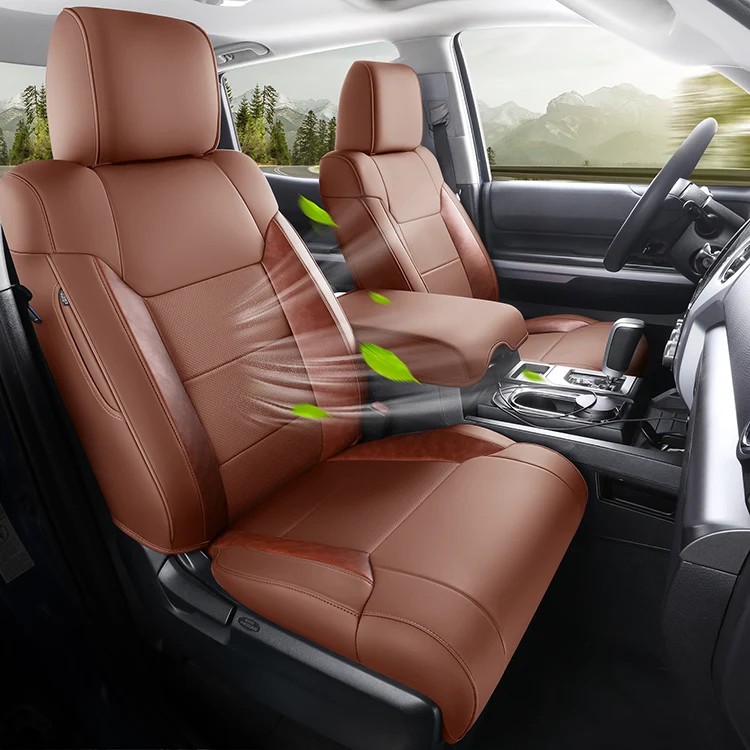
Most people assume a custom truck is about paint color or wheel size—but the real difference shows up the moment you climb inside. Your cab configuration dictates the shape of your daily workspace: how you reach the controls, where your knees sit against the dash, and whether you can grab a gear without twisting your shoulder. Skip this step and even the most expensive interior upgrades feel like they were designed for someone else.
Getting the exact cab layout right means mapping every physical touchpoint to your own body and habits. A day cab, an extended cab, and a crew cab each create a completely different relationship with the steering wheel, pedals, and storage. Once that foundation is locked in, the finer touches—seat foam density, pedal offset, even the angle of the mirror switch—stop being cosmetic choices and become extensions of how you already move.
That’s why builders who skip the cab conversation end up with gorgeous trucks that nobody wants to drive for more than an hour. A genuine custom fit doesn’t begin with a fabric swatch or a stitch pattern. It begins with the steel box around you, measured against the way you sit, reach, and breathe. Nail that, and every layer after it simply falls into place.
The Difference Between 'Tundra-Compatible' and Actually Made for Your Seats
A label like “Tundra-Compatible” often means the cover or cushion was designed to fit a range of trucks that share roughly similar dimensions. It’s not a guarantee that the seams will line up with your exact seat bolsters, headrest cutouts, or the placement of your side airbags. You may find yourself tugging corners back into place every time you slide out of the cab.
When something is actually made for your seats, the pattern starts with the factory seat shape—including the contour of the backrest, the width of the bottom cushion, and the location of controls or levers. That means no excess fabric bunching behind the console and no blocked release handles. The difference becomes obvious after a few weeks of daily use: a tailored fit stays put, while a “compatible” fit slowly turns into a wrinkled, shifting layer.
Before you buy, look past the compatibility claims. Compare photos of the cover installed on your specific trim level, check whether the listing mentions the exact year range, and watch for details like seatback pocket placement or console clearance. If the product only shows a generic truck interior, you’re probably getting a one-size-fits-most compromise instead of a true custom fit.
Questions That Reveal Whether a Company Stands Behind Its Work
When you're evaluating a potential partner, the way they respond to pointed questions tells you more than any polished pitch. Ask what happens when a deliverable misses the mark: Will they redo the work at no charge, or will you be chasing revisions through a support queue? A company that stands behind its work usually has a clear, written process for handling mistakes and doesn't treat accountability as a favor.
Dig into the specifics of their guarantees. Do they offer a defined window for requesting fixes, and does that window reflect the complexity of the work? If a firm hesitates to explain how they handle scope changes, rushed deadlines, or underperforming results, that hesitation is itself an answer. The most trustworthy teams welcome these questions because their track record gives them nothing to hide.
Installation Shouldn't Require a Shop Manual or a Second Person
You know that sinking feeling when you open the box and find a booklet thicker than a novel, plus a parts list that reads like a scavenger hunt. We've all been there. This product flips that script. The entire setup is designed around common sense and clear visual cues, so you won't need to decipher cryptic diagrams or hunt for a specific hex key that was never included. If you can stack three blocks, you can put this together.
More importantly, you won't need to bribe a friend with pizza just to hold one side while you fumble with the other. Every connection point is engineered to lock securely on its own, with alignment guides that let parts slide into place without requiring three hands. The weight distribution is balanced enough that even larger pieces can be maneuvered solo, and the key fasteners are placed within easy reach rather than hidden in awkward corners.
The best part? Most people finish the entire installation in under fifteen minutes, often without checking the included quick-start card twice. That's not an accident. It comes from testing prototypes with first-time users who had zero prior experience, then simplifying anything that caused even a moment's hesitation. The result is an assembly process that feels less like a chore and more like a satisfying click into place.
What Three Years of Daily Driving Does to Cheap Covers
After three years of being yanked on and off every single day, the first thing you notice is the fabric itself. What started as a vaguely smooth, almost plasticky layer has turned into something resembling tissue paper that's been left in the sun too long. The corners pull apart at the seams, and the elastic edges that once snapped snugly under the bumpers now hang like tired rubber bands. You stop trusting it to stay put in a stiff breeze, and you definitely stop trusting it to keep bird droppings from soaking through to the paint.
The UV damage is relentless. A cheap cover might block some light at first, but after years of daily exposure, the dye fades in uneven streaks and the material becomes brittle. Small tears appear where the side mirrors press against it, and those tears only grow because the fabric has lost whatever flexibility it had. When it rains, water doesn't bead up anymore—it soaks in, leaving a damp, musty layer resting directly on the car. You end up with a cover that traps moisture instead of shedding it, which is the opposite of what you paid for.
What's more frustrating is the way the cover starts leaving its own marks. The inner lining, if there ever was one, breaks down into a fine dust that settles into every crevice. Repeated friction from the same cheap material wearing against the clear coat can create dull patches, especially along the roof and hood. By the end of three years, you're not protecting the car—you're just managing a slowly disintegrating sack that needs to be replaced twice as often as a decent cover would have lasted.
FAQ
Look for a company that asks for your truck's year, cab style, and seat configuration before you order. A proper custom fit means they account for details like the center console, adjustable headrests, and the cutouts for seat belts and airbags. Avoid any place that says one cover fits all Tundras from 2007 to today, because Toyota changed seat contours and cushion thickness across generations. The best shops use laser-measured patterns or have actual Tundra seats on hand during design. You can usually tell by how specific their order form is. If you have a 2021 CrewMax with a bench seat and your buddy has a 2015 Double Cab with captain's chairs, those should not get the same cover.
If your Tundra gets muddy, sandy, or covered in sawdust, choose a heavy-duty fabric like Cordura or ballistic nylon. Those resist tears and can be wiped down with a damp rag. For a daily driver that rarely sees dirt, neoprene or a high-grade leatherette feels more comfortable and looks closer to factory upholstery. Some people like canvas for breathability in hot climates, but it stains easier. Stay away from thin polyester blends that fade within one summer. A reputable company will send you material swatches before you commit, so you can feel the thickness and check the backing. The backing matters just as much as the face fabric because a rough backing can wear down your original cloth seats over time.
They take patience but no special tools. Most covers use a combination of straps, hooks, and Velcro to stay tight. For power seats, you may need to move the seat forward and back a few times to tuck the fabric under the plastic trim. The critical part is the side airbag. A trustworthy company will sew in a special breakaway seam that lets the airbag deploy normally. If a cover doesn't mention airbag compatibility or asks you to cut holes yourself, walk away. Plan on spending about an hour for the front pair if it's your first time. Watch for covers with labeled left and right pieces, because forcing a driver-side cover onto the passenger seat will stretch the seams and ruin the fit.
Not necessarily, but a little lead time can be a good sign. Smaller shops often make covers to order, which means they cut and sew after you pay. That can take one to three weeks before shipping. Large retail brands might have stock ready to go, but their 'custom fit' is often just a generic pattern with extra straps. A short wait is worth it if the company can tell you exactly which factory is sewing your cover and lets you approve a digital mockup first. Ask about their current backlog before ordering. If they promise overnight delivery on a truly custom Tundra cover, be suspicious. Real craftsmanship doesn't come off an Amazon shelf.
Look for a warranty that covers stitching, seams, and hardware for at least two years. The best companies go further and cover fading or material defects for the life of the cover. But read the fine print: some warranties only apply if a certified installer puts them on, which is nonsense for seat covers. A trustworthy shop will offer a simple free return or remake if the cover doesn't fit your Tundra on the first try, no matter who installed it. Also check how they handle a single damaged piece. Replacing just one headrest cover shouldn't force you to buy a whole new set. Honest companies mention their warranty on the product page, not buried in a PDF.
Yes, if the company does in-house embroidery or digital printing rather than iron-on patches. Custom stitching can add stiffness around the logo area, so ask if they place it away from side airbag seams. For colors, many shops offer a two-tone scheme that mimics factory designs, like black outer bolsters with gray center inserts. That adds character without looking like an afterthought. Be specific about thread color too, because a bright red thread on dark fabric looks sharp but can fade unevenly. A good company will send a photo of a previous Tundra with similar colors so you can see the real result, not just a computer rendering.
For a front row only, expect to pay between $200 and $350 for quality custom-fit covers. A full set including the rear bench or split seats usually runs $400 to $700 depending on material and options. Below $150 for an entire truck, the fabric is almost always thin and the seams will pull apart where you slide in and out. Above $800 doesn't automatically mean better; sometimes you're paying for a brand name or exotic leather. Ask what's included: headrest covers, armrest covers, and console lid coverage should be standard at the higher end. Also ask about replacement straps or clips, because those tiny plastic pieces often break first and a good company will send extras for free.
Conclusion
When you start shopping for seat covers for your Toyota Tundra, the first thing that separates a smart buy from a costly mistake is how the material handles real-world abuse. Cheap vinyl or thin neoprene might look fine on day one, but after a single brutal summer of direct sun, door-slamming heat, and sweat, you'll see cracks spreading across the seating surface like a dry riverbed. Ask the company directly about UV stabilizers, heat resistance, and whether their fabric has been tested under prolonged exposure—not just in a lab, but in actual truck cabs. A trustworthy maker will answer without hesitation, because they know Tundra owners don't garage their trucks year-round. Beyond the fabric, a real custom fit starts long before the first stitch: it starts with your exact cab configuration. CrewMax, Double Cab, bench seat, front buckets, power controls, seat-mounted airbags, even the position of the center console latch—every detail changes the pattern. If a company's idea of "custom" is a generic seat cover with a Tundra logo slapped on, you're not getting a true fit; you're getting a universal cover with extra marketing.
The difference between "Tundra-compatible" and actually made for your seats becomes obvious the moment you try to install it. A properly patterned cover slides over the seat back and cushion without wrestling, without needing a second person to pull it tight, and without a shop manual to figure out which strap goes where. If the instructions read like a puzzle and the fabric bunches at the bolsters, that's a red flag. Dig deeper by asking the company how they handle warranty claims, what happens if a seam splits in year two, and whether they'll replace a cover that fades unevenly. Then think about the long game: three years of daily driving, with work boots, dog claws, spilled coffee, and sun beating through the windshield. Cheap covers will have torn piping, loose elastic, and a color that's gone from black to gray-brown. A company that stands behind its work will show you real photos of covers after years of use, not just studio shots. That's how you find a seat cover that actually fits your Tundra—and your life.
Contact Us
Contact Person: Ms. Zhu
Email: [email protected]
Tel/WhatsApp: 86-15906860931
Website: https://www.redrainseatcovers.com