

Decorative Flowers We Recommend for an Instant Home Refresh
2026-09-23
If your space feels a little tired, don’t redecorate—just rethink what’s on your table. A handful of sculptural stems or a low cluster of dried grasses can shift the mood faster than a new coat of paint. At PHLEEYA, we’re always reaching for arrangements that do the heavy lifting without asking you to rearrange the whole room. Below, the decorative flowers we turn to again and again when a room needs a quick, no-fuss lift.
The Unexpected Stem That Lasts Weeks Without Fading
Most stems collapse within days, but this one refuses to quit. The leaves keep their deep green undertones and the stems stay upright without any wilting, even when water runs low. It's the kind of stem you can place in a narrow vase by the entryway and not think twice about for a fortnight.
Unlike fresh-cut flowers that demand constant trimming and cloudy-water changes, this stem holds its shape through dry indoor heat and overlooked watering. After three weeks it still looks intentional, not exhausted. Bend a leaf and it springs back, not crack.
That durability also makes it a quiet workhorse for styling. Tuck one behind a stack of books, layer it into a ceramic jug with dried grasses, or let a single stem stand alone on a bathroom shelf. It brings the softness of greenery without the usual countdown.
Bold Colors That Wake Up a Beige Room
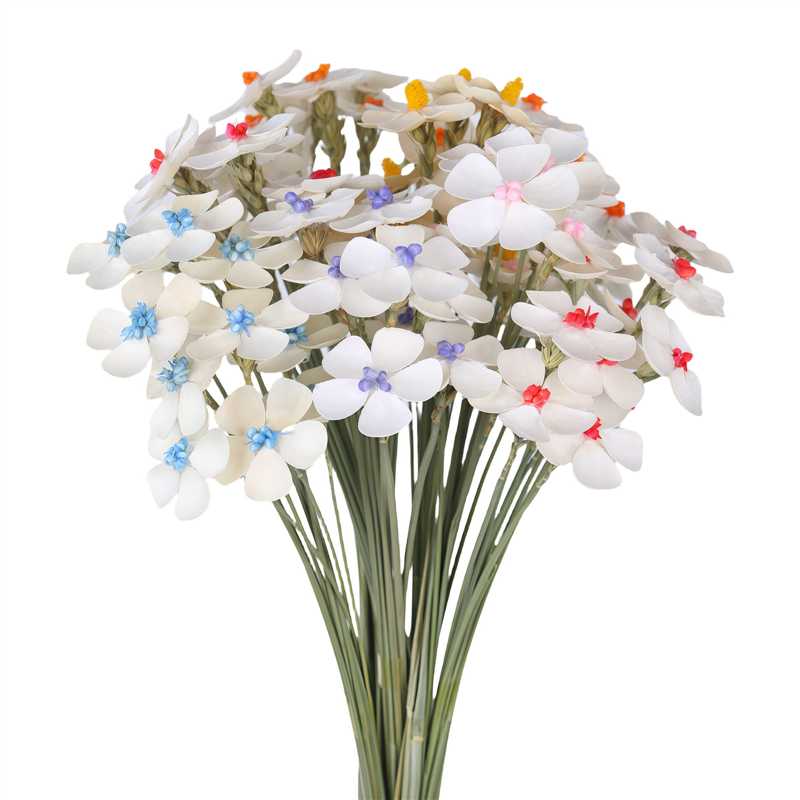
Beige rooms often feel safe but flat, and the fastest shift comes from a single saturated accent wall. Instead of defaulting to navy or burgundy, try an unexpected shade like deep teal, burnt orange, or oxblood. The key is to lean into contrast rather than playing it safe with pastel tints.
If painting an entire wall feels like too much commitment, bring bold color through large-scale pieces—a mustard velvet chair, a cobalt area rug, or oversized abstract art with electric pink and green. These anchor points pull the eye around the room and make the beige backdrop recede, turning neutrality into an intentional frame rather than a boring default.
For a layered look, repeat the same bold hue in two or three smaller doses: a lampshade, a stack of books, a ceramic vase. This repetition tricks the eye into seeing the color as an essential part of the room's palette, not an afterthought. And don't be afraid to mix warm beige with cool, vivid tones—things like chartreuse or electric blue can feel surprisingly harmonious because the beige softens their edge.
Why a Single Stem Beats a Dozen for Instant Style
A single stem cuts through visual noise. Twelve flowers crammed into a vase fight for attention, leaving the eye with nowhere to settle. One well-chosen branch or bloom, though, draws you in immediately — it reads as intentional, not accidental. That restraint signals confidence, and it's the fastest way to make a room feel considered rather than decorated.
It also highlights line and negative space, which are the real style-makers. A lonely tulip curving over the rim, a bare magnolia branch against a white wall — these moments create a quiet drama a bouquet never can. Plus, who has time to strip leaves and arrange a dozen stems before guests arrive? One stem, one glass bottle, done. The effort-to-impact ratio is unbeatable.
The Flower That Doubles as Sculpture (and Costs Less Than Lunch)
The first time I saw a bucket of ornamental allium stems leaning against a flower stall, I assumed they were leftovers from a sculpture class. Each one ended in a tight sphere of tiny star-shaped florets, balanced on a long, bare neck that looked almost too thin to hold it up. Then the vendor told me the price — less than what I'd pay for a takeout bowl of noodles. That's the moment the allium stopped being a flower and became a piece of architecture you can put in a drinking glass.
What makes allium work as sculpture is its restraint. There are no floppy petals or generic leaves to dilute the form. You get a straight green stem, usually 60 to 90 centimeters, topped by a perfect orb in deep purple, white, or even a dusty blue. The surface is made of hundreds of small blossoms packed together so tightly that the whole thing reads as a solid object from across the room. Put one tall stem in a narrow-necked vase and you have an instant focal point. Put five in a low ceramic bowl and you'll feel like you've curated a small exhibition on your dining table.
The practical side is just as compelling. A single stem often sells for two or three dollars at farmers markets, and once the fresh blooms fade, the dried seed head holds its shape for months. You can spray-paint it, leave it natural, or snip the head off and display it in a shadow box. Next time you pass a bucket of these odd, lollipop-like flowers, grab one before the bouquet crowd notices. That's less than the cost of a sandwich, and it'll far outlast lunch.
How to Mix Three Everyday Blooms Into Something Stunning
Start with one bloom you can always find: the carnation. Its ruffled, dense petals act like a color anchor, especially in deep burgundy or blush. Strip the lower leaves and cut stems at a sharp angle before arranging. Instead of leaving them in a neat row, cluster three or five stems of different heights in your non-dominant hand, turning the bunch as you go so the heads fall naturally outward.
Next, weave in a second everyday flower with a different shape, like spray chrysanthemums. Their small, daisy-like blooms break up the carnation's tight spheres and add a bit of wildness. Let a few stems dip lower than the carnations so the arrangement doesn't look like a uniform ball. For texture, pull a few chrysanthemum stems slightly forward so their petals nearly touch the vase rim.
Finally, use the third bloom as a quiet bridge: alstroemeria, with its speckled throats and curved stems, fills gaps without stealing attention. Place the alstroemeria on a slight diagonal between the two heavier clusters, then turn the vase and trim any stem that blocks the view of another. The mix works because each flower repeats a color from the other two, tying the whole thing together without a single focal point you've seen a hundred times.
The One Bloom That Makes Any Corner Feel Intentional
A single stem in the right spot can shift the entire mood of a room. Not a fussy arrangement, not a crowded vase—just one bloom with a confident silhouette, placed where the light catches it for a few hours each day. It turns an overlooked shelf, a bare windowsill, or the edge of a side table into something that feels chosen rather than decorated. The trick is giving that flower enough space to breathe, so its shape and color become the quiet focal point instead of competing with everything around it.
Think of a ranunculus with its layered, papery petals standing in a small ceramic cup by the kitchen sink, or a single branch of cherry blossom arching over a stack of books in the hallway. These moments don't announce themselves; they simply make the corner feel settled. The bloom doesn't need to match the room's palette perfectly—in fact, a slight tension, like a deep burgundy dahlia against pale linen, often works better than a safe match. What matters is that it looks intentional: trimmed stem, clean water, nothing else within a handspan to dilute its presence.
This approach also suits people who love flowers but hate the upkeep of a full arrangement. One stem takes less than a minute to refresh, yet it delivers the same sense of care as a larger display. Over time, you learn which blooms hold up longest in your space—proteas, anthuriums, and dried grasses are surprisingly resilient—and where the natural light shifts so a single petal can glow for an hour each afternoon. That small ritual of replacing the water and turning the vase becomes a quiet punctuation in the day, a way of saying this corner matters without saying anything at all.
FAQ
Fresh eucalyptus stems or a bunch of pale pink ranunculus work wonders—they add texture and soft color while asking almost nothing in return.
Dried lavender bundles or preserved hydrangeas hold their shape for months; you just set them in a vase and forget about watering.
Deep burgundy dahlias or orange tulips pop against beige and gray, giving the space a quick focal point without redecorating.
Trim stems at an angle, change the water every two days, and keep them away from direct sun and fruit bowls—it adds at least a few extra days.
Yes, if you pick single-stem silk orchids or faux cherry blossom branches with realistic texture; stick to one or two stems in a slim vase rather than a crowded bouquet.
A bud vase or a short ceramic pitcher works better than tall glass; it keeps arrangements compact and lets you scatter flowers across shelves and side tables.
Yellow solidago or white freesia are ideal—they're not overpowering, add a fresh scent, and won't distract during video calls.
Every five to seven days for fresh stems, or whenever petals start dropping; rotating between a bright bunch and dried stems keeps the change noticeable.
Conclusion
Forget filling every vase you own. The fastest way to refresh a room often starts with restraint. A single, well-chosen stem can do more than a crowded bouquet — especially if you pick something with sculptural lines, like a dried allium, a contorted willow branch, or a protea. These oddballs don't just sit there; they hold a corner's attention for weeks without fading or dropping petals, and many cost less than a takeout lunch. That kind of staying power means you're not nursing wilting flowers by Thursday. You're simply moving one stem from the kitchen table to the shelf by the window and watching the room shift.
If your walls lean beige or greige, color is your best trick — but you don't need a rainbow. Two or three everyday blooms in a saturated hue, say magenta ranunculus with orange tulips and a few sprigs of blue eryngium, can wake up a whole seating area. The secret is repetition and scale: place one cluster low on a coffee table and a single matching stem on a sideboard across the room. That echo makes the corner feel deliberate, not decorated. You're not arranging flowers for a magazine spread; you're just using a few hardy, inexpensive stems to give your home a quick, unforced lift. Start with one bold bloom you actually like, then see what it asks for next.
Contact Us
Contact Person: Mr. Luo
Email: [email protected]
Tel/WhatsApp: 86 18100895505
Website: https://www.feiliyaflowers.com/en/