

Forged Steel Gate Valve Manufacturer Selection Tips for Reliable Industrial Performance
2026-11-16
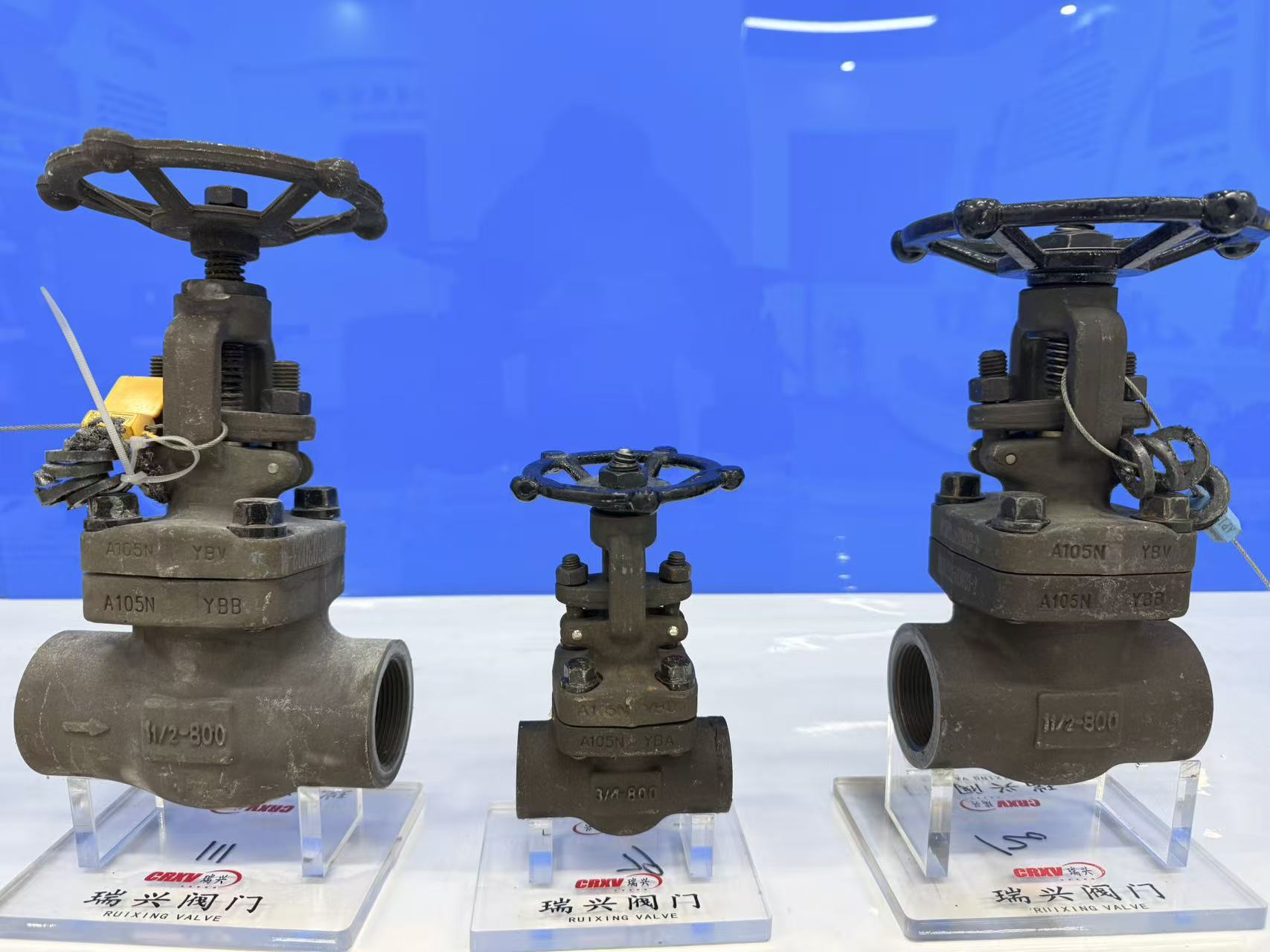
Most forged steel gate valve selection guides read like a spec sheet. This one won’t. If your operations depend on valves that hold up under pressure, the manufacturer you choose matters more than the alloy. Here’s what separates a supplier that merely quotes a part number from a partner like CRXV that engineers reliability into every gate valve.
Forging Quality You Can Verify Before the First Shipment
Most forging suppliers talk about quality after parts arrive. We prefer a different approach: you see the evidence before anything leaves our floor. Each order comes with a complete digital trail—raw material certifications, heat treatment curves, dimensional reports from CMM checks, and high-resolution surface inspection photos. If you want to watch the first article inspection live via video call, we'll set it up. No waiting for a box to show up with surprises inside.
That upfront transparency changes how projects start. You can compare our documented measurements against your own tolerance stack before committing to full production. It also means any adjustment happens while tooling is still mounted and operators are on hand, not after a container is already at sea. For teams managing tight launch windows, that kind of early visibility is worth more than any promise.
Material Traceability: The Difference Between Claim and Proof
Many suppliers will tell you their materials are traceable, but a verbal assurance is not the same as a documented chain of custody. Claim means someone says it happened; proof means each transfer, processing step, and batch number can be followed back to a specific source without gaps.
The real test comes when you ask for records beyond the certificate. Can the supplier show dated receiving logs, internal lot splits, and shipping paperwork that line up with the raw material invoices? If any link relies on memory or a generic statement, traceability stops being a fact and becomes an assumption.
That difference matters most during audits or recalls. A claim might satisfy a simple checklist, but proof gives you the ability to locate affected stock quickly and verify what actually entered your production line. Without that level of detail, traceability is only a label, not a capability.
Matching Gate Valve Design to the Real Stress of Your Process
Every process line carries its own fingerprint of stress—thermal swings, pressure spikes, vibration, and occasional slug flow that never shows up neatly on a P&ID. Selecting a gate valve based only on nominal pressure class or pipe size often leaves the real operating conditions unaddressed. Instead, start by mapping the actual stress profile: how often the valve cycles, what temperature extremes the body and seat will see, and whether the line experiences bending moments from thermal expansion. A cast valve with a thick, well-ribbed body may handle a static high-pressure application well, but the same design can crack under rapid thermal transients. The goal is not to over-specify blindly, but to understand where the stress concentrates in your specific system.
Gate valve internals deserve equal scrutiny. The wedge, stem, and seat interface bear the brunt of both mechanical and thermal loads. In a slurry or scaling service, a flexible wedge may tolerate solids better than a solid wedge, yet under high differential pressures, that same flexibility can lead to chatter and seat wear. Look closely at the stem-to-wedge connection: a bolted or T-slot design gives some freedom for thermal movement, while a rigid connection transfers stress directly to the stem threads. For frequent operation under load, consider a rising stem with a backseat that relieves packing stress, rather than a non-rising stem that twists the packing with every cycle. The point is to match the internal geometry to how the valve actually lives—not to how it looks on a cut sheet.
Finally, factor in the hidden stresses that instrumentation rarely captures. Water hammer from fast-closing actuators, vibration from nearby pumps, or uneven bolt loading during flange assembly can shorten a valve's life far more than the steady-state pressure rating suggests. Adding a damping mechanism, specifying a heavier bonnet flange, or choosing a pressure-seal bonnet for high-temperature cycling may shift the design from marginal to robust. It often helps to involve your valve manufacturer early with actual operating data—not just the line list, but the transients, the start-up sequences, and the maintenance history. A gate valve that matches the real stress of your process will not necessarily be the most expensive one; it will be the one whose design choices line up with the way your system actually behaves on its worst day.
Test Demands That Separate Serious Valve Makers from the Rest
Walk through any valve plant and you'll see pressure gauges, torque benches, and hydrostatic rigs. But the real difference isn't the equipment—it's how far a maker is willing to push each unit before it leaves the floor. A serious shop doesn't just run a seat leak test and call it done. They cycle the valve under full differential pressure, often hundreds of times, then tear it down to inspect for galling on the stem or wear on the sealing faces. They log every data point: breakaway torque, mid-travel thrust, seat tightness after thermal shock. If the graph shows a drift of more than a few percent, the part gets rejected, even if a customer would never notice.
Less committed builders skip the brutal stuff—cryogenic cycling, high-cycle endurance, fugitive emissions sniffing with a helium mass spectrometer. They rely on batch sampling or trust the design software. But a handful of operators know the difference. They're the ones who ask for the raw test reports, not the summary sheet. They want to see the valve survive a 600°F thermal swing and still hold a bubble-tight seal at 50 psi. That's not a marketing claim; that's a data trail.
The divide shows up in the scrap bin too. A serious maker will cut open a valve after a destructive test—sacrificing a five-thousand-dollar unit to verify wall thickness and weld penetration under a microscope. The rest just polish the outside and ship it. Over time, the market learns who does the deep testing. Field failures don't lie, and neither do the maintenance logs from refineries, chemical plants, and power stations.
When Low Bids Hide Long-Term Industrial Risks
In industrial procurement, the lowest bid rarely equals the lowest total cost. A supplier can shave initial price by using thinner pipe walls, cheaper seals, or skipping redundant safety systems. Those choices don't show up on the purchase order, but they surface three to five years later as corrosion, leaks, and unplanned downtime that halt production lines.
The hidden costs often lurk behind the contract terms, not just the hardware. Low-bid vendors may narrow warranty coverage, delay spare parts shipments, or offer only minimal technical support. When a critical pump or compressor fails, the on-site team discovers that the money saved upfront is dwarfed by expedited freight, overtime labor, and lost output during the wait.
Experienced project owners now break down bids into capital and operating expenses, demanding lifecycle cost models, historical failure rates, and reference sites with comparable duty cycles. Without those guardrails, an aggressive low bid becomes an expensive shortcut that the maintenance budget pays for long after the procurement team has moved on.
Post-Delivery Support: The Silent Partner in Reliable Operation
Equipment reliability rarely hinges on the initial build alone. What keeps a system running years after commissioning is the quiet, consistent availability of someone who knows its history, its quirks, and its failure patterns. That kind of support doesn't announce itself with a launch event; it shows up as a fast answer on a Tuesday afternoon, a spare part already on the shelf, and a technician who remembers the last service call.
The real value of post-delivery support appears when schedules tighten and downtime is not an option. A supplier that tracks serial numbers, documents every modification, and proactively flags wear before it becomes a breakdown turns maintenance from a reactive scramble into a planned routine. That shift is often invisible until it's missing—then every hour of lost production makes it painfully obvious.
In practice, strong after-sales support means more than a helpdesk. It includes on-site training adjusted to the crew's actual skill level, remote diagnostics that shorten troubleshooting, and a parts network that doesn't treat a five-year-old machine as obsolete. These are the unglamorous elements that determine whether a piece of equipment earns a reputation for dependability or becomes a source of constant friction.
FAQ
Closed-die forging is typical for smaller valve bodies, while larger sizes may use open-die or ring-rolled blanks. Ask about grain flow direction, post-forge normalizing or quenching, and whether the plant machines in-house to maintain dimensional control.
It is a critical requirement. Request actual time-temperature charts for each heat lot, verify furnace calibration records, and confirm the cycle matches the material grade, such as normalizing for ASTM A105 or solution annealing for F316.
Look for API 602 and API 6D where applicable, ISO 9001 as a minimum, PED for European supply, and NACE MR0175 compliance for sour gas or crude. Check that certificates list the specific facility and remain valid.
Most industrial users need Class 150 through 4500, with sizes from 1/2 inch to 4 inch as standard. Some shops extend to 6 inch. Confirm they pressure-test at 100% of rated class and offer threaded, socket weld, and flanged ends.
Ask for third-party positive material identification on a sample of valves, request Charpy impact values at the lowest design temperature, and confirm no weld repairs were made after final heat treatment unless re-audited.
Avoid shops that batch-test instead of performing 100% shell and seat tests, those without a low-pressure air seat test for metal-seated valves, and any that cannot provide serialized test reports tied to each valve.
A dependable manufacturer offers field installation guidance, keeps spare parts stock for common trims and stem materials for at least a decade, and provides a documented failure analysis process rather than treating shipment as the end of the relationship.
Conclusion
Choosing a forged steel gate valve manufacturer goes far beyond comparing material grades on a datasheet. Before committing to a supplier, demand forging quality you can actually inspect in the first batch—not just a promise. Ask for forged body markings that match heat numbers, and check whether the material traceability runs from the mill certificate all the way to the finished valve. A manufacturer that treats traceability as proof rather than a claim will have no issue walking you through their melt records, forging logs, and final assembly files. At the same time, make sure the gate valve design is matched to your actual stress conditions—thermal cycling, pressure spikes, and flow direction matter more than a generic API or ASME listing. Request test reports for shell strength, seat leakage, and backseat performance; serious makers welcome additional witnessing or third-party inspection, while others hesitate.
If a bid seems unusually low, it usually hides shortcuts in forging reduction ratios, non-destructive testing coverage, or post-weld heat treatment—choices that turn into leaks, galling, or stem failures after only a few cycles. Long-term industrial risk is rarely captured in the purchase price. Beyond delivery, look for a manufacturer that offers field startup guidance, spare parts availability, and technical response when operating conditions change. That post-delivery support works as a silent partner: it keeps your isolation points dependable during shutdowns and emergencies. The most reliable performance comes from a vendor that proves its forging quality before shipment, documents every material step, designs for your process reality, and stands behind the valve long after the invoice is paid.
Contact Us
Contact Person: TIM
Email: [email protected]
Tel/WhatsApp: 8615857807381
Website: https://www.crxv.com/en/