

Gas Dispenser Pump Factory: A Complete Guide to Quality, Certifications, and Support
2026-11-02
Price draws most buyers to a gas dispenser pump factory, but quality, certifications, and support decide whether the deal pays off or falls apart. This guide strips away the sales talk and focuses on what actually keeps fuel flowing. It also explains why a growing number of operators are turning to BEILIN for equipment that meets real-world demands.
Inside the Production Line: What Separates a Quality Gas Pump Factory from the Rest
Walk the floor of a genuinely reputable gas pump factory and the differences show up long before the final coat of paint. The metal stock isn't just whatever arrived cheapest that month—it's checked for thickness consistency and corrosion resistance at the receiving dock, with rejected batches sent back before they ever touch a cutting tool. Jigs and fixtures on the assembly line get recalibrated between shifts, not once a quarter, because even a half-millimeter drift in a mounting bracket can shorten seal life down the road.
What really sets the better plants apart is how they handle the parts most buyers never see. Flow meters are paired and tested under varying back pressures, not just spun to see if the dials move. Wiring harnesses are pulled, flexed, and soaked in humidity chambers to mimic years of station canopy condensation. A quality factory treats every subcomponent as if it will be the one a technician has to swap out at 2 a.m. on a remote highway—because eventually, one will be.
Then there's the paperwork nobody frames. Torque values get recorded against each unit's serial number. Calibration certificates match the actual meter in the pump, not a generic printout from a file. When a production lot shows even a slight uptick in leak-test failures, the line pauses and the root cause is chased into the supplier's process. That kind of discipline doesn't come from a mission statement; it comes from managers who walk the line with their hands in the machines and their names on the final sign-off.
Decoding Certifications: Which Standards Actually Matter for Fuel Dispensing Equipment
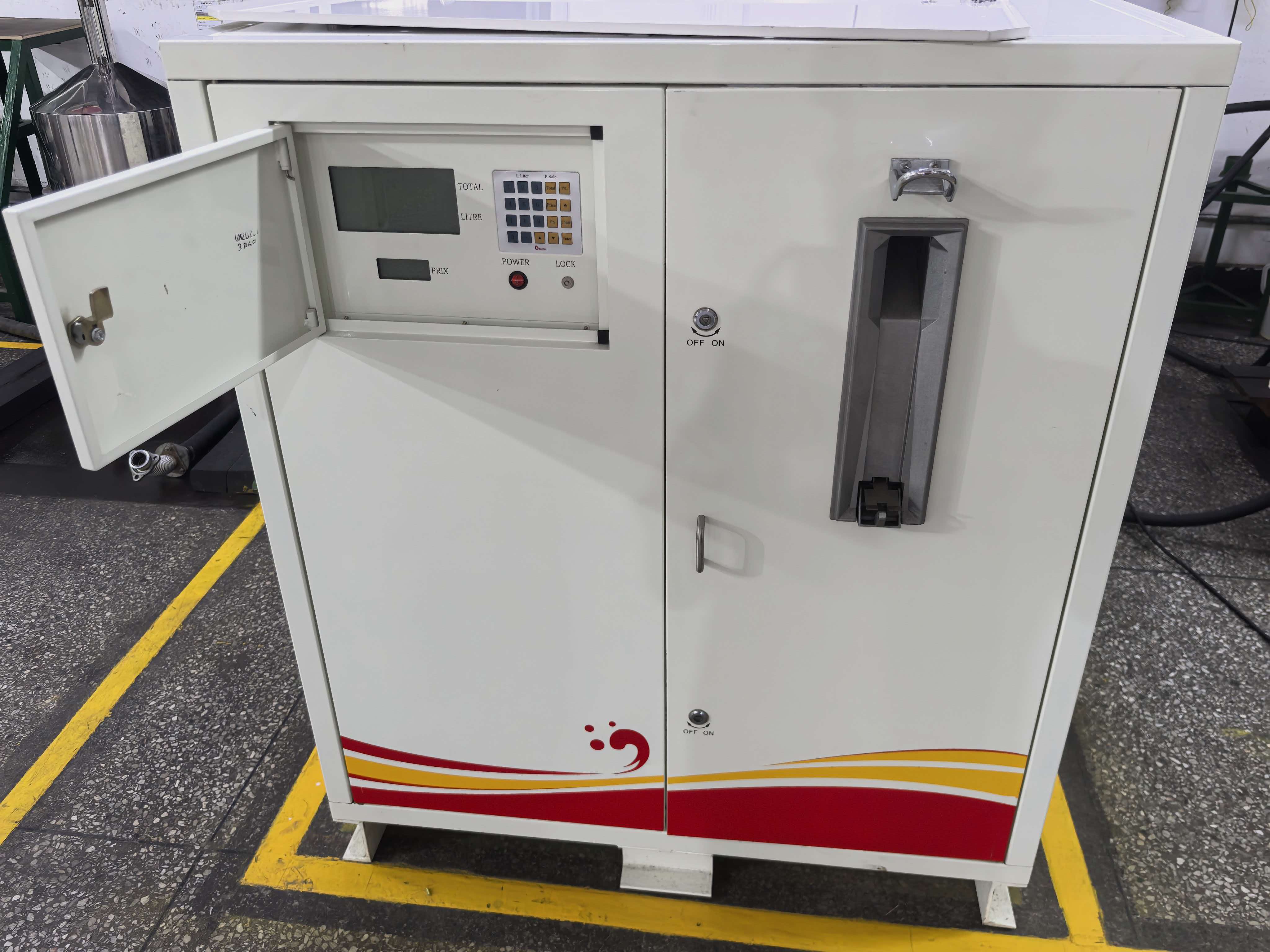
Walk through any fueling station equipment catalog and you'll spot a parade of acronyms—UL, ATEX, CE, ISO, AGA, OIML. Many buyers assume more badges equals better safety, but that's rarely how it works. Some certifications overlap, others address entirely different risks, and a few are borderline decorative depending on where you install the dispenser. The real challenge is separating the labels that carry legal weight from those that simply look impressive on a spec sheet.
At the core, two families of standards matter for fuel dispensers: electrical safety and metrological accuracy. In North America, UL 87 and UL 2586 govern electrical construction and flammable vapor containment, while the Canadian equivalent CSA C22.2 No. 22 adds specific requirements for cold climates. In Europe and much of Asia, ATEX 2014/34/EU is non-negotiable for any component that could encounter an explosive atmosphere—the dispenser housing, hose, and nozzle all fall under zone classifications. For measurement, OIML R117 and R118 define how accurately the meter must dispense across temperature ranges and flow rates; without those, you cannot legally sell fuel by volume in most jurisdictions. Ignoring these core certifications isn't a quality concern, it's a regulatory shutdown waiting to happen.
That said, not every badge deserves equal attention. A dispenser carrying both CE and UL approvals has been tested twice for essentially the same electrical hazards—useful if you plan to deploy in multiple markets, but redundant for a single-region site. Some suppliers tout ISO 9001 certification as if it guarantees dispenser performance, yet that standard only certifies the factory's quality management process, not the equipment itself. The smart approach is to match certifications to your specific operating environment: coastal stations need salt-spray corrosion validation (often referenced as ISO 9227), while high-throughput truck stops should verify endurance under continuous duty cycles rather than chasing an exotic approval that adds cost without reducing risk on your forecourt.
The Support Equation: Why Factory Backup Outweighs a Lower Purchase Price
When a production line halts, the cost of downtime rarely shows up on the initial invoice. A machine that carries a lower sticker price may seem attractive during budget reviews, yet the real expense emerges weeks later when a minor fault requires three phone calls, a vague email thread, and a technician who can only visit next Thursday. Factory support reshapes this math entirely. A vendor with a responsive service team, local spare parts inventory, and direct access to engineering notes can turn a potential two-day stoppage into a two-hour fix. That difference in recovery speed often eclipses whatever discount was negotiated at purchase.
Strong factory backing also changes how problems are diagnosed in the first place. Instead of relying on generic troubleshooting manuals or third-party guesswork, operators can reach the people who actually designed the equipment. Those conversations tend to surface subtle configuration errors, firmware quirks, or wear patterns that would otherwise go unnoticed until a larger breakdown occurs. Over a machine's life cycle, this ongoing dialogue prevents failures rather than merely reacting to them. A cheaper purchase with thin support leaves the buyer alone with the manual, while a well-supported machine comes with a quiet safety net that operates long after the warranty document is filed away.
Ultimately, the equation is not about choosing between a low price and a help desk. It is about recognizing that the purchase price is a one-time number, whereas factory support determines how many productive hours that machine will deliver over its usable life. Buyers who have endured a stalled order, a cryptic error code, or a replacement part stuck in customs understand this intuitively. For them, the real cost of a machine is measured in the hours it runs without someone standing beside it, phone in hand, trying to explain a blinking light to a voicemail system.
Custom Builds and Niche Requirements: When Standard Dispensers Are Not Enough
Off-the-shelf dispensers assume a world where every liquid has the same viscosity, every bottle fits the same thread, and every workspace follows the same layout. That assumption falls apart the moment you deal with aggressive solvents that eat through standard seals, or a production line where the dispensing point sits at an awkward angle behind a guard rail. Custom builds start with a simple question: what exactly is breaking in your current setup? Often the answer is a seal material, a nozzle length, or a mounting bracket that was never designed for your specific chemical or physical environment.
Niche requirements rarely announce themselves in a specification sheet. They show up as slow drips that ruin a batch, as a dispenser that needs recalibration every shift, or as an operator who has to stand on a step stool to reach the trigger. When you chase these failures back to their source, the standard product's limitations become obvious. A custom build can mean changing the wetted path to match a particularly thick or abrasive fluid, extending the spout to clear a safety shield, or re-engineering the valve so it stays drip-free after ten thousand cycles instead of five hundred. None of these changes are exotic, but they demand a vendor willing to look at your actual task rather than just a catalog number.
The move to a custom solution often saves money in the long run because it eliminates workarounds. You stop buying adapters that leak, stop stocking three different dispenser models for one line, and stop paying for downtime caused by a part that was never quite right. The key is to document what a standard dispenser fails to do, then ask for a modification that targets that exact failure. In most cases, the difference between a stock unit and a custom one is a handful of component swaps and a machined bracket, not a ground-up redesign. That small engineering effort turns a persistent nuisance into a reliable part of your process.
Material Choices and Corrosion Resistance: What to Inspect on the Factory Floor
When evaluating material choices on the factory floor, corrosion resistance often starts with visual cues that don't require a lab. Look for signs of pitting, flaking, or discoloration near joints, fasteners, and areas where moisture can pool. Stainless steel grades like 316 may look similar to 304 at a glance, but subtle surface staining after exposure to chlorides can hint at the wrong alloy being used. Pay attention to weld zones—improper passivation or heat tint left behind creates weak points where rust will appear within weeks, not years.
Beyond the surface, verify that coatings and platings match the specified thickness and adhesion. A quick tape test or a low-cost coating thickness gauge can reveal whether zinc plating on brackets is thick enough to survive the intended environment. For components that face alternating wet-dry cycles, inspect for crevice corrosion under washers, gaskets, or overlapping sheets. If the factory uses mixed metals, check for galvanic couples—aluminum panels bolted directly to steel frames without isolation will corrode rapidly, even if each material alone would be fine.
Finally, ask what happens to parts before they reach your inspection station. Oils from machining, fingerprints, or residual cleaning chemicals can accelerate corrosion before protective packaging goes on. Watch how operators handle bare metal. If they're not wearing gloves or if parts sit uncovered overnight near open bay doors, the material choice may be correct but the process is undermining it. Catching these issues early on the floor prevents costly failures downstream and often reveals whether the real problem is the alloy or the habits around it.
Pre-Shipment Testing Protocols: How Reliable Factories Simulate Real-World Stress
A factory with a serious pre-shipment testing setup rarely relies on a single pass/fail check. Instead, engineers build a stress profile from the product's actual lifecycle. Injection-molded casings get torqued with repetitive flexing, sealed enclosures are cycled through thermal shock chambers that swing from -20°C to 60°C, and metal fasteners see salt spray for hundreds of hours. These aren't arbitrary numbers; they're mapped from teardown studies of field failures and warranty data. The goal is to reproduce the exact fracture pattern or leak path that a customer might encounter after six months of daily use, not just confirm that a fresh unit works out of the box.
Reliable factories also simulate stress in combinations rather than isolation. A power tool battery, for example, is not simply dropped from a calibrated height onto concrete. It gets dropped, then charged and discharged at high ambient temperature, then vibrated on a shaker table while still warm. This sequencing mirrors how a user might knock a tool off a ladder on a hot roof, pick it up, and keep working. Some facilities go further by pulling random units off the production line at different times of day—after shift changes, before maintenance windows—to catch drift in process variables that a golden sample would miss.
The most telling sign of a mature protocol is traceability. Each test log is tied to a serial number or lot code, and the raw data curves—not just pass/fail flags—are reviewed before a shipment is released. If a vibration sweep shows an unexpected resonance at 42 Hz, the engineering team investigates whether a change in gasket durometer or torque setting shifted the natural frequency. Calibration records for sensors and actuators are kept current, and operators who run the equipment receive recurring training on fixture setup. That level of rigor separates a factory that merely fills out a checklist from one that can predict and prevent real-world returns.
FAQ
Look beyond the polished brochure. A solid factory will show you its calibration rigs, flow meter test benches, and batch traceability records. Ask about reject rates on machined components and how they handle non-conforming parts. The strongest indicator is whether they invite you to watch a full accuracy test on the exact model you're ordering, not just a demo unit.
It depends on the destination. For most of Europe you'll need ATEX for hazardous zones and MID or national metrology approval for legal trade. North America typically requires UL or cUL listing plus weights and measures certification. In many African and Asian markets, ISO 9001 quality management and OIML R117/R118 compliance are the baseline. Always verify the certificate number with the issuing body instead of accepting a scanned logo.
Support usually falls into three layers: remote troubleshooting with video calls and wiring diagrams, a stocked spare parts kit with a clear replacement matrix, and local technician training either at the factory or on site. The better suppliers also keep software update files versioned and send out bulletins when they fix meter drift issues or add protocol compatibility.
Yes, but only if the engineering team controls the meter, pump, and nozzle selection in-house. Custom work might involve changing seal materials for methanol or ethanol blends, fitting a larger flow meter for fleet or aviation refueling, or adjusting the vapor recovery path. Expect a detailed technical questionnaire and a pilot test before full production.
Insist on a water draw or actual fuel test at multiple flow rates, not just a static pressure check. High-quality plants run each meter through a master meter comparison and record the deviation at low, mid, and high flow. They should also soak-test electronics in a temperature chamber and simulate power fluctuations. If they cannot provide a signed test report with serial numbers, walk away.
Standard models usually ship in 30 to 45 days if the factory keeps subassemblies in stock. Custom voltage, nozzle configuration, or local certification paperwork can extend that to 60 to 90 days. The biggest delays tend to come from third-party testing labs or export documentation, not the assembly line, so lock down the certification plan before placing the deposit.
A practical factory offers a recommended spare parts list tied to two years of expected wear: nozzles, breakaway couplings, filter elements, drive belts, and main boards. They label every part with a unique code and keep a digital parts book. For emergencies, the best ones ship via air freight from a bonded spare parts shelf and can walk a technician through replacement with live video.
Documentation quality. That includes wiring schematics, calibration certificates, installation manuals, and maintenance logs. Factories that cut corners on paperwork usually cut corners on internal traceability. Ask for the complete documentation package for a recent export order, and check whether it includes exploded diagrams, torque specs, and a troubleshooting tree.
Conclusion
The real difference between a dependable gas dispenser pump factory and an average one rarely shows up in glossy brochures. Walk the production line and you will notice how top-tier facilities treat every weld, every seal, and every circuit board as a point of pride. Instead of relying on a single final inspection, these factories build quality checks into each stage—from raw material batch testing to torque verification on nozzle assemblies. Certifications like ATEX or OIML matter, but they only tell you that a factory met a minimum on a given day. What separates the best is a culture where workers stop the line for a misaligned gasket rather than letting it pass. Material selection plays a huge role too: stainless steel grades, powder-coated frames, and corrosion-resistant display panels are not optional extras when pumps sit near coastal humidity or chemical runoff. Before shipping, credible manufacturers simulate years of abuse in weeks—vibration rigs, temperature cycling, and continuous flow tests that expose weak points before a customer ever hangs a hose.
Even the finest dispenser becomes a liability if the factory disappears after the invoice is paid. The support equation is brutal: a 10% lower purchase price means nothing when a failed flow meter shuts down a station for five days and the supplier does not answer emails. Reliable factories keep spare parts on shelves for models sold a decade ago and offer remote diagnostics before sending a technician. Custom builds are another dividing line. Standard dispensers cannot handle high-viscosity fuels, dual-sided fleet layouts, or extreme low temperatures without modifications. A factory willing to adjust nozzle reach, pump speed, or display language—and to document those changes in the user manual—is a partner, not just a vendor. Finally, when you visit the factory floor, inspect how they store stainless steel sheets, how they label O-rings by material code, and whether the pre-shipment test bay includes a salt spray chamber. Those details are boring until they are not, and they tell you whether the factory builds for a one-time sale or a twenty-year relationship.
Contact Us
Contact Person: Jason
Email: [email protected]
Tel/WhatsApp: 8615876017548
Website: https://www.bei-lin.com/