

OEM Massage Gun Essentials for Building Your Brand
2026-11-16
Launching your own massage gun line is more than just slapping a logo on a generic device—it’s about engineering trust, comfort, and performance from the very first pulse. Whether you're targeting fitness enthusiasts, physical therapists, or the everyday recovery seeker, the OEM choices you make today will define your brand tomorrow. XINGBU has spent years refining the art of percussive therapy manufacturing, and in this guide we’ll break down the must-know essentials—from motor torque and battery life to noise control and ergonomic design—so you can build a product that stands out in a crowded market. Because when your customers pick up that massage gun, they’re not just buying a tool; they’re buying into a promise of relief. Here’s how to make sure you deliver.
Motor Tuning That Sets Your Massage Gun Apart From White-Label Clones
Most massage guns on the market share the same off-the-shelf motor cores. The difference comes down to how the firmware and mechanical damping are tuned. We don't just push raw RPM numbers for a spec sheet. Instead, we map torque curves and acceleration ramps that feel intentional under load. A stall threshold that's too aggressive makes the motor jerk when you press into dense tissue. Too soft, and the percussion stalls out on the glutes or hamstrings. Our tuning finds that narrow band where the head keeps its amplitude even as you lean in, but never snaps back at you. That's the kind of detail you can't buy from a catalog.
White-label clones often run a single PWM profile across all speed levels. That's why they whine at low settings and feel hollow at high ones. We spend hours on the bench with accelerometer data, adjusting pulse width modulation frequency to avoid resonant rattles in the plastic housing. The result is a motor that sounds tighter and hits cleaner. No buzz, no drift, just a percussive thud that stays consistent from the first session to the five-hundredth. If you've ever used a gun that felt like it was vibrating your hand more than the muscle, you've felt untuned motor control.
Another overlooked variable is the relationship between the brushless driver and the battery's discharge curve. Cheap controllers sag under load, dropping stroke depth when the battery is below forty percent. Our tuning holds the motor's effective stroke down to the last usable volt, so the gun doesn't turn into a weak spinner halfway through a long session. That kind of consistency comes from custom calibration, not a generic reference design. It's what separates a tool you trust from one you tolerate.
Battery Performance Metrics Your Customers Will Actually Talk About
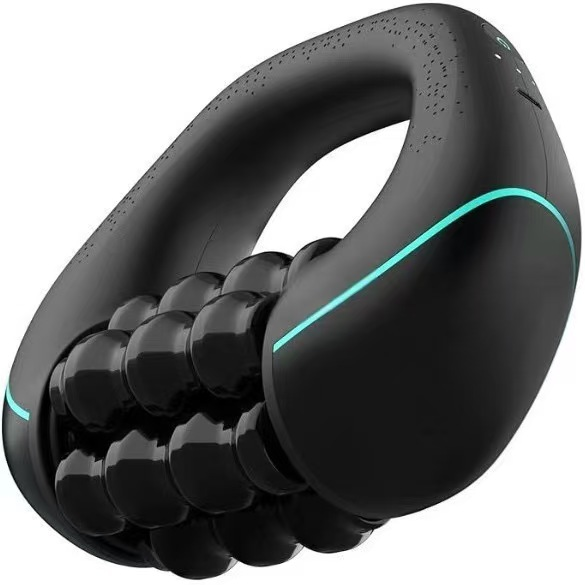
When a customer picks up a battery-powered device, they rarely ask about nominal voltage or internal resistance. They want to know if it will last through a long shift, survive a forgotten overnight charge, or keep working when the temperature drops. The metrics that actually come up in conversation are refreshingly practical: how many hours of real use before reaching for a charger, how quickly it recovers from empty to usable, and whether the performance stays consistent after months of daily cycling. These are the numbers that shape word-of-mouth recommendations and repeat purchases, yet most spec sheets bury them under laboratory jargon.
Think about the last time a colleague complained about a cordless tool or an e-bike. The frustration was probably not about milliamp-hours in the abstract, but about the gap between the advertised runtime and what happened on a cold morning or during heavy load. Customers talk about "it died halfway through the job" or "I can get a full day on a single charge"—narratives built around usable energy, not theoretical capacity. Translating raw performance into these everyday benchmarks means reporting metrics like runtime at typical load profiles, charge time from 20% to 80% under real-world conditions, and capacity retention after 500 cycles. Those are the figures that create trust and drive genuine conversations.
For any team designing or marketing battery-powered products, the challenge is to move beyond generic claims and offer numbers that resonate in the field. Instead of listing a discharge curve, show how many fasteners driven per charge or how many miles of assisted pedaling at a given assist level. Instead of a vague cycle life, state the expected usable capacity after two years of daily use. When you frame battery performance in the language your customers already use around the job site, the trailhead, or the warehouse floor, you turn a technical specification into a story worth sharing.
Housing and Grip Design: Making the Device Feel Like an Extension of the Hand
The housing doesn't attempt to be a neutral shell; it follows the natural curl of a relaxed palm. Where most devices force your fingers into a rigid claw, the rear surface here carries a subtle asymmetric swell that nestles into the hollow between thumb and index finger. The transition from back panel to side edge is softened with a radius that mirrors the crease of your inner knuckles, so there's no hard seam to dig into skin during longer use. It's less about adding grip tape or ridges and more about letting the silhouette disappear against your hand's own geometry.
Material choices reinforce that sense of continuity. A matte, slightly warm-to-the-touch polymer forms the main body — not the slick, cold plastic found on many electronics, but a finish with a fine grain that reads more like pebbled leather. In areas where your fingertips rest, the texture tightens into a barely visible micro-dot pattern, increasing friction without becoming abrasive. This isn't a one-size-fits-all tacky coating; the surface treatment varies across the device, mirroring how different parts of your hand exert different pressure. The result is a housing that stays put when your palm is dry, but doesn't turn slippery the moment your hand warms up or perspires slightly.
Weight distribution does the final work of making the device feel like a natural extension. The battery and internal frame are positioned so the center of mass sits just below the midpoint of your palm, not out toward the fingertips or hanging off the heel. That placement lets your wrist stay neutral instead of constantly fighting a forward-leaning load. The primary buttons sit exactly where your thumb already arcs, requiring no stretch or repositioning. After a few minutes, you stop noticing the device as a separate object — your hand simply knows where everything is, the way it knows the position of its own fingers.
Packaging That Makes People Film the Unboxing
Some boxes never make it to the trash. They sit on a shelf, get passed around a room, or become the reason someone pulls out their phone before touching the product. The packaging does something rare: it slows the moment down. A lid that lifts with a soft pneumatic hiss, a folded paper sleeve that unfolds like a map, a hidden compartment that only appears after you pull a ribbon. These small physical surprises turn a routine task into a tiny performance, and people want to capture it.
It is not about expensive materials. A plain cardboard box can feel more filmable than a lacquered one if the opening has rhythm. The first reveal should not be the product—it should be a layer that hints at it. Maybe a translucent sheet with a single word printed in the corner, or a die-cut window that frames just one edge. When the whole thing arrives flat and expands as you lift it, the hands naturally slow down. The sound matters too: a crisp snap, a smooth slide, a gentle tear. These details give the unboxing a beginning, middle, and end, almost like a short scene.
The real trick is making the person feel like they discovered something, not that they were handed a sales pitch. A small handwritten-style note tucked under the product, a reusable cord organizer hidden in the lid, a sticker sheet that matches the inner print—these extras appear unscripted. When the packaging invites touch, repositioning, and a second look, the phone comes out without thinking. The unboxing becomes less about the thing and more about the moment of opening itself.
Certifications and Compliance Without Slowing Down Your Launch
Bringing a product to market often feels like a tug-of-war between meeting regulatory demands and keeping your timeline intact. Too many teams treat certifications as a final gate that stalls everything after development is done. That approach almost guarantees delays. Instead, weave compliance checks into your sprint cycles from day one. Identify the specific standards that apply to your region and industry, then map each requirement to a concrete design or test task. When certification is a living part of development rather than a last-minute hurdle, you avoid rework and keep momentum.
Pre-compliance testing is one of the most underused shortcuts for launching faster. Rather than waiting for the official lab visit only to discover a failure, run simplified versions of the same measurements in-house. For electromagnetic compatibility, for example, a basic spectrum analyzer and a quiet room can catch glaring issues early. The same logic applies to safety, wireless, or environmental standards. Fixing a grounding problem during prototyping costs a few hours; discovering it after tooling can set you back weeks. Build a small pre-check checklist from the official test plan and run it at every hardware revision.
Partnering with a certification body that understands startup pace makes a noticeable difference. Look for labs that offer design reviews, rapid retest slots, and transparent timelines instead of black-box submissions. Some will even review your schematics before you build the first prototype, flagging non-compliant component choices while changes are cheap. Also consider modular certifications if your product family shares a core platform—certify the base board once, then file variant approvals with minimal additional testing. This turns compliance from a bottleneck into a parallel track that protects your launch date without cutting corners.
After-Sales Support That Turns First-Time Buyers into Brand Advocates
After-sales support begins the moment a first-time buyer opens the box, not when something breaks. A short, unscripted follow-up message two days after delivery—asking whether the setup was intuitive or if the quick-start guide left any gaps—signals that the purchase wasn't just a transaction. One team I worked with started including a photo of the actual assembly stage for that specific order number in their check-in email. It took an extra minute per customer, but the number of confused replies dropped sharply, and buyers often mentioned that small touch in their first product review.
The real shift happens when support agents are allowed to solve problems without forcing customers through a rigid script. A first-time buyer doesn't know that a faint clicking sound is normal for a particular model, or that a loose fitting can be fixed with a simple adjustment video. Instead of telling them to submit a warranty claim, a trained agent can say, "Here's a 40-second clip showing exactly what to check—if that doesn't clear it up, we'll send a replacement part today." That single moment, where the buyer expected resistance but got practical help, does more for brand loyalty than a year of polished marketing.
After the immediate issue is resolved, the door shouldn't close. A brief follow-up that references the earlier conversation—not a generic satisfaction survey—reminds the buyer that they were heard as an individual. Invite them to a private user group where other first-timers share setup hacks, or send a seasonal maintenance checklist with their model's name filled in. Over time, these buyers stop thinking of you as the company who sold them something and start thinking of you as the people who made the whole experience feel manageable. They leave longer, more specific reviews, answer questions in forums, and recommend you to friends with a story attached—exactly the kind of advocacy that no ad budget can manufacture.
FAQ
Go beyond the spec sheet. Ask about their foam molding tolerances, battery cell sourcing, and whether they have experience with brands in adjacent wellness niches. A partner that pushes back on unrealistic requests often saves you from costly returns later.
You don’t need twenty. Three to four speeds and four to five attachments cover most use cases—warm-up, deep tissue, and recovery. Focus on making the low setting genuinely gentle and the high setting quiet, because that’s what users remember.
Look for a brushless motor rated for at least 3,000 rpm, a battery that can handle 2–3 hours of real use, and a housing made from nylon-reinforced ABS rather than cheap plastic. Small things like a soft-touch handle and reinforced attachment stems matter more than peak stall force.
Start with a mixed batch if the factory allows it—several colors or bundle kits under the same MOQ. Negotiate staged shipping so you pay for production in milestones, and keep at least 20% of your budget for unexpected warehousing rather than maxing out the first order.
Skip the logo-only approach. Custom silicone grips, a unique carry case color, or a laser-etched panel with your brand’s pattern creates a stronger recall. Even a small detail like matching the charging cable to your brand color can make the product feel intentional rather than rebadged.
Order at least three samples and use them hard for two weeks. Give one to a trainer or physio, keep one for yourself, and leave one in a gym bag. Pay attention to heat buildup after 10 minutes, battery drain when idle, and whether the attachment lock stays firm under angled pressure.
Use a rigid two-piece box with a foam insert that holds the gun snugly instead of a flimsy carton. Add a quick-start card with simple recovery routines, and include a storage pouch that doesn’t smell like plastic. These small unboxing elements do more than a glossy sleeve.
Clarify who covers return shipping for defective units before you sign. Ask for a spare parts kit—extra attachment heads and a replacement battery—so you can resolve most issues without sending the whole gun back. A supplier willing to provide a 12-month defect rate guarantee is worth a slightly higher unit cost.
Conclusion
Building a massage gun brand around an OEM platform rarely hinges on a single spec. The motor's tuning matters far more than its top RPM; a well-mapped torque curve, reduced stall under load, and quieter operation are what separate a device people keep from one they return. Battery claims also fall apart fast if the cells sag under pressure or the runtime drops after a few dozen charges. Honest discharge curves, thermal management, and a charging routine that doesn't cook the pack tend to show up in reviews and word of mouth long before they appear on a spec sheet. That kind of tuning and battery honesty quietly builds trust.
The housing needs to disappear in the hand, which means balancing weight, grip diameter, and texture so the device feels stable during self-massage on awkward spots like the lower back. Packaging shouldn't just protect the product; a compact unboxing moment with clearly labeled accessories gives buyers a reason to share it. On the compliance side, having IEC 60335 or regional safety marks ready before production avoids launch delays, and a responsive after-sales path—simple replacement parts, clear warranty terms, and real human support—turns a first purchase into repeat loyalty. In a crowded shelf of lookalike devices, these operational details do more brand-building than any logo.
Contact Us
Contact Person: Hannah
Email: [email protected]
Tel/WhatsApp: +86 18266954198
Website: https://www.okmassager.com/