

Portable Fuel Dispenser Manufacturer Guide: Choosing the Right Supplier for Your Needs
2026-10-02
Choosing a portable fuel dispenser manufacturer is rarely a one-size-fits-all decision. The right supplier shapes how safely, efficiently, and compliantly you move fuel—whether that’s on a construction site, in a remote mining camp, or at a backup power facility. This guide breaks down the essential criteria, from build quality and calibration accuracy to after-sales support and certification. As you compare options, BEILIN stands out for its field-proven designs and responsive engineering team. Read on to make a decision that keeps your operations running without refueling hiccups.
How to Spot a Factory Floor vs. a Sales Pitch
A real factory floor has a rhythm you can feel. Machines hum, carts rattle, and people move with purpose rather than polish. It rarely looks like a catalog photo - there are scratches on the floor, bins of half-finished parts, and handwritten notes taped to equipment. A sales pitch, by contrast, tends to show clean workbenches, perfect lighting, and smiling staff who never seem to touch anything.
Look for details that cannot be staged easily. Ask about raw material storage, machine maintenance logs, or how they handle rush orders. On a genuine factory floor, someone will point to a specific press, explain its daily output, and maybe complain about a supplier. In a sales pitch, you will hear broad claims like "state-of-the-art facility" or "quality-driven process" without any numbers, names, or operational trade-offs.
Another tell is the language of compromise. Real manufacturing involves constraints - lead times, tooling changes, defect rates, and shift schedules. If every answer sounds effortless and every photo looks like a brochure, you are probably seeing a sales narrative rather than an actual production line. The most credible factories are not afraid to show a little grit.
Certifications Are Not Decoration: What a Pump's Paperwork Actually Proves
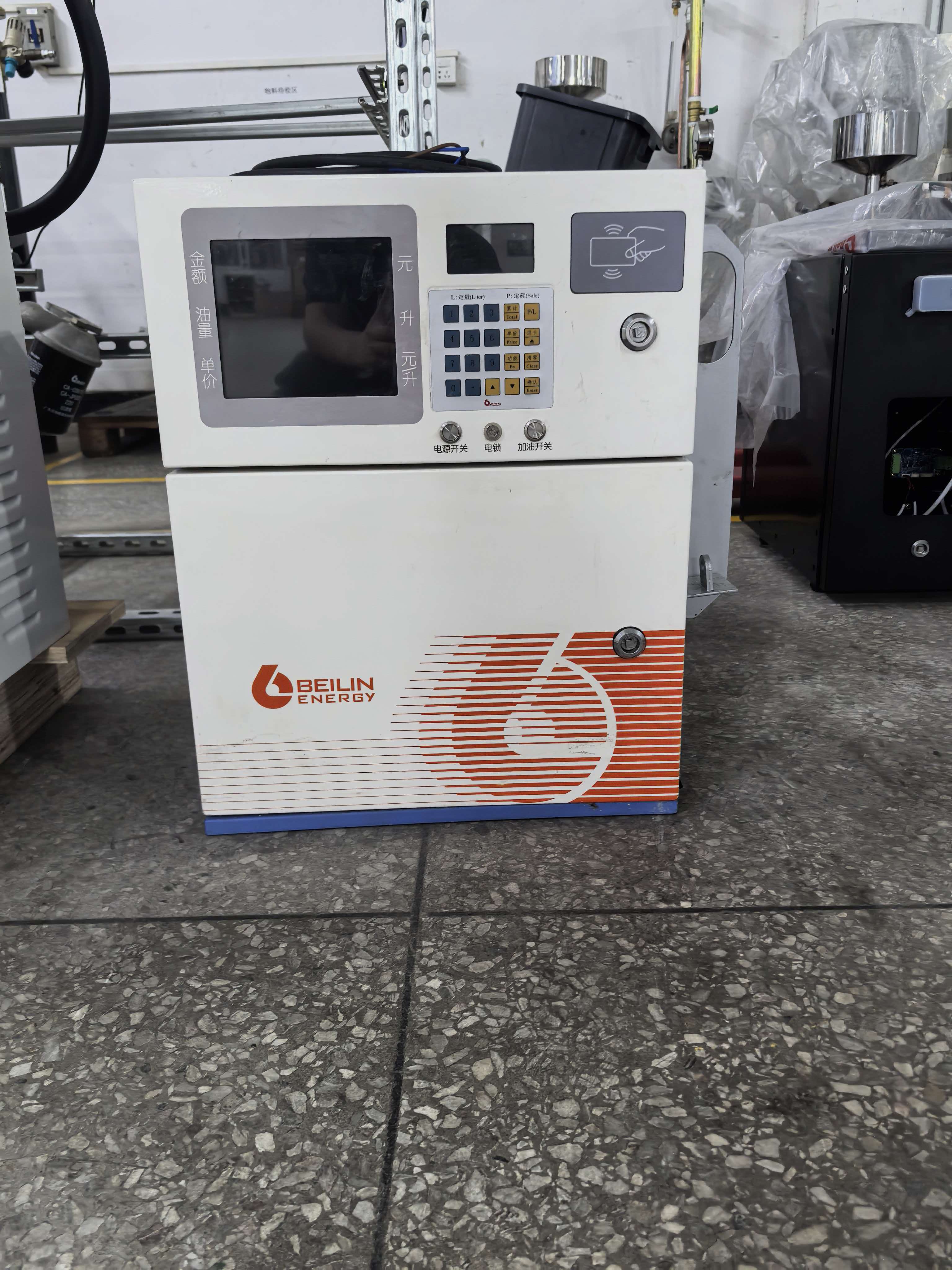
A pump's certification plate is often treated like a sticker on a laptop—nice to have, quickly ignored. But unlike a decorative badge, every mark on that plate corresponds to a specific set of tests, material checks, and design constraints the manufacturer had to pass. For instance, a CE mark isn't a general "quality" endorsement. It means the pump meets EU safety, health, and environmental requirements for its intended use, verified through documented risk assessments and, where required, third-party conformity testing. Without that paper trail, the mark means little.
The real value of certifications becomes clear when you look at what they prevent. A pump certified for potable water service has been evaluated for leaching of harmful substances into drinking water—not merely inspected for visible defects. In hazardous locations, an ATEX or IECEx certification confirms the pump won't become an ignition source, based on specific gas or dust groups and temperature classes. These aren't marketing claims; they are legal and contractual guarantees, often tied to insurance requirements and facility safety audits. When a pump fails and the paperwork is missing, the cost is rarely just a replacement unit—it can involve regulatory fines, production downtime, and liability disputes.
So the next time someone dismisses a pump's documentation as red tape, ask what specific hazard or performance claim that paperwork is meant to substantiate. The difference between two pumps that look identical on the outside is often hidden in the test reports, material certifications, and factory inspection records nobody reads until there's a problem. Certifications aren't decoration—they are the only verifiable evidence that the pump will do what the datasheet promises under the conditions you actually operate in.
Beyond Standard Specs: Customizing a Dispenser Without the Usual Headaches
Most off-the-shelf dispensers assume a narrow set of fluids and duty cycles. When your process involves abrasive pastes, temperature-sensitive adhesives, or odd viscosities, the standard wetted path quickly becomes the bottleneck. Swapping seals and nozzles may work for a demo run, but production realities—downtime, inconsistent bead placement, wasted material—force a different conversation. Customization starts with mapping the actual flow path, not the catalog page.
A practical custom build often hinges on two overlooked details: the dispense valve's response time and the fluid reservoir's pressure stability. Standard layouts place the metering point too far from the nozzle, causing lag and tailing. Relocating the valve closer to the point of dispense and adding a dampener that matches the fluid's compressibility can eliminate most of the pulsing that operators blame on the pump. It is rarely about a bigger motor or a thicker barrel; it is about shortening the distance between pressure changes and fluid departure.
The final headache usually appears during validation. Custom parts that cannot be cleaned without full disassembly or that require proprietary tools for a simple O-ring swap add hours to every maintenance window. Specifying quick-release fittings, polished internal radii, and tool-free access from the start turns a one-off prototype into a repeatable production asset. When customization is treated as an engineering constraint list rather than a parts swap, the result is a dispenser that fits the line—without the typical rework spiral.
The 3 a.m. Test: Will Your Supplier Answer When the Pump Stops?
Every maintenance manager knows the real stress test isn't in a spec sheet or a signed SLA. It happens at 3 a.m., when a critical pump dies and production stops. The only question that matters: does your supplier pick up the phone, or do you get a voicemail greeting? Most suppliers look great during business hours, with polished quotes and quick email replies. But the 3 a.m. test strips all that away. It reveals whether you have a true partner or just a transactional vendor.
A missed call at that hour can cascade fast. Downtime piles up by the minute, shipments slip, and your own customers start asking questions. If your supplier only promises "next business day" support, you're already behind. It's not about having a 24/7 hotline number on a website; it's about someone competent actually answering, knowing your equipment, and being ready to dispatch or troubleshoot. Many companies claim round-the-clock support, but few can prove it when a pump stops at the worst possible time.
Before you renew that next supply contract, run your own version of the test. Call after hours, ask for emergency support without identifying yourself as a big account, and see what happens. Better yet, ask for a list of recent after-hours responses and talk to the customers on that list. If the answers feel vague or scripted, trust your gut. A supplier that passes the 3 a.m. test may cost a little more, but they save you from losing an entire shift—or worse.
Dirt, Dust, and Diesel: What Harsh Environments Teach You About Build Quality
The first time you watch a skid steer disappear into a cloud of its own making, you realize build quality isn't a spec sheet item. It's the difference between a machine that shrugs off abrasive grit and one that eats its own seals by hour 200. Contractors in mining and agriculture don't care about marketing language; they care whether a hose clamp survives a thousand vibration cycles or a bearing tolerates fine silica that finds its way into everything.
Diesel engines in these settings teach a brutal lesson: filtration is destiny. A cheap air intake lets dust score cylinder walls and turn oil into grinding paste. But the real test is in the details you can't see on a showroom floor—the way wiring harnesses are routed away from heat, how connectors are sealed against moisture, and whether the frame has enough bracing to keep every panel from rattling loose after a season of washboard roads.
After enough hours in the field, you stop trusting glossy brochures and start looking for the scars. A machine that's survived a few years of dirt, dust, and diesel without constant attention has proven something no laboratory test can replicate. Build quality isn't about never breaking; it's about breaking less often, being easier to fix, and keeping the operator safe when the environment does its worst.
The Price Tag Is the Least Interesting Number on the Quote
A quote’s bottom line rarely tells you what the work will actually cost you. Two vendors can price the same job within a few dollars of each other, yet one will ship late, nickel-and-dime you on changes, and leave you redoing half the deliverable. The other will charge slightly more upfront but absorb minor revisions, flag risks before they become invoices, and deliver a result you can use immediately. Focusing on the dollar amount alone is like choosing a restaurant by the price of the bread basket.
What should you look at instead? Start with the line items that aren’t there. Does the quote mention a revision limit, an hourly rate for overruns, or a vague “project management” fee that could balloon later? A serious quote should make assumptions explicit: how many concepts, how many rounds of feedback, what happens if you change direction halfway. If those details are missing, the low number is just a hook, not a promise.
Then compare the same scope across quotes, line by line, not just the totals. One vendor might include two rounds of edits; another might charge for the first revision. One might quote a fixed price for a defined deliverable; another might estimate hours with a “not to exceed” cap that quietly invites scope creep. The least interesting number on the page is the one printed in bold at the bottom. The interesting numbers are the ones hiding in the assumptions, the exclusions, and the fine print.
FAQ
Focus on the housing material first—cast aluminum or powder-coated steel holds up far better than thin sheet metal around job sites. Check that seals and hoses are rated for the specific fuels you'll handle, since diesel and gasoline degrade different rubber compounds. A weather-resistant enclosure with a sealed control panel also prevents early failures from rain or dust.
Ask for actual certificates, not just claims. Look for ATEX or IECEx markings on the motor and pump assembly if you're handling gasoline, and confirm the unit has proper grounding lugs. A reliable supplier will provide test reports for explosion-proof enclosures and emergency shut-off switches without hesitation.
Some models are designed as multi-fuel units, but you need to confirm the wetted components—seals, diaphragm, hose lining—are compatible with both. If you switch fuels often, request a manufacturer's written compatibility chart. Cross-contamination and seal swelling are the two biggest risks when running gasoline through a diesel-only pump.
For most small to medium equipment, a 20 to 40 liters-per-minute rate is practical. Below 15 L/min gets frustrating when filling larger tanks, while above 60 L/min usually requires a larger power source and sturdier hoses. Match the flow to your biggest tank, not the average one, to avoid bottlenecks.
It often matters more than the initial price. Inquire about spare parts availability for the pump, meter, and nozzle—not just the whole unit. Ask how quickly a technician can respond in your area, and whether the supplier offers remote troubleshooting or just ships replacement parts. A cheap dispenser becomes expensive if it sits idle for three weeks waiting on a seal kit.
If you need to track fuel usage across multiple machines or prevent unauthorized dispensing, yes. Digital meters with pulse outputs let you log every liter, and basic remote monitoring can alert you to low battery or flow anomalies. For a single operator refueling one tractor, these add-ons are usually unnecessary complexity.
They often ignore real-world power consumption—especially with 12V or 24V DC models—and end up with a pump that drains the vehicle battery too quickly. Another mistake is overlooking the weight and mounting footprint; a 'portable' unit with a fixed steel frame may be impractical to move alone. Also, comparing only the purchase price instead of total cost over five years leads to false savings.
Conclusion
Selecting a portable fuel dispenser manufacturer rarely comes down to the unit sitting on a showroom floor. You need to look past the polished sales pitch and ask whether you're standing in a real factory, watching metal get cut and welded, or just a fancy office with a demo model. Paperwork matters too—certifications aren't decorations. A pump's certificates should prove it meets safety, metering, and environmental standards for the regions you operate in, not just that someone paid for a wall plaque. And if you need a dispenser that doesn't match the catalog, the right supplier will work with you on flow rates, nozzle types, or hose lengths without acting like every change is a crisis. That kind of flexibility usually means the manufacturer actually builds the equipment rather than reselling someone else's box.
After the sale is where most suppliers separate themselves. The 3 a.m. test is simple: if a pump stops in the middle of a night shift, will a real engineer answer the phone and talk you through a fix, or will you get a voicemail and a promise to call back next week? Harsh environments—dirt, dust, diesel spills—quickly expose cheap seals, flimsy wiring, and filters that clog after one tank. A supplier who has seen those conditions will harden the enclosure, use better filtration, and choose components that survive vibration and temperature swings. Finally, ignore the headline price. The least interesting number on a quote is the unit cost. What actually matters is the cost of downtime, the availability of spare parts, the labor required for routine maintenance, and whether the supplier will stand behind the pump three years from now. A few hundred dollars saved upfront disappears fast if you're down for a week waiting on a backordered seal.
Contact Us
Contact Person: Jason
Email: [email protected]
Tel/WhatsApp: 8615876017548
Website: https://www.bei-lin.com/