

Solar Agriculture Mounting Systems: Advanced Factory Solutions
2026-02-03
The future of agriculture is not just about seeds and soil—it's about harnessing the sun itself. As farmers worldwide face rising energy costs and growing pressure to adopt sustainable practices, innovative solar agriculture mounting systems are transforming how crops are grown and powered. At Energet Solar, we're at the forefront of this revolution, offering advanced factory solutions that seamlessly integrate solar panels into agricultural landscapes. In this blog, we'll explore cutting-edge mounting designs that maximize space, boost efficiency, and pave the way for a greener, more productive farming era. Curious how these systems can turn your fields into dual-purpose assets? Let's dive in.
Innovative Mounting Designs for Enhanced Solar Farm Efficiency
When you picture a solar farm, it's often rows of panels at a fixed tilt, almost like a field of static sentinels under the sun. But what if those panels could move? That's where single-axis and dual-axis tracking systems come in, transforming efficiency by following the sun's path. Single-axis designs, which pivot on one axis (usually east to west), can boost energy output by up to 25% compared to fixed mounts. Dual-axis systems take it further, adjusting both horizontally and vertically to capture optimal angles year-round, pushing gains to around 35% or more in some climates. It's not just about more power—tracking reduces shading between panels and better aligns with peak demand times, making solar farms more responsive and profitable.
But innovation doesn't stop at tracking. Consider floating solar farms, where mounting designs take to the water on lakes or reservoirs. These systems use buoyant platforms that keep panels cool naturally, reducing heat-related efficiency losses—a common issue on land. By using otherwise unused water surfaces, they cut down on land-use conflicts and can even help reduce evaporation. The mounting structures here need to withstand waves and corrosion, leading to materials like high-density polyethylene and advanced alloys. It's a clever twist that solves multiple problems at once, showing how thinking outside the box can yield big efficiency wins.
Then there's the shift toward flexible and modular mounting designs, like those using lightweight frames or ballasted systems that don't require deep foundations. These options speed up installation and lower costs, especially on uneven or sensitive terrain. For example, some newer designs incorporate adjustable legs that adapt to ground contours, ensuring a stable setup without extensive grading. This flexibility means farms can be deployed faster and in more locations, tapping into previously overlooked sites. In short, these innovations aren't just technical tweaks; they're reshaping how solar farms operate, making them smarter, more adaptable, and ultimately more efficient in harnessing sunlight.
Precision Engineering in Solar Mounts for Agricultural Land Use
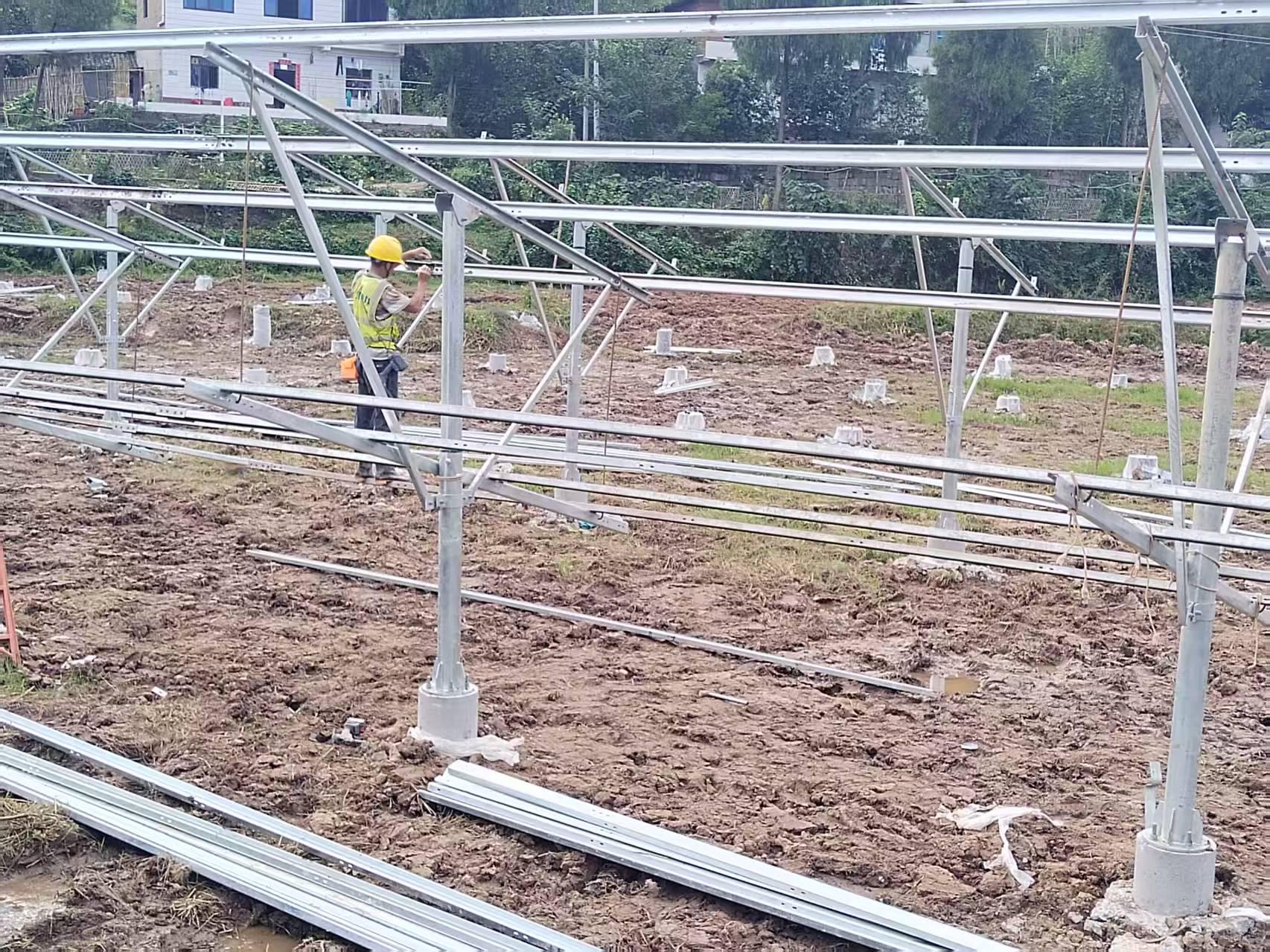
Precision engineering in solar mounts for agricultural land use involves designing and installing mounting systems that maximize solar energy capture while minimizing disruption to farming operations. This approach goes beyond basic racking solutions; it integrates advanced materials, adjustable angles, and site-specific assessments to ensure optimal performance in diverse crop environments. By tailoring mounts to factors like soil type, terrain, and crop cycles, these systems can boost energy output without sacrificing valuable arable space, making them a smart investment for modern farms looking to diversify their revenue streams.
What sets these engineered mounts apart is their adaptability to both ground-mounted and elevated setups, such as agrivoltaics, where solar panels coexist with crops or livestock. Precision here means not just following standard blueprints but leveraging real-time data and simulation tools to predict shading effects and microclimate changes, which can enhance crop resilience and water efficiency. This dual-use strategy transforms passive land areas into active, multifunctional assets, blending renewable energy goals with sustainable agriculture in ways that generic installations often miss.
The innovation extends to durability and maintenance, with mounts engineered to withstand harsh agricultural conditions like heavy machinery, weather extremes, and chemical exposure. By using corrosion-resistant alloys and modular designs, these systems reduce long-term costs and downtime, ensuring reliable energy production year-round. This careful attention to detail helps farmers not only generate clean power but also improve land stewardship, creating a harmonious balance that supports both environmental and economic growth on the farm.
Customizable Solutions for Diverse Soil and Terrain Conditions
When it comes to agriculture and land management, a one-size-fits-all approach just doesn't work, especially with the unpredictable nature of soil and terrain. Our customizable solutions are designed to tackle this head-on, offering tools that adapt to everything from arid deserts to wet marshlands. Think about it: rocky slopes that need erosion control, clay soils that hold too much water, or sandy grounds that drain too quickly—each scenario demands a unique strategy, and we've got the flexibility to deliver it.
We start by analyzing your specific site conditions using advanced technology like drones and soil sensors, which helps us gather precise data without the guesswork. This means you get recommendations tailored to your exact needs, whether it's nutrient management for poor soil or drainage systems for hilly areas. It's not just about applying a standard fix; it's about crafting a plan that evolves with your land, ensuring sustainability and long-term success.
Beyond just technical adjustments, our approach emphasizes collaboration with local experts and farmers who know the land best, blending traditional knowledge with modern innovations. This synergy leads to more resilient solutions that stand out in the market—think reduced waste, higher crop yields, and better environmental stewardship. So, no matter how challenging your terrain might be, we're here to provide a solution that fits like a glove.
Automated Assembly Lines Boosting Production Speed and Quality
In today's fast-paced manufacturing landscape, automated assembly lines have become indispensable for companies aiming to streamline operations. By integrating robotics and advanced sensors, these systems significantly reduce human error and downtime, leading to faster production cycles. For example, a car manufacturer recently reported a 30% increase in output after implementing such technology, allowing them to meet rising demand without compromising on precision.
Beyond just speed, the quality improvements are equally remarkable. Automated lines ensure consistent assembly processes, minimizing variations that often arise from manual labor. This consistency not only enhances product reliability but also reduces waste and rework, saving costs in the long run. Companies across sectors, from electronics to pharmaceuticals, are leveraging these systems to maintain high standards while scaling their production capabilities efficiently.
The versatility of modern automated assembly lines allows for easy customization and quick changeovers, catering to diverse product lines without extensive retooling. This adaptability empowers businesses to stay agile in competitive markets, responding swiftly to consumer trends. As industries continue to evolve, the role of automation in boosting both speed and quality will only grow, making it a key driver of sustainable manufacturing success.
Durable Materials Ensuring Long-Term Reliability in Harsh Climates
Harsh climates often push materials to their limits, subjecting them to intense UV radiation, extreme temperature swings, heavy precipitation, and corrosive elements. To guarantee long-term performance and reliability, selecting durable materials is absolutely crucial. Advances in material science have led to innovative solutions that not only withstand these environmental stressors but also maintain structural integrity and aesthetic appeal over decades, ensuring investments are protected and performance remains consistent even under the most demanding conditions.
Beyond traditional options like stainless steel or treated wood, modern engineering now harnesses high-performance polymers, composite materials, and specialized coatings that excel in resistance to weathering and degradation. For instance, polymers with enhanced UV stabilizers prevent brittleness and discoloration, while composite materials combine strength with lightweight properties to handle thermal expansion and contraction without cracking. This focus on durability significantly reduces maintenance needs and lifecycle costs, making it a smart choice for projects in coastal, desert, or arctic environments where reliability is non-negotiable.
In practical applications, durable materials translate to safer, more resilient infrastructure and products, from architectural facades and roofing to outdoor equipment and automotive components. By prioritizing materials tested in real-world harsh climates, manufacturers and builders can deliver solutions that stand the test of time, offering peace of mind and sustainable value without constant repairs or replacements. This approach not only enhances longevity but also supports environmental goals by minimizing waste and resource consumption over the long haul.
Integration of Solar Panels with Modern Farming Equipment
Think about the typical farm field: tractors chugging along, irrigation systems pumping water, and perhaps a drone monitoring crop health. Now, imagine all that equipment running on clean power harnessed directly from the sun. That's the core idea behind integrating solar panels into modern farming. It's not just about slapping panels on a barn roof anymore. Today's innovations are seeing solar cells seamlessly woven into the fabric of farming machinery, providing a direct, off-grid power source for everything from electric tractors to sensor networks. This shift moves farms away from reliance on diesel generators or distant power lines, offering a silent, emission-free alternative that aligns perfectly with the growing demand for sustainable agriculture. Farmers aren't just saving on fuel costs; they're gaining energy independence and reducing their carbon footprint in the process.
What really sets this integration apart is how it supercharges the capabilities of smart farming tools. Take autonomous planting equipment or GPS-guided harvesters – these devices require constant, reliable power for their complex electronics and data transmission. Solar panels, paired with efficient battery storage, ensure they can operate uninterrupted for hours, even in remote fields. This isn't a minor upgrade; it enables precision agriculture at its finest. For instance, solar-powered sensors can continuously monitor soil moisture and nutrient levels, sending real-time data to farmers' smartphones without ever needing a battery change. The result? More timely interventions, optimized resource use, and ultimately, higher crop yields with less environmental strain.
Looking ahead, the fusion of solar technology with farming equipment is sparking some truly creative applications. Picture lightweight, flexible solar films integrated into the canopies of irrigation pivots, powering their movement while shading crops to reduce water evaporation. Or consider portable solar arrays that fold out to charge electric utility vehicles on the go. These solutions aren't just theoretical; they're being tested on forward-thinking farms today. By blending renewable energy with high-tech tools, this integration is helping shape a new era of farming that's not only more efficient but also more resilient to energy price fluctuations and climate challenges, proving that innovation in agriculture can be both practical and planet-friendly.
FAQ
Solar agriculture mounting systems are specially designed structures that integrate solar panels with agricultural land, allowing dual land use for both energy production and farming. Unlike traditional solar setups, these systems are elevated or spaced to enable crops or livestock to thrive underneath, maximizing land efficiency and supporting sustainable practices.
Advanced factory solutions for solar agriculture mounting systems involve precision engineering, modular designs for easy assembly, and durable materials like galvanized steel or aluminum to withstand outdoor conditions. They often include automated production lines for consistency, custom configurations to fit various terrains, and integrated tracking systems to optimize solar panel angles throughout the day.
These systems benefit farmers by providing a renewable energy source that can power farm equipment, reducing electricity costs, and offering additional income through excess energy sales. They also promote soil health by reducing direct sunlight exposure, conserving water through shading, and enabling year-round farming under the panels, enhancing overall farm productivity and sustainability.
Challenges include high initial costs, maintenance needs for both solar and agricultural components, and ensuring compatibility with existing farm operations. These can be addressed by seeking government incentives or grants, choosing systems with low-maintenance designs, and planning installations in phases to minimize disruption, along with thorough site assessments to optimize placement.
Solar agriculture mounting systems are versatile and can be adapted to various crops and climates. They work well with shade-tolerant crops like leafy greens in hot, sunny regions, helping to reduce heat stress. In cooler areas, they can protect sensitive plants from frost. The systems can be tailored to local conditions, making them suitable for many agricultural environments worldwide.
Advanced factory solutions enhance efficiency and reliability by ensuring high-quality manufacturing standards, such as corrosion-resistant coatings and precision welding. They allow for scalable production, reducing lead times and costs. Features like pre-assembled components and standardized parts simplify installation and maintenance, leading to longer system lifespans and better performance in diverse agricultural settings.
Conclusion
Advanced factory solutions for solar agriculture mounting systems are revolutionizing how farms integrate renewable energy through innovative mounting designs that maximize solar farm efficiency. These systems feature precision engineering specifically tailored for agricultural land use, ensuring minimal disruption to farming operations while optimizing energy capture. By offering customizable solutions that adapt to diverse soil and terrain conditions, manufacturers provide flexibility for various farm environments, from flat plains to hilly regions.
The adoption of automated assembly lines significantly boosts production speed and quality, enabling faster deployment of robust mounting systems. Utilizing durable materials ensures long-term reliability in harsh climates, protecting investments against weather extremes. Furthermore, integration with modern farming equipment creates seamless synergies between energy production and agricultural activities, enhancing overall farm sustainability and productivity. This holistic approach positions solar agriculture as a key driver in sustainable farming practices.
Contact Us
Contact Person: Simon
Email: [email protected]
Tel/WhatsApp: 8613672181100
Website: https://energetsolar.com/