

Stamping Parts Exporter Delivering Precision Metal Components Worldwide
2026-11-16
Precision metal stamping is one of those invisible foundations of modern manufacturing—until a batch arrives out of tolerance. Then every stopped line, reworked order, and delayed shipment points back to the same question: can your stamping parts exporter actually deliver worldwide without compromising quality? BOYIKUN built its reputation on answering that question with repeatable precision, from micro brackets to heavy-gauge structural components. In this post, we’ll look at what separates reliable global suppliers from the rest.
Precision Stamping Without the Customs Drama
Sourcing precision stamping parts usually means juggling tolerance specs on one side and a growing pile of import paperwork on the other. We handle both ends so your parts arrive on schedule without a customs broker calling you at 6 a.m. Our team manages global logistics, pre-clears documentation, and ships to your dock with landed costs locked before production even starts. No surprise tariffs, no last-minute warehouse holds—just the parts you specified, ready for assembly.
The stamping itself stays razor sharp. We work with thicknesses from 0.08 mm to 6.0 mm across steel, aluminum, copper, and specialty alloys, holding dimensional tolerances down to ±0.01 mm where the design calls for it. Every batch moves through first-article inspection, in-process checks, and a final dimensional audit. The result is a repeatable process that doesn't drift between prototype and volume runs, whether you need 500 pieces or 50,000 per month.
You also get a single point of contact who understands both tooling nuances and international shipping rules. If a die needs adjustment or a port changes its inspection protocol mid-order, we resolve it before it becomes your problem. That means you can focus on your own product development instead of untangling a cross-border mess. Plain language updates, clear timelines, and parts that show up when we say they will—that's the whole deal.
Die Design That Holds Up from Dock to Dock
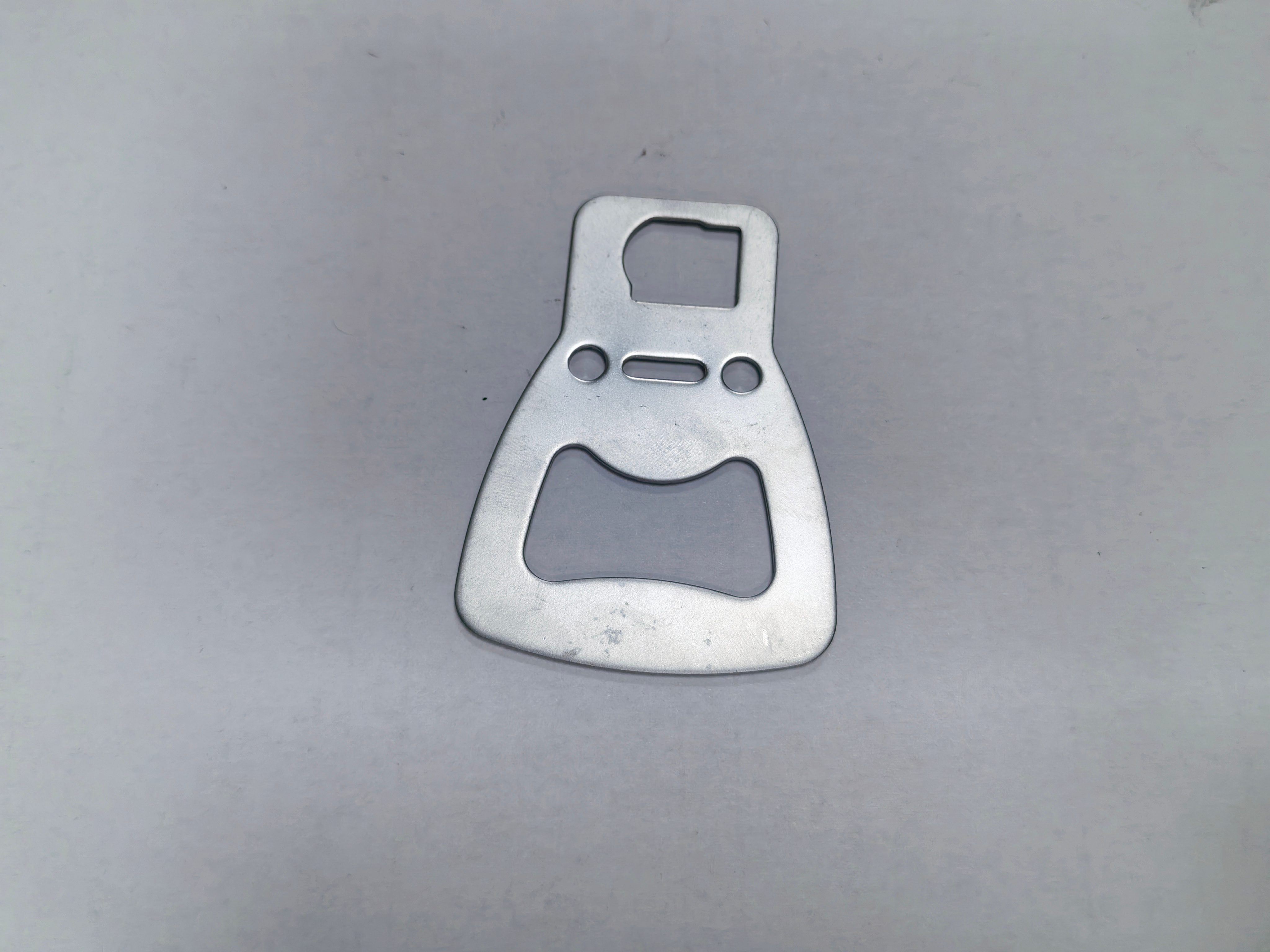
A die that survives dock-to-dock handling needs more than just good steel. Corners get bumped, forks slide under the wrong lift points, and tie-down straps dig into machined surfaces. Smart design starts with recessed lifting lugs and clearly marked balance points, so a crane or forklift doesn't end up torquing the die shoe or cracking a guide pin. Adding replaceable wear plates along the bottom and side edges absorbs the scrapes that happen every time the die is shuffled from rack to trailer to press.
Internal alignment matters just as much as external armor. Guide pins and bushings sized for the full shut height, plus tapered leader pins on the upper half, let the die self-center even when it gets set down a little out of square. Extra heel blocks at the shear faces stop side-loading from turning a small misalignment into a cracked punch or scored die section. These aren't luxury add-ons; they're the difference between running a full shift without adjustment and shimming a die back into tolerance after every move.
The real test comes after repeated docks, bad roads, and hurried operators. A die designed for this life has bolts that stay put because they're angled or retorqued at the right intervals, and dowel holes that don't oval out because the locating features are case-hardened. When seals and grease fittings are tucked out of the way of slings and chains, the die arrives at the next press ready to run, not ready for triage.
Export-Ready Metal Parts, Not Just Boxed
We treat every shipment as a handshake with your production line. Instead of dropping parts into standard cartons, we engineer crating systems that match the exact mass, geometry, and surface sensitivity of each component. Threaded inserts, machined faces, and tight-tolerance bores arrive protected by custom-cut foam, vapor-phase inhibitors, and bolt-down steel frames — not bubble wrap and hope.
Customs paperwork, harmonized codes, and destination-country packaging rules are handled before the first layer of wrap goes on. Your parts get a documented chain of custody from inspection bench to loading dock, with photographs at each stage. No last-minute repacking, no surprise duties because the crate said "samples."
The real export-ready difference shows when the container opens overseas. Same orientation you shipped them, same cleanliness, same zero scratches. Your receiving team unbolts a reusable cradle, not a pile of loose hardware. That is what we mean by export-ready: the part arrives as if it never left your floor.
When Tolerances Cross Oceans
The first time a batch of parts arrives from across the ocean and the bolt holes don't line up, it's rarely the ocean's fault. Tolerances are local habits as much as engineering numbers. A shop in Osaka might treat plus or minus 0.05 mm as a starting point, while a plant in Ohio reads the same drawing and assumes you meant something looser, because their machines, their history, and their inspectors have always done it that way. When those habits cross water, the gap between expectation and reality gets measured in scrapped inventory and delayed shipments.
Then comes the harder part: figuring out which tolerance actually matters. A tight bore on a pump housing might be non-negotiable, but a surface finish callout that one side polishes obsessively can be ignored by the other without any functional loss. Yet remote teams often treat every number on the print as sacred, because no one wants to own a failure from three time zones away. That caution quietly drives up costs and lead times, turning a ten-day ocean crossing into a six-week argument over who read the drawing wrong.
The fix isn't a bigger stack of inspection reports or another conference call about alignment. It's building a shared language that lives closer to the work: photos of actual rejected parts, videos of assembly attempts, and short notes that say "this dimension only matters if it interferes with the seal." When those examples move back and forth as often as the parts themselves, tolerances start crossing oceans with fewer misunderstandings—and fewer containers sent back.
Tool Steel and Trackable Shipments
Tool steel isn't the kind of material you can afford to lose in transit. Its grades, from water-hardening W-series to high-speed M-series, each carry specific heat-treatment histories and dimensional tolerances that make a delayed or misrouted shipment more than an inconvenience—it becomes a production stoppage. That's why modern suppliers have moved beyond basic tracking numbers. They now embed each bar or coil with laser-marked heat numbers that stay legible through rough handling, so a receiving dock can verify a shipment against its mill certificate before the crate is even opened.
Trackable shipments for tool steel don't just mean knowing where a truck is on a map. The real value lies in condition monitoring during transit. Temperature swings, humidity spikes, and even prolonged vibration can affect surface finish or induce stress in precision-ground flats. Some logistics partners now place compact data loggers inside the packaging, recording exposure and flagging any excursion beyond agreed thresholds. When a shipment arrives, the recipient pulls that log and checks it alongside the bill of lading—no guesswork, no finger-pointing, just a clear chain of custody for the steel's physical state.
There's also a quiet shift toward pairing tool steel orders with digital shipment IDs that tie directly to the supplier's inventory system. Instead of a generic tracking page, a buyer sees the exact alloy, the saw-cut length, the original heat lot, and the expected delivery window all in one view. If a truck gets rerouted, the system recalculates the ETA and alerts the shop floor manager before they've even scheduled the next machining operation. For toolrooms running lean on stock, that kind of real-time traceability is the difference between a seamless handoff and an idle spindle waiting on steel.
The Quiet Logistics Behind Global Metal Supply
The steel beam in a skyscraper and the copper wire inside a phone rarely reveal their journey. Before either exists, a bulk carrier may wait three weeks off a congested port, its load of iron ore from Pilbara or bauxite from Guinea shifting with each tide. These delays rarely make headlines, but they quietly redraw delivery schedules for smelters and manufacturers on four continents.
Behind the scenes, traders and logistics coordinators juggle inventory buffers, demurrage fees, and railcar availability. A single bottleneck—a lock closure on the Panama Canal, a strike at a Chilean mine, or low water on the Rhine—can force a smelter to buy pricier spot alumina or idle a furnace. The work is unglamorous: checking vessel position reports, negotiating with warehouse operators, recalculating safety stock. Yet this constant adjustment is what keeps metal moving when the visible supply chain stalls.
The quiet logistics also shape prices more than many realize. Metal sitting on a dock in Rotterdam is not just inventory; it is a signal. When warrant cancellations rise or trucking queues stretch outside a Midwestern depot, buyers begin to suspect that the next delivery may be late. In that way, the most important events in global metal supply often happen in the least visible places—a weighbridge reading at dawn, a pilot boarding a ship outside Hamburg, or a phone call changing a delivery window by six hours.
FAQ
We ship a wide range of precision metal stampings, including brackets, terminals, connectors, spring clips, deep-drawn housings, and custom micro-stamped parts. Our tooling supports progressive, compound, and transfer die methods.
Our components end up in automotive systems, consumer electronics, medical devices, industrial machinery, and renewable energy equipment. We adapt surface finishes, tolerances, and material choices to match each sector's requirements.
We have an in-house tooling department that can develop a die set from your CAD file or from a physical sample. We also run simulation checks to spot potential forming issues before cutting steel, which saves revision cycles.
Common materials include cold-rolled steel, stainless steel, copper alloys, brass, aluminum, and beryllium copper. We can also process pre-plated or clad metals when the final part needs specific conductivity or corrosion resistance.
Every batch goes through first-article inspection, in-process checks, and final dimensional reports. We use CMMs, optical comparators, and automated vision systems, and we can provide PPAP documentation if your supply chain requires it.
Prototype stampings usually leave our facility within two to three weeks after die approval. Production runs depend on volume and complexity, but we often ship standard orders within four to six weeks, with expedited options available.
Yes, we regularly export to Europe, North America, and Southeast Asia. We prepare the necessary certificates of origin, material test reports, and surface treatment documentation so your customs clearance goes smoothly.
Conclusion
Shipping precision stamping across borders used to mean accepting a whole lot of uncertainty—customs delays eating into lead times, dies that arrived worse for wear, and tolerances that somehow shifted somewhere mid-ocean. We took a different route. Our die design isn't just built for the press; it's built for the journey. Each tool is engineered to hold its geometry from dock to dock, so the parts you unpack in Rotterdam or Houston measure exactly like the ones that left our floor. When you're dealing with tolerances measured in microns, that kind of consistency isn't a bonus, it's the whole point.
Export-ready metal components go beyond a cardboard box and a packing slip. We treat every shipment as a moving extension of the production line. Our stock of tool steel is chosen for repeatability and edge retention, so long runs don't drift. And behind every pallet is a quiet logistics operation—tracking numbers that actually update, documentation that clears before the vessel berths, and routing decisions that avoid the usual customs tangles. It's not glamorous, but it's why our stamped parts show up on time, in spec, and ready to feed your assembly line without a single phone call to sort out a mystery.
Contact Us
Contact Person: Xianchen Hu
Email: [email protected]
Tel/WhatsApp: 86-13248645200
Website: https://www.hexnb.com/