

Top 10 Solar Ground Mount Suppliers from China You Should Know
2026-09-07
Choosing the right ground mount system can make or break a utility-scale solar project. China now leads the world in manufacturing these structures, offering everything from fixed-tilt to single-axis trackers at competitive prices. Yet the sheer number of suppliers makes it hard to separate reliable partners from short-lived vendors. That’s why we’ve rounded up ten Chinese ground mount suppliers with proven engineering and export experience. One name that keeps surfacing in recent bids is Topfencesolar—known for heavy-duty steel designs and responsive customization. Read on to see who else made the cut and what sets each apart.
Why Some Ground Mount Systems Outlast Their Warranties in the Field
A major reason some ground mounts hold up beyond their warranty period comes down to materials that are specified well above the corrosive threat of the site. Instead of settling for the minimum galvanized coating thickness that meets a generic standard, these systems often use hot-dip galvanizing with 85 microns or more of zinc, or switch to high-grade aluminum alloys in coastal or agricultural environments. The extra material cost is small compared to the labor of replacing failed steel a decade later, and field inspections show that bolts and brackets with a heavier coating simply shed rust longer. This isn't about marketing a "premium" product; it's a quiet engineering choice that shows up in how the frame looks after five years of morning dew and bird droppings.
Structural over-design also plays a quiet but important role. Rather than calculating wind and snow loads to the exact code minimum and stopping there, some manufacturers add 15-20% margin to the allowable stress, or they use finite element analysis to identify weak points in the racking that standard tables miss. The result is a frame that can shrug off an unusually wet snowstorm or a gust that exceeds the 50-year return period without permanent deformation. Equally important is how the connections handle thermal movement: short, rigid brackets may look strong on paper, but they transfer stress to the module glass when the aluminum expands in summer. Systems with slotted holes or sliding clamps allow that movement, and that small detail prevents microcracks from growing into early failures.
Finally, installation practices and ongoing care often separate the systems that last from those that barely make it. A ground mount driven into soil with the correct pile depth and torque will stay plumb through freeze-thaw cycles, while one that was rushed may begin to lean within a few seasons. After commissioning, simple steps like keeping vegetation trimmed around the array, checking that drainage channels don't erode near the footings, and retightening bolts to spec every couple of years catch minor issues before they become structural. None of this requires specialized equipment; it's mostly a matter of treating the array as a long-term asset rather than a set-and-forget installation. The systems that outlast their warranties tend to be the ones where someone actually walks the rows once or twice a year with a torque wrench and a notepad.
Aluminum vs. Steel: What Chinese Suppliers Actually Recommend for Corrosive Sites
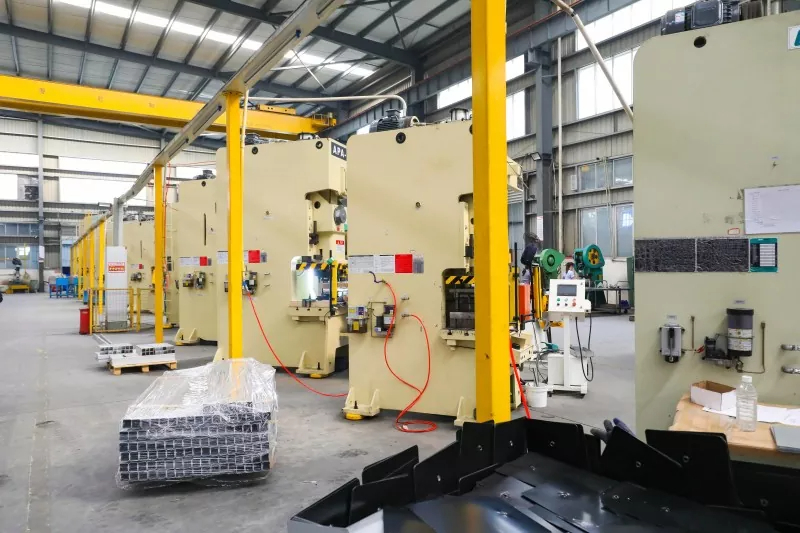
Ask a handful of Chinese sheet metal and extrusion suppliers what they quote for a corrosive site, and you might be surprised how often aluminum gets the nod over steel. Not because aluminum is universally superior, but because many coastal and chemical plant projects involve enclosures, brackets, or frames that never see heavy structural loads. In those cases, suppliers frequently recommend 5052 or 6061 aluminum with a proper anodized or powder-coated finish. The oxide layer gives it decent salt spray resistance without the price jump of 316 stainless, and it avoids the red rust that clients hate seeing on galvanized steel after a few years.
That changes quickly when the part carries real weight or sits in constant contact with chlorides. Chinese suppliers with field experience will then push back on aluminum, noting that its lower yield strength can force thicker sections, and that direct contact with steel fasteners leads to galvanic corrosion. For load-bearing supports, pipe racks, or buried components, they usually recommend hot-dip galvanized steel or 316 stainless instead, often with isolation pads or coated fasteners to stop the dissimilar metal reaction.
The most useful advice from these suppliers is rarely about picking one metal. It is about asking the right questions: how often will the surface be washed by rain, is there sheltered salt buildup, and can the design avoid crevices where moisture lingers. Many will suggest a hybrid approach—aluminum housing with stainless hardware, for example—and then tweak the finish based on actual exposure rather than a generic corrosion resistant spec.
How Pre-Assembled Components Cut On-Site Labor Without Sacrificing Strength
On a conventional job site, welding and cutting steel beams eats up hours and demands skilled hands working at height. Pre-assembled components flip that script by moving most cutting, drilling, and fitting into a controlled factory environment. Instead of a crew burning rods in the wind, you get connection plates with pre-punched holes that line up like a kit. A couple of workers with torque wrenches can bolt a joint in minutes—no field measuring, no rework, and far fewer certified welders needed on the clock.
There's a common worry that off-site work weakens the final structure, but it often does the opposite. CNC machines in a fabrication shop hold hole positions to within a millimeter, something a tape measure and a steady hand rarely match outdoors. Most pre-assembled units also go through a dry-fit check before shipping, so any misalignment gets caught before it reaches the crane. The result is a tighter, more predictable load path at every connection—strength isn't sacrificed; it's engineered with less room for human error.
From a project standpoint, pre-assembly shifts on-site effort from making parts to placing them. Lifting and bolting become the main tasks, which slashes high-altitude work and shrinks the weather window you need. Owners see fewer labor hours, lower safety exposure, and a schedule that doesn't hinge on a handful of specialized welders. And because each component leaves the factory with a quality sign-off, the built strength often exceeds what field improvisation could reliably deliver.
Reading Between the Lines of a Ground Mount Datasheet
A datasheet for a ground mount system rarely tells you how the structure will behave on your exact parcel. Load ratings are given for ideal soil and perfect installation, but the moment you hit rocky ground or a slope with a 15 percent grade, the math changes. The real trick is figuring out what the manufacturer isn't saying: the embedment depth assumes homogeneous soil, the tilt angle is optimized for their test site, not your latitude, and the corrosion warranty quietly excludes coastal salt spray unless you paid extra.
Field experience shows that the cheapest quote usually hides the highest foundation risk. If the sheet lists a 40-year lifespan but only a 10-year paint warranty, you're inheriting a re-coating job. Watch for missing detail on fastener torque, because loose bolts on a ground mount turn into a harmonic mess in high winds. And that line about 'site-specific engineering included'? It often means they'll redo the design after you've already bought the steel, which is a polite way of saying you own the change order.
The most useful column is not the wind speed rating or the panel count. It's the fine print about soil bearing pressure and the test reports. If those aren't referenced by name and revision, assume the numbers came from a different project. Good ground mount suppliers will hand you a pile of boring logs and a PE stamp without being asked. The rest are selling you an erector set with a glossy cover.
When Standard Racking Fails: Custom Tilt Angles and Terrain Challenges
Flat ground and cookie-cutter tilt angles only get you so far. On slopes, uneven terrain, or sites with unusual sun paths, standard racking systems often force compromises: lower yield, higher ballast, or awkward gaps under the panels. Custom tilt angles step in where off-the-shelf geometry stops making sense, letting the array follow the actual contours of the land instead of fighting them.
Terrain challenges rarely announce themselves on a spec sheet. A five-degree cross slope might look harmless until rows start shadowing each other in winter. Rocky outcrops, drainage swales, or soft soil can turn a simple install into a series of small engineering puzzles. Adjustable leg heights, asymmetric footing layouts, and bespoke tilt brackets let installers keep the modules aligned to the sun while the structure adapts to the ground beneath it.
The payoff shows up in more than just kilowatt-hours. Custom angles reduce the need for heavy earthmoving, protect fragile ground, and avoid the wind load penalties that come with overly tall or oddly spaced racks. When the site refuses to fit the standard design, the design has to fit the site—and that usually means tilt angles and racking geometry that are anything but standard.
What a Factory Audit Reveals That a Brochure Never Will
A glossy brochure can show you polished assembly lines and smiling workers, but it won't tell you how the factory handles a batch of defective components discovered at 2 a.m. During an on-site audit, you see the real workflow: whether quality checks are skipped when deadlines loom, how raw materials are actually stored, and if the safety signage is just for show. You might notice that the injection molding machines are older than the ones in the photos, or that the “ISO-certified” lab is a corner desk with a single outdated caliper.
More importantly, a factory audit reveals the unspoken rules of the floor. You learn how supervisors react when you ask to see the night shift log, whether workers hesitate before answering questions about overtime, and if the emergency exits are blocked by finished inventory. These details never appear in marketing materials, but they determine whether your order will arrive on time, meet spec, and come from a place you can actually trust.
When you walk the production line yourself, you catch the small things: a bin of rejected parts quietly being mixed back into the line, a tool calibration sticker two years out of date, or a manager who proudly shows you the wastewater treatment room that hasn't been opened in months. A brochure gives you the ideal; an audit gives you the truth.
FAQ
The list includes companies like Arctech Solar, Antaisolar, Mibet, Grace Solar, Kseng Solar, Versolsolar, Chiko Solar, Sunforson, Solaracks, and Clenergy. Each has a slightly different focus, from utility-scale tracking systems to smaller distributed projects.
They combine large-scale manufacturing with really competitive pricing. Many have moved beyond simple fixed tilt racks into more advanced tracking systems, and they can deliver quickly because the supply chain is concentrated in one region.
Most of them serve both. You'll find products for a 5 kW backyard array as well as multi-megawatt sites. Some like Chiko and Sunforsun have dedicated residential ground mount lines, while Arctech focuses more on utility scale.
The main categories are fixed tilt, seasonal tilt, single-axis trackers, and dual-axis trackers. Within fixed tilt you also see aluminum and steel options, plus ballasted systems for sites where digging isn't practical.
It varies, but the top tier Chinese suppliers now meet international standards like UL 3703 and IEC certifications. Many of them supply major EPCs and developers in Europe, Australia, and the US. The key is to check the certification and actual project references rather than assuming lower quality.
Ask about wind and snow load ratings for your specific site, the type of foundation they recommend, whether they provide stamped engineering drawings, and delivery lead time. Also see if they have a local warehouse or distributor to handle after-sales support.
Yes, most offer some level of customization. Steep slopes, rocky ground, or sites with high corrosion risk can be accommodated through modified leg lengths, different foundation types like ground screws or concrete piers, and special coatings.
China has a massive domestic solar market plus a huge steel and aluminum industry. That gives suppliers easy access to raw materials and a huge test bed for new designs. The volume also drives down cost, which helps them export competitively.
Conclusion
Any serious shortlist of Chinese ground mount manufacturers quickly narrows to ten names, but the difference between them rarely shows up in a glossy brochure. Field crews keep repeating the same lesson: the racks that outlast a 10-year warranty usually carry slightly thicker post walls, deeper hot-dip galvanizing, and bolts torqued to factory specs rather than guesswork. When a site sits near salt spray or industrial fallout, suppliers themselves steer buyers away from bare steel and toward 6005-T5 aluminum or zinc-aluminum-magnesium coated steel, because they have seen too many warranty claims traced back to coating failure. The smarter factories also pre-assemble hinge points and splice kits, so installation teams spend less time aligning parts, and the structure does not lose rigidity.
The real information lives in the datasheet margins: load tables calculated at different tilt angles, material thickness in millimeters, coating weight in microns, and whether the listed wind speed assumes open terrain or a roof-like wind zone. A factory audit adds what the PDF cannot: raw material certificates, weld consistency, batch testing, and whether the line actually builds the custom angles they promised. Standard racks fail most often on sloped terrain or awkward compass orientations, which is why top suppliers offer adjustable posts, telescopic legs, and east-west racking as standard variations instead of expensive one-offs. Buyers who check these details before signing tend to avoid the replacement conversation five years later.
Contact Us
Contact Person: Nancy
Email: [email protected]
Tel/WhatsApp: +86-13365923720
Website: https://www.topfencesolar.com/