

Top Rubber Kneader Selection: Mastering Efficient Mixing Solutions
2026-08-12
When it comes to mixing rubber compounds, the right kneader can make all the difference between consistent quality and costly inconsistencies. In this guide, we explore what truly matters in selecting a top-tier rubber kneader, with insights from industry leader SFC. Discover how efficient mixing solutions can streamline your production and boost output—no matter the challenge.
Decoding Kneader Specifications for Your Rubber Mixing Needs
Understanding kneader specifications starts well beyond the obvious figures like chamber volume or motor power. For rubber applications, the real performance hinges on fill factor range, rotor tip clearance, and the interplay between rotation speeds and ram pressure. A machine rated for 120 liters might only deliver optimal results with a fill factor of 70–85%, depending on whether you're working with high-viscosity compounds or those needing rapid distributive mixing. Paying attention to these nuances helps you avoid underutilizing the equipment or pushing it past its thermal limits.
Matching rotor geometry to your specific rubber compound is another layer often missed in generic spec sheets. Tangential rotors excel when you need high shear and quick pigment dispersion, while intermeshing designs generate more efficient cooling and better control over batch temperature for temperature-sensitive EPDM or silicone recipes. The rotor length-to-diameter ratio also affects residence time distribution—critical if your production line demands consistent plastication from batch to batch. Don't just assume a 'standard' rotor will handle all your formulations equally well.
Finally, dig into the details of the drive configuration and cooling capacity. A variable-frequency drive may cost more upfront but offers the flexibility to fine-tune mixing energy for dissimilar compounds without mechanical changes. Likewise, the jacket heating/cooling surface area and the design of the rotor cooling channels dictate how quickly you can extract heat during the intense mixing cycle. If your operation runs multiple short cycles per hour, quick thermal recovery becomes a specification that directly influences productivity and compound quality.
Rotor Geometry: The Heart of Dispersion and Distribution
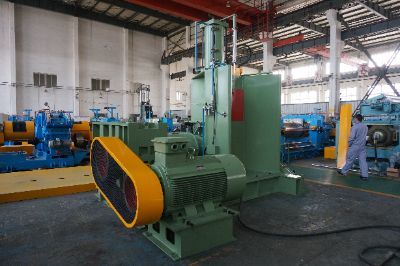
The shape and internal contours of a rotor do far more than simply spin material outward—they fundamentally dictate how energy is transferred, how particles collide, and how uniformly a product is processed. A rotor with steeply angled blades or deep channels can create intense shear zones, ideal for breaking down agglomerates, while a more gradual, swept profile promotes gentle blending. Every radius, every relief angle, and every surface finish plays a role in whether the final output meets a narrow specification or falls short.
In high-speed dispersion, rotor geometry governs the formation and intensity of hydraulic shear and cavitation. Narrow gaps between the rotor and stator, combined with precisely machined slots or teeth, generate micro-turbulence that pulls powders into liquids and wets them within seconds. If the gap is too wide, you lose efficiency; too tight, and you risk excessive heat, wear, or even mechanical failure. The interplay between tip speed and geometric features—like tooth count and helix angle—determines the vortex pattern, directly affecting how quickly a powder is incorporated and whether lumps survive the first pass.
For distribution tasks, where the goal is homogeneous mixing without particle size reduction, rotor design takes a different turn. Here, the focus shifts to maximizing bulk flow and minimizing dead zones. Overlapping paddle configurations, helical ribbons, or specialized impeller shapes ensure that material from the vessel walls and bottom is constantly brought into the center and recirculated. The result is a consistent blend in shorter cycle times, with fewer hot spots and less reliance on baffles or secondary agitation. Ultimately, the rotor is not just a component—it is the primary architect of the process outcome.
Temperature Control Tactics to Prevent Compound Degradation
Maintaining precise temperature levels is critical because even minor fluctuations can accelerate the breakdown of delicate compounds. A common oversight is relying solely on ambient room conditions, which often drift throughout the day. Investing in a high-precision digital thermostat that logs data over time can reveal hidden patterns of instability. Some facilities go a step further by creating micro-zones around storage areas, using passive insulation barriers to buffer against HVAC cycles. This layered approach ensures that compounds aren’t exposed to thermal spikes during routine operations.
Beyond static cooling, rapid temperature transitions during handling are often the real culprit. When a compound is repeatedly moved from chilled storage to a warmer workspace, condensation and thermal shock create microscopic fissures in its structure. Implementing a staged acclimatization protocol—where samples gradually warm in a controlled antechamber—prevents this damage. In practice, some labs repurpose inert gas-filled containers as thermal buffers, buying extra minutes of stability while technicians work under tight deadlines.
Monitoring shouldn’t end at the thermostat display. Placing independent calibrated probes directly inside storage units catches localized hotspots that centralized sensors miss. Pairing these with a simple alarm threshold, rather than complex automation, keeps the system robust and easy to maintain. One overlooked tactic is to map the unit’s airflow with smoke pencils, then reroute racks away from vent outlets. Such small adjustments can eliminate persistent degradation issues without upgrading equipment.
Throughput vs. Quality: Striking the Perfect Mixing Balance
Achieving high throughput often tempts operators to shorten mixing cycles, but this can lead to inconsistent blends that compromise product integrity. The real challenge lies in identifying the minimum mixing time that still guarantees homogeneity, without unnecessarily extending the process. This sweet spot varies with material properties, equipment design, and downstream requirements, making it a moving target that demands careful analysis.
Advanced monitoring techniques, such as inline spectroscopy or torque sensors, provide real-time insights into blend uniformity, allowing adjustments before quality drifts. By coupling these tools with a deep understanding of particle dynamics, manufacturers can push throughput while holding quality steady. It’s not about trading one for the other, but about redefining the relationship through smarter process control.
Ultimately, the perfect balance is a continuous pursuit that benefits from iterative testing and cross-functional collaboration. When R&D, production, and quality teams align on key performance indicators, they can design mixing protocols that maximize output without sacrificing the consistency customers expect. This holistic approach turns a potential bottleneck into a competitive advantage.
Maintenance & Durability: Extending Kneader Lifecycles
Regular inspection of wear components is the foundation of a long-lasting kneader. Blades, shafts, and seals endure constant stress, and catching early signs of fatigue prevents abrupt failures. A simple monthly check for unusual vibrations or temperature spikes often reveals issues before they escalate, saving thousands in emergency repairs.
Lubrication practices are just as critical as mechanical checks. Over-greasing attracts contaminants, while under-lubrication accelerates metal-on-metal wear. Tailoring the grease type and interval to your specific process material keeps friction low and component life predictable. Operators who log lubrication schedules consistently report fewer unplanned shutdowns.
Finally, surface treatments and material upgrades pay dividends in abrasive environments. Hardfacing on blades or ceramic coatings on chamber walls resist corrosion from aggressive compounds. While the initial investment is higher, the extended intervals between rebuilds make it a practical choice for facilities running multiple shifts. The kneader becomes less of a maintenance burden and more of a reliable workhorse.
Cost Analysis: Uncovering Long-Term Value in Mixing Solutions
Initial price tags rarely tell the full story when evaluating mixing equipment. A lower upfront cost might look appealing, but it often masks inefficiencies that drain budgets over time—think higher energy consumption, frequent part replacements, and unplanned downtime that disrupts production schedules. Smart buyers dig deeper, comparing total cost of ownership across the lifespan of the system, where a slightly pricier unit with superior engineering can slash operational expenses and pay for itself within a surprisingly short window.
Maintenance demands are a silent budget killer that separates truly cost-effective solutions from the rest. Some mixers require constant attention: seal changes, bearing lubrication, motor recalibrations. Others are designed with self-lubricating components and sealed drives that run for years without intervention. Hidden labor costs add up quickly—every hour a technician spends on routine upkeep is an hour not spent on revenue-generating activities. Factoring in these indirect expenses often flips the cost argument on its head.
Beyond the balance sheet, mixing performance directly affects product quality and yield, which in turn shapes brand reputation and customer retention. A poorly mixed batch can mean wasted raw materials, rejected shipments, or even recalls—each a financial blow that a superior mixing solution helps avoid. When you look beyond the purchase order and examine how the technology influences output consistency, scrap rates, and scalability, the long-term value proposition becomes clear. It’s not about spending less; it’s about investing where the returns compound over years of reliable service.
FAQ
It comes down to rotor geometry and control precision. High-performance units often feature intermeshing rotors that deliver more consistent shear and distributive mixing, plus tighter temperature regulation. That means fewer batch variations and shorter cycle times, especially with challenging compounds.
Very. Overfilling prevents proper mixing and leads to dead zones; underfilling reduces shear and wastes capacity. Most designs work best around 70-80% fill. Adjusting based on compound viscosity and rotor speed can make a noticeable difference in dispersion quality.
Silica tends to clump and demands higher shear and better temperature control. Kneaders with strong intermeshing rotor designs generally handle silica better because they break down agglomerates more efficiently. Poor mixing often leads to higher Mooney viscosity and processing issues downstream.
Ram pressure helps force materials into the mixing chamber and maintains contact with rotors. Too little pressure delays incorporation; excessive pressure can overheat the batch. Fine-tuning ram pressure alongside rotor speed can slash mix time without compromising quality.
Definitely. Rotor tip clearance checks are frequently skipped. When clearance widens beyond spec, mixing efficiency drops and you lose batch consistency. Also, monitoring the condition of the dust seals prevents leakage and contamination that degrades compound quality over time.
Watch for warning signs like increasing scrap rates, longer-than-benchmark cycle times, or inability to meet compound specs. If your current machine can't handle new formulations or scale-up needs, an upgrade with better automation and data logging often pays back quickly.
Conclusion
Selecting the right rubber kneader goes far beyond a simple spec comparison—it demands a deep understanding of how the machine’s specifications align with your compound’s rheological behavior. Start by decoding the chamber volume, drive power, and rotor speed ranges, but realize that the real magic happens in the mixing zone. Rotor geometry is the heart of efficient mixing; tangential or intermeshing designs dramatically affect dispersion and distribution. For carbon black incorporation, intermeshing rotors often provide superior distributive mixing and quicker bite, while tangential rotors can offer higher shear for tough dispersive tasks. Pair this with precise temperature control tactics, because even the best rotor design fails if heat history degrades the polymer. Integrated tangential water channels and automated TCU setups help keep rubber cool during mastication, preventing scorch and preserving molecular weight—this is non-negotiable for sensitive compounds like halobutyl or EPDM.
Yet, peak performance is a balancing act where throughput must not compromise quality. Pushing a kneader beyond its optimal fill factor might boost output temporarily, but it often leads to inconsistent dispersion and higher scrap rates. True efficiency comes from a holistic view that includes maintenance practices and lifecycle cost analysis. Frequent ram and door seal inspections, coupled with proactive rotor tip clearance checks, keep the kneader running as a tight system with minimal energy waste. When evaluating cost, look beyond the purchase price; consider energy efficiency, spare parts availability, and the machine’s adaptability to future compound recipes. A kneader with modular chambers and variable frequency drives may carry a higher upfront tag, but it unlocks long-term value through reduced downtime and better quality consistency. Mastering these interconnected elements turns a kneader from a simple mixer into a strategic asset for rubber processing.
Contact Us
Contact Person: Chen Zhengwei
Email: [email protected]
Tel/WhatsApp: +86-13963975727
Website: https://www.sfcrubbermachine.com