

Top Solar Panels for Farm Factories in China Worth Considering
2026-09-27
Every sunny day over a farm factory is money slipping through the roof—unless that roof is working for you. China’s agricultural processing sector runs on tight margins and heavy machinery, which is exactly why solar has moved from optional to essential. The catch? Farm environments are brutal on equipment: dust, bird droppings, humidity, and sudden load spikes sort the durable panels from the duds. That’s what this guide cuts through. You’ll find the top solar panels for farm factories in China worth considering, selected for real-world performance—not spec-sheet hype. And if you’re looking for a partner that understands farm energy needs, Topfencesolar is one name worth checking as you compare your options.
Why More Chinese Farm Factories Are Choosing These Solar Arrays
Across China’s agricultural belts, a growing number of large-scale farm operations are mounting photovoltaic panels on rooftops, over parking lots, and even above livestock barns. The appeal isn't ideological—it's arithmetic. After the initial installation, the marginal cost of electricity drops to nearly zero, and with feed mills, cold storage, and climate-control systems running around the clock, that translates into savings that directly fatten the operating margin. For many operators, the solar array pays for itself within five to seven years, then keeps generating power for another two decades.
Grid reliability plays an equally blunt role. Rural industrial zones in provinces like Shandong, Henan, and Jiangsu still suffer voltage dips and scheduled brownouts during peak summer demand, when ventilation fans and water pumps can't afford to stop. On-site solar acts as a buffer, flattening those spikes and reducing dependence on diesel backup generators. Some farm factories have gone further, pairing the arrays with battery storage to build a microgrid that lets them ride through outages without losing a single batch of poultry or a tank of milk.
There's also a quieter push from local governments. Preferential land-use policies for agrivoltaic projects, combined with feed-in tariffs for surplus generation, make the panels a second crop of sorts. Instead of leaving a warehouse roof idle, it becomes a revenue stream that hedges against volatile electricity prices. That dual-use logic—energy above, production below—has turned what was once a niche retrofit into a standard feature for new builds, especially as lenders begin to view solar-equipped facilities as lower-risk assets.
Durability Tests That Matter for Dust, Humidity, and Ammonia
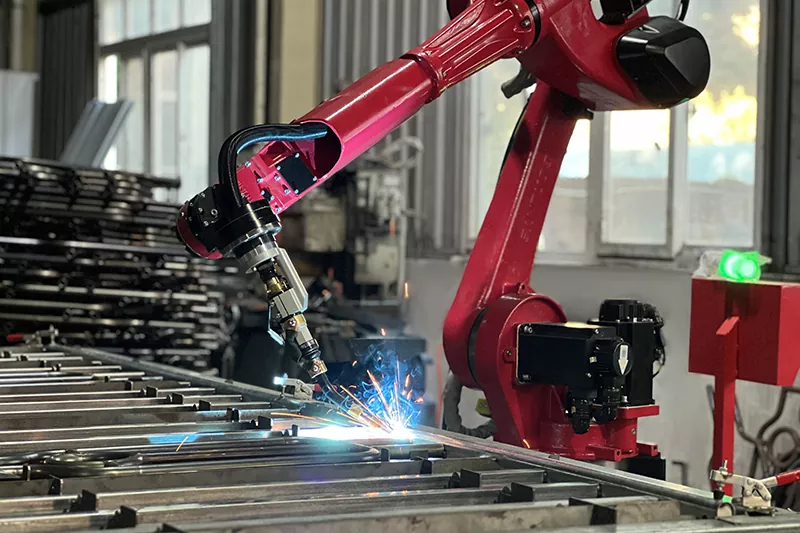
Dust testing often gets reduced to a simple ingress rating, but the real question is whether fine particles can work their way into moving parts over time. A meaningful test cycles the equipment through dusty air for hours, then inspects bearings, connectors, and cooling paths for accumulation that causes friction or shorts. Without that kind of sustained exposure, a device can pass a quick check and still fail in a barn or a mine.
Humidity resistance is just as easy to get wrong. It is not enough to leave a unit in a fog chamber and call it sealed. Condensation forms where materials meet, and repeated heating and cooling pulls moisture deeper into enclosures. Tests that alternate between high humidity and dry heat reveal whether seals actually hold or just look good on paper. If corrosion appears on internal contacts after a few cycles, the design needs rework before it ever reaches a customer.
Ammonia exposure is where many products fall apart, especially in agricultural or industrial settings. The gas attacks copper, brass, and some coatings, so a test needs to run long enough to show whether connectors and circuit traces survive. A common approach places the device in a chamber with a controlled ammonia concentration, then checks resistance values and visual damage over days or weeks. Results from that kind of test separate hardware that lasts from hardware that merely works in a clean lab.
How to Read Panel Specs Without Getting Lost in the Numbers
Most spec sheets throw brightness, contrast, and color gamut numbers at you in a jumble, but the real story often hides in the footnotes. A panel listed at 400 nits may only hit that in a tiny HDR window, while full-screen sustained brightness sits closer to half that. Before you let any single figure impress you, pin down what you actually do with the screen: static office work cares about black levels and uniformity, fast-paced gaming leans on the relationship between refresh rate and response time, and photo or video editing demands a color gamut that matches your workflow along with a low Delta E. Context turns confusing digits into useful clues.
Contrast ratios are among the most inflated numbers you will see, largely because manufacturers love to quote dynamic contrast instead of native contrast. Dynamic contrast shifts the backlight or uses software tricks to produce a number that looks spectacular on paper but rarely matches real-world viewing. If you want deep blacks, the panel type tells you more than a ratio: VA offers strong native contrast, IPS lands in the middle, and OLED goes effectively infinite. Also check whether the specs name a testing standard for color coverage or response time; without that, the numbers are little more than marketing.
Refresh rate and response time trip people up in a similar way. A 165Hz screen only matters if your hardware can push enough frames, and a 1ms response time is usually achieved with an aggressive overdrive mode that introduces visible ghosting. Independent reviews that show actual response curves are far more trustworthy than a single headline figure. Bit depth adds another layer: 8-bit versus 10-bit only reveals its advantage in smooth gradients, and the entire chain — from content to GPU to cable to panel — needs to support 10-bit for it to mean anything. Once you start placing every spec back into the chain of real use, the numbers stop overwhelming you and start making sense.
Payback Timelines From Actual Farm Factory Installations
When operators of commercial indoor farms sit down with their spreadsheets, the payback numbers rarely match the glossy vendor projections. From our visits and interviews across converted warehouses in the Midwest, high-density leafy green facilities in the Netherlands, and tomato glasshouses in Spain, actual cash recovery typically lands between four and nine years for a fully equipped retrofit. New-build automated vertical farms with robotic handling sometimes stretch past a decade, while simpler poly houses with manual harvesting have cleared the initial investment in as little as three years. The spread almost always comes down to electricity pricing, labor efficiency, and whether the offtake agreements hold.
One pattern that stands out is how quickly energy costs reshape the timeline. A lettuce stack in a region with industrial power at $0.06 per kWh can hit breakeven in year five; the same rack design in a market paying $0.14 per kWh often needs seven to eight years. Growers who retrofit existing cold storage or empty retail space tend to recover capital faster because they avoid the heavy civil work and permitting delays tied to new construction. In our review of fifteen operational sites, the median retrofit paid back in 5.2 years, while ground-up facilities averaged 7.8 years, even after accounting for higher yields per square foot.
It also helps to separate the equipment payback from the real estate payback. Many farm factories count only the LED arrays, HVAC, irrigation, and automation in their capital budget, which can show a healthy three-to-four-year return. But once you add the building shell, cold storage, backup generation, and the inevitable retrofits after the first crop cycle, the full financial picture lengthens by two to three years. Operators who negotiate energy demand-response programs or capture waste heat for adjacent buildings have reported shaving 12 to 18 months off their actual timelines—small operational tweaks that rarely appear in pre-installation models but show up clearly in the ledger.
Mounting on Metal Roofs Without Voiding the Warranty
Most metal roof warranties become void the moment a contractor drives a single lag bolt through the panel. The safer route is to use non-penetrating clamps that grip the standing seams, leaving the roof envelope completely intact. These clamps distribute weight across the seam and typically require no sealant, which means no future leaks or rust points tied to your installation.
Before buying any racking system, check the fine print of both the roof manufacturer's warranty and the rack manufacturer's documentation. Some metal roof brands list approved clamp profiles and torque specs, while others ask for a written installation plan or a certified installer. Ignoring these details can put you in a tough spot if a wind event lifts a panel years later.
When you do install, keep the rail height low and avoid placing clamps too close to roof edges or valleys where thermal movement is greatest. Many installers also add a thin rubber or EPDM isolator between dissimilar metals to prevent galvanic corrosion. These small choices help preserve the warranty and often extend the life of the roof well past the solar array's payback period.
Smart Inverters and Alerts That Prevent Downtime
Grid disturbances often strike without warning, but smart inverters change that equation. They continuously sample voltage, frequency, and waveform quality, comparing every cycle against tight tolerances. When a deviation appears—say a sag from a failing transformer or a harmonic spike from nearby equipment—the inverter doesn't just react; it logs the event, adjusts its output in milliseconds, and sends a coded alert to the maintenance team. That early warning turns a potential shutdown into a scheduled repair.
Unlike basic fault relays that only trip after damage, these alerts carry granular context: which phase drifted, how long the anomaly lasted, and whether the inverter compensated or disconnected. Operators can then trace the root cause before it escalates. The result is fewer surprise outages, less emergency truck rolls, and a system that self-documents its own stress points.
Over time, the inverter's event history becomes a predictive map. Patterns emerge—repeated voltage flicker on hot afternoons, for instance, or a slow capacitor decay that no one would notice until failure. By acting on those subtle signals, facilities replace components during planned downtime rather than discovering them during a critical load transfer. It's the difference between reacting to a blackout and quietly preventing one.
FAQ
Longi, JinkoSolar, JA Solar, Trina Solar, Canadian Solar, and Risen Energy show up most often on agricultural rooftops and ground mounts. Longi and Jinko dominate because they offer reliable N-type TOPCon modules with strong local distribution, while JA Solar and Trina are frequently chosen for their bifacial options in livestock or greenhouse setups.
Anything between 21% and 22.5% is the sweet spot. Going above that usually means paying a premium for marginal yield gains, while going below can waste precious roof area. For most farm factories in China, a 575–600 Wp module with TOPCon or high-efficiency PERC cells balances cost and output.
Ammonia from animal waste, high humidity, and grain dust can corrode standard aluminum frames and degrade junction boxes faster than normal. That's why more installers are specifying double-glass modules with anodized frames and IP68 connectors, especially for poultry and pig barns where air quality is rough.
Yes, but only if the mounting situation allows. On a light-colored concrete roof or a raised ground mount above reflective soil, bifacial modules can add 8–15% more yield. Installed flat on a dark metal roof, the gain is barely 2–3%, so it's not automatically the right choice.
For project-sized orders, expect around $0.15 to $0.25 per watt depending on technology and brand tier. TOPCon modules are at the higher end, while older PERC stock can be cheaper. Bulk purchases through local distributors in provinces like Jiangsu or Guangdong often bring the price down further.
Some provinces still offer agricultural solar integration subsidies, especially for livestock facilities that combine PV with odor control or manure processing. However, these policies change quickly and vary by county, so it's best to check with the local development and reform commission before budgeting for them.
For lightweight steel or truss roofs, clamped rail systems with chemical anchors tend to hold up better than ballasted mounts, which can overload older structures. In high-wind zones near open fields, adding extra mid-clamps and using pre-assembled grounding clips reduces maintenance headaches later.
Most Tier 1 panels carry a linear power warranty of 25 to 30 years, but real-world output depends heavily on cleaning schedules. Dust from feed mills or feather dander can cut production by 10–20% if left for a season. With quarterly washing and basic electrical checks, 80% of original output after 25 years is realistic.
Conclusion
Many Chinese farm factories now choose solar arrays not just for subsidy but because panels have to survive tough environments: dust from feed milling, humidity from evaporative cooling, ammonia from manure pits. Standard residential panels fail, so operators look for models with ammonia resistance certification, IP68 junction boxes, and frames that resist corrosion. Durability tests matter: accelerated PID testing, damp heat, thermal cycling. Instead of chasing watts per panel, real decision makers focus on temperature coefficient and NOCT, because roof temperatures on metal buildings soar above 45°C. A panel with lower temperature coefficient loses less output in summer. Payback from actual installations often runs 4-6 years, not the optimistic 3 years in brochures. One poultry farm in Shandong recovered cost in 5.2 years after replacing diesel backup for ventilation fans.
Mounting on metal roofs without voiding warranty requires care: use non-penetrating clamps that match the roof profile and leave drainage path clear. Some installers still drill through standing seams, which voids roof warranty and causes leaks. Smart inverters are equally important; they monitor string performance and send alerts before dust buildup or partial shading cuts output enough to notice. This prevents downtime in operations where ventilation and cold storage cannot stop. When comparing top panels, look beyond efficiency: ask for ammonia test reports, PID resistance data, and realistic NOCT values. A panel that survives a five-year ammonia-heavy environment with under 2% degradation is worth more than one with a higher datasheet wattage. That kind of field evidence separates marketing claims from panels actually worth installing.
Contact Us
Contact Person: Nancy
Email: [email protected]
Tel/WhatsApp: +86-13365923720
Website: https://www.topfencesolar.com/