

Window Treatments Factory: Where Custom Blinds and Shades Are Made
2026-08-24
Ever wondered how those perfectly fitted custom blinds and shades come to life? Step inside a window treatments factory where precision meets craftsmanship—and discover why ROLLERGY stands at the forefront of innovation.
Custom Blinds Start With a Conversation, Not a Catalog
When you're ready to replace window treatments, the last thing you need is a wall of fabric swatches and a pushy sales pitch. Custom blinds should grow out of how you actually live in a room. That means asking how the light moves across your kitchen table in the morning, whether your dog naps in the front window, or why the previous shades never quite felt right. A good designer starts by listening, not by flipping to page forty-two.
The conversation often uncovers details you'd never think to mention. Maybe you need a cordless lift because little hands are always reaching for the windowsill. Maybe you assumed blackout was your only option, but a woven texture would give you privacy without turning the room into a cave. By talking through your routines, frustrations, and hopes for the space, the right solution tends to reveal itself naturally.
That's the difference between buying blinds and having them made for you. A catalog shows you what's possible; a conversation figures out what's right. And when the final product arrives, it won't feel like an off-the-shelf afterthought. It'll feel like the room finally settled into place.
How Our Factory Handles Awkward Window Shapes Without Headaches
We've built our production line around flexibility. Instead of forcing every window into a standard template, our team starts each order by mapping the actual frame dimensions and angles from your site photos or drawings. That lets us spot potential trouble spots early—like an arch that narrows unevenly or a bay with non-square corners—before cutting begins.
Once the shape is locked in, we cut and assemble the sash in a single pass using adjustable jigs that hold odd angles without slipping. For extreme curves, we add temporary bracing inside the frame during glazing so the glass sits tight while the sealant cures. The result is a window that fits the first time, without shims, gaps, or callbacks.
The Difference Between Blackout and Room-Darkening Shades, Explained by Makers
Most people assume blackout and room-darkening shades are just two names for the same thing. Ask the people who actually make them, though, and you'll hear a different story. Manufacturers look at fabric density, coating layers, and the way light sneaks around the edges. That's where the real distinction lives, not in the marketing copy.
Blackout shades are built to stop light almost entirely. The fabric is typically thicker, often with a foam or acrylic backing that blocks both light and heat. Makers also focus on side channels or tightly fitted tracks, because even a small gap can ruin the effect. Room-darkening shades, by contrast, are a step down. They let a soft glow filter through, enough to darken a room for a nap but not enough for someone who needs true darkness to sleep.
If you're choosing between them, think about how you actually use the room. For a bedroom where one person works nights, go full blackout with a well-sealed frame. For a living room that just needs relief from afternoon glare, room-darkening will feel less like a cave and cost a bit less. The makers won't tell you one is better — they'll just ask what you're really trying to block.
Inside the Cutting Room: What Precision Really Looks Like
Precision in the cutting room isn't about following a checklist—it's about knowing when a half-second pause changes the entire rhythm of a scene. Editors who work this way don't rely on default transitions or obvious cuts. They listen to the footage, find the exact frame where an actor's breath catches or a glance shifts, and let that imperfection carry more weight than any polished effect could.
The real skill shows up in what gets left out. A cut that lands three frames early can kill a joke; three frames late and the tension evaporates. Experienced editors develop a feel for this timing that's closer to playing an instrument than following a manual. They watch the raw dailies without sound first, then with sound, then again at half speed—not to find mistakes, but to discover the moments that deserve to survive the trim.
What separates refined work from competent work is the willingness to break symmetry. Two shots might match perfectly on paper, but if the second one feels dead, a precise editor will hold on the first shot a beat longer or cut into the middle of a movement. That kind of decision doesn't come from a rulebook. It comes from sitting with the material long enough to trust your own reaction over any conventional wisdom.
From Motorized Systems to Manual Pulls: Building Controls That Last
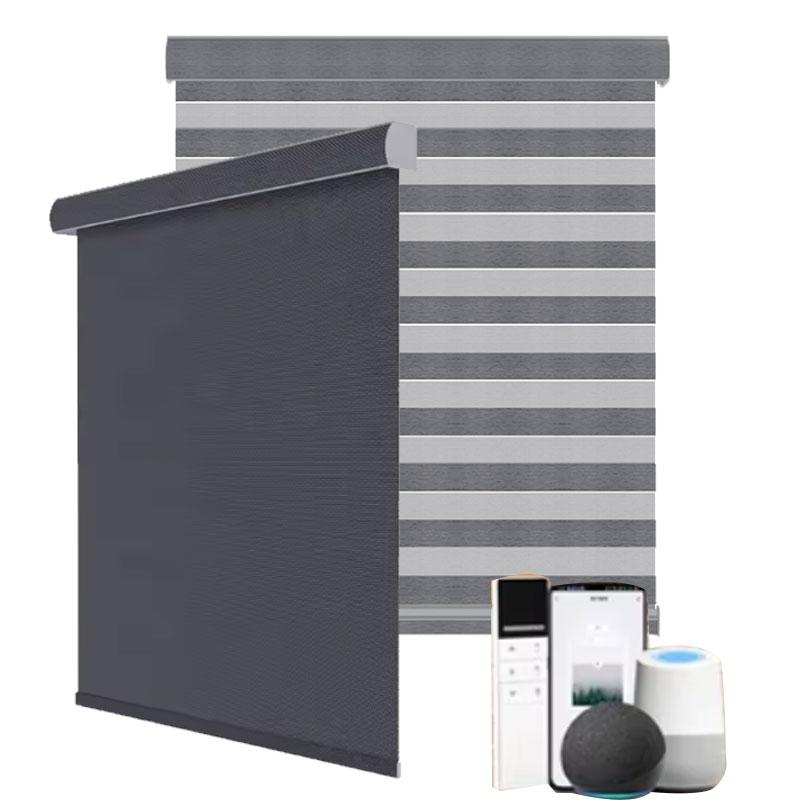
Most people assume motorized window treatments are the obvious upgrade—until the first power outage leaves a room stuck in the dark. The real test of a control system isn't how smooth it feels on day one, but whether it still works without complaint five years down the road. That's where a well-built manual pull earns its place.
Manual systems strip away the circuit boards, batteries, and remote pairings that tend to fail quietly. A quality cord or chain drive relies on simple mechanics: a clutch, a spool, and a grip that fits the hand. When those parts are machined from solid materials and fitted with care, the result is a shade that glides up and down with consistent effort, season after season.
Longevity isn't about avoiding motors altogether—it's about matching the control to the space. In bedrooms, kids' rooms, or rental units, manual pulls often outlast their powered counterparts because there's less to break and nothing to recharge. Choose a control that feels good to operate every single day, and you'll forget it's even there.
Why a Factory Tour Changes How You Think About Window Treatments
You can read about fabric weights and stack-back ratios until your eyes glaze over, but standing next to a cutting table while a bolt of linen gets unrolled changes the conversation completely. The smell of the material, the way the blade travels through eighteen layers at once, the offcuts piling up in bins sorted by fiber content—those details never make it into a catalog. Suddenly a drapery panel isn't a flat rectangle anymore. It has tension, grain, and a stubborn memory of the roll it came from.
What also becomes obvious is how much hand work still runs through the process. A motorized shade might look sleek and tech-driven in a showroom, but at the assembly bench you see someone squaring corners, burnishing seams, and testing the clutch by feel before it ever gets boxed. That kind of repetition builds an intuition no spec sheet can capture. It makes you second-guess the bargain option that arrived with a crooked hem and a vague rattle.
Most of all, the tour rewrites your definition of quality. Instead of comparing thread counts or brand names, you start asking whether the cord locks are metal or plastic, whether the spring tension was checked twice, and who actually signed off on the final inspection. That shift in perspective sticks with you long after the samples have been filed away.
FAQ
The order gets broken down by material, size, and hardware. Cutting stations handle fabric, aluminum, or wood slats according to the exact window measurements, then edge sealing, drilling for cord holes, and assembling headrails and bottom rails follow. Each piece moves through quality checks before packing.
We work from precise measurements and often build a template or use digital cutting patterns. For arches, angles, or extra-wide spans, the fabric is cut on a CNC table and rails are bent or joined to match the profile, with reinforcement added so the shade doesn't sag over time.
Most production runs pull from aluminum slats, basswood, faux wood composites, and a range of polyester blends for shades. We also keep specialty options like blackout lining, solar screen fabric, and moisture-resistant materials for bathrooms or kitchens ready to cut.
Yes, tours can be arranged by appointment during regular production hours. You'll see the cutting and assembly areas, fabric inspection tables, and the testing station where cords and motors are cycled repeatedly to catch any weak points before delivery.
A typical single-family home with 10 to 15 windows usually takes five to eight business days on the production floor, assuming materials are in stock. Larger orders or special finishes like hand-stained wood can stretch that to two or three weeks.
Every unit gets a visual inspection for fabric alignment and slat spacing, then we run the lift and tilt mechanisms through multiple cycles. Cord tension is measured on corded blinds, and motorized shades are tested with a load similar to daily use for at least 50 cycles.
Headrails, bottom rails, brackets, and fabric cutting are handled in-house so tolerances stay tight. We source raw materials like aluminum coils, wood boards, and motor components from vetted suppliers, but each piece is cut, drilled, and finished on our own lines.
Ours are sized to the exact window opening, so there's no trimming or leftover gaps. The cords are cut to length rather than left at a standard drop, and you can choose details like tape color, valance style, or continuous-loop lift that big retailers don't offer.
Conclusion
A window treatments factory isn't just a place where fabric gets cut and stitched—it's where the whole idea of custom blinds and shades starts with a real conversation. Instead of flipping through a catalog and hoping something fits, customers talk through their needs, light preferences, and lifestyle details. That back-and-forth shapes everything, especially when windows refuse to be rectangular. Awkward angles, arches, and corner glass don't cause panic here; the team measures and builds around them without making the process feel like a headache. Along the way, makers also clear up a common mix-up: blackout shades actually block nearly all light, while room-darkening options soften and filter it. Both have their place, but knowing the difference changes what ends up on your window. In the cutting room, precision isn't just a buzzword. Laser-guided tools and careful hand checks mean every panel is cut to the millimeter, so the final product looks clean and hangs correctly.
Beyond the fabric and cuts, the factory puts serious thought into how blinds and shades are controlled. Motorized systems are built with simple, durable components that won't fail after a year of use, and manual pulls are tested for smooth, consistent movement. Nothing feels flimsy because the people building them know that a window treatment gets touched every single day. That's also why a factory tour changes how you think about the whole category. Watching raw materials turn into a finished shade—from the first measurement to the final quality check—makes the cost and the wait make sense. You start to see window treatments less as a generic product and more as a tailored piece of your home. When custom means conversations, handled quirks, explained options, and tested controls, it's clear that the factory floor is where the real difference is made.
Contact Us
Contact Person: Vivien Cheng
Email: [email protected]
Tel/WhatsApp: +86 13751758835
Website: https://www.rollergytech.com/